After Texas Floods, NIH Swiftly Supports Health Research, Recovery
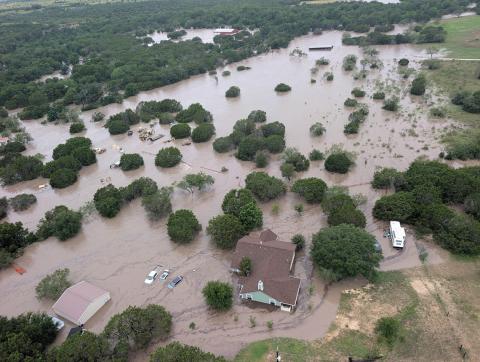
Photo: U.S. Coast Guard
When catastrophic flooding swept through central Texas in July, NIH’s National Institute of Environmental Health Sciences (NIEHS) mobilized to address public health threats posed by rising waters, debris and health system disruptions. Institute leaders quickly activated the Disaster Research Response (DR2) program and the Worker Training Program (WTP) to aid in recovery and planning efforts.
The fast response to the flooding builds on longstanding efforts to reduce health risks and bolster preparedness in disaster-prone regions across the nation.
“NIEHS leads disaster research efforts through programs that provide critical support to improve response, recovery and preparedness for future disasters,” said Dr. Aubrey Miller, senior medical advisor and director, NIH Disaster Research Response Program.
Such programs disseminate research tools to support robust data collection in the aftermath of disasters, in addition to providing health and safety training for response workers.
Coordinating a rapid response
NIEHS leaders called disaster health experts across the nation within days of the July 4 flooding to identify pressing concerns and facilitate research activities.
As part of this outreach, NIEHS shared resources to help support scientists’ efforts to collect data rapidly. Researchers—many of whom are supported in part by NIEHS—identified safety issues, water quality monitoring, hazardous environmental exposures, and adverse socio-behavioral and mental health impacts as concerning areas warranting further investigations and long-term follow-up.
Floodwaters can result in mold, physical hazards, sewage, bacteria and contaminated debris, which pose significant health risks to responders and returning residents. The WTP provides free educational resources and mobile apps for safe cleanup and recovery.
To explore these hurricane and flood training tools—including mold remediation, debris removal and respiratory protection resources—from WTP, see: https://go.nih.gov/mGfQzaT. All materials are available in English, Spanish and Vietnamese and are accessible via the WTP Disaster Preparedness app, which works offline for use in field research.
NIEHS researchers in Texas respond
The NIEHS Superfund Research Center at Texas A&M University (TAMU) will deploy a Community Assessment for Public Health Emergency Response (CASPER) in Kerr County, Texas, one of the areas hardest hit by the July flooding. The CASPER method provides rapid, household-based insights to inform local response and recovery and will help assess the health and infrastructure impacts of the flooding in Kerr County. TAMU’s Community Engagement Core is also conducting research to better understand factors that affect community resilience during and after disasters.
For more information, the DR2 website highlights an extensive list of curated flood-specific resources available from NIEHS and other federal partners: https://www.niehs.nih.gov/research/programs/disaster.