NIH Remembers Cashel
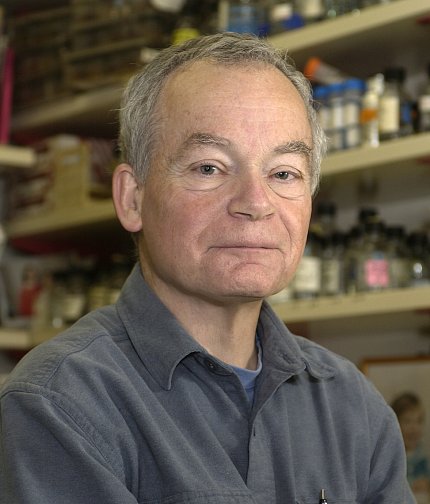
Dr. Charles Michael Cashel passed away on July 15. He was a federal employee for 58 years, having retired in 2021.
Cashel had joined the laboratory of Dr. Ernst Freese at NIH’s National Institute of Neurological Disorders and Stroke (NINDS) in 1963 while serving in the USPHS Commissioned Corps.
He moved to NIH’s National Institute of Child Health and Human Development (NICHD) in 1971 where he was a member of the Laboratory of Developmental Biology. That laboratory merged with the Laboratory of Molecular Genetics (LMG) in which he was head of the section on molecular regulation. While still associated with NINDS, he was a graduate student in the Genetics Department at the University of Washington, completing his Ph.D. in two years. He’d previously earned his bachelor’s from Amherst College and his MD from Case Western Reserve University.
It was while earning his PhD that Cashel discovered a small nucleotide that is formed upon various types of stress, with ~60% of the cell’s genes responding to the compound. He returned to NIH and determined the chemical nature of the compound was ppGpp, a guanine with di-phosphates on the 5’ and 2’ OH. His studies defined the roles of highly phosphorylated nucleotide secondary messengers in “rheostated” gene expression in bacteria.
Examining the many amazing cellular responses to ppGpp was the joy of his research for the remainder of his career. He also described transcription factors that bind directly to RNA polymerase and alter both transcription initiation and elongation. Notably, his lab generated a collection of over 20,000 bacterial strains that are an extremely valuable resource for ongoing and future research by many laboratories around the world.
Cashel was a giant in the field he founded and was an important contributor to LMG and the Division of Intramural Research. He was a true bench scientist, conducting experiments alongside his trainees up until his retirement.