NIH Record - National Institutes of Health

Annual CFC Effort Launches

NIH employees work hard every day to advance medical research, said NIH Acting Director Dr. Lawrence Tabak during the 2023 NIH Combined Federal Campaign (CFC) virtual kickoff event on Oct. 4.

Social Factors Help Explain Worse Cardiovascular Health in Rural Areas

An NIH-funded research team uncovered higher rates of heart disease and worse heart health affecting adults living in rural communities compared to urban areas and factors that likely drive these differences. More than 60 million U.S. adults live in rural communities, and heart disease remains the nation’s leading cause of death.

The researchers found adults living in rural areas were more likely to have heart disease, high blood pressure, high cholesterol, obesity and diabetes. Across all age groups, the differences in high blood pressure, obesity and diabetes were largest among adults ages 20–39 living in rural areas.

Investigators reviewed data from more than 27,000 adults who participated in the 2022 National Health Interview Survey to understand geographical differences in rates of heart disease and risk factors for conditions that affect the heart and blood vessels, such as high blood pressure, diabetes and obesity.

They found that factors such as levels of income and education, having enough food to eat and owning a home helped explain the higher rates of people in rural areas who had high blood pressure, diabetes and heart disease. Prior research has also shown how difficult circumstances, such as living in poverty, can affect cardiovascular health, including increased inflammation in the body.

Identifying factors driving the higher burden of heart disease and risk factors in rural regions remains a critical research priority.

Insights from this study could inform public health efforts and policies to support and improve the cardiovascular health of people — especially younger adults — living in rural areas.


Meet the 2024–2025 Cohort of Climate and Health Scholars

Dr. Sue Anne Bell
Associate Professor of Nursing, University of Michigan School of Nursing
Host: National Institute on Aging

Dr. Daniel Carrión
Assistant Professor of Epidemiology and Director of Education for Climate Change and Health, Yale School of Public Health
Host: National Institute on Minority Health and Health Disparities

Dr. José Guillermo Cedeño Laurent
Assistant Professor of Environmental and Occupational Health and Justice, Rutgers School of Public Health
Host: National Institute of Arthritis and Musculoskeletal and Skin Diseases

Dr. Jaime Madrigano
Associate Professor of American Health, Johns Hopkins Bloomberg School of Public Health 
Host: NIH Office of Disease Prevention

Dr. Kimberley Miner
Climate Scientist and Program Manager,
NASA Jet Propulsion Labs at the California Institute of Technology
Host: National Institute of Environmental Health Sciences

Dr. Eugene Richardson
Assistant Professor of Global Health and Social Medicine, Harvard Medical School
Host: NIH Office of Behavioral and Social Sciences Research

Dr. Jason Rohr
Professor of Biological Sciences and Chair of the Department of Biological Sciences, University of Notre Dame
Host: Fogarty International Center

Dr. Patrick Ryan
Professor of Pediatrics and Environmental and Public Health Sciences, University of Cincinnati
Host: National Institute of Allergy and Infectious Diseases 

Dr. Soko Setoguchi
Professor of Medicine and Epidemiology, Rutgers University
Host: National Cancer Institute

Dr. Christopher Uejio
Professor of Geography and Public Health, Florida State University
Host: National Institute of Neurological Disorders and Stroke

Dr. Leyao Wang
Assistant Professor of Epidemiology, University of Massachusetts Amherst
Host: National Heart, Lung, and Blood Institute

Dr. Joshua Wortzel
Child and Adolescent Psychiatrist and Clinical Scientist, Institute of Living - Hartford HealthCare; Adjunct Assistant Professor of Psychiatry, Yale School of Medicine
Host: National Institute of Mental Health

Dr. Jun Wu
Professor of Environmental and Occupational Health, University of California, Irvine
Host: NIH Office of Dietary Supplements

More information about each individual scholar and their research interests can be found by visiting go.nih.gov/4vxNO4w.

NCI, NCATS Scrimmage to Support CFC

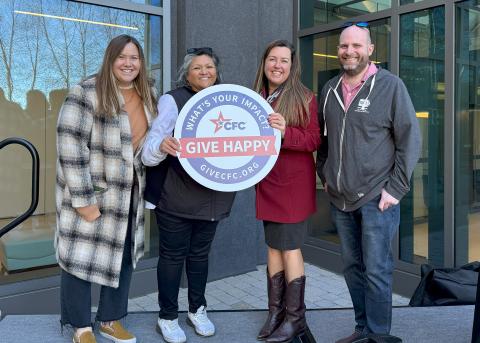
Group stands together holding Give Happy sign.
Scrimmage organizers, from l, Megan Moretz (NCATS), Patricia Voysest (NCI), Kelly Lawhead (NCI), and Chris Maurer (NCATS)

Photo:  Amy Trenkle

On Nov. 13, the National Cancer Institute (NCI) and the National Center for Advancing Translational Sciences (NCATS) held their first-ever joint Cornhole Scrimmage at NCI’s Shady Grove campus to engage staff in the Combined Federal Campaign (CFC) efforts. 

This event offered the opportunity for these two institutes to come together for the CFC and for their staff to connect, especially since approximately 100 NCATS staff moved into the Shady Grove building over the summer. Amber Lowery, NCI’s deputy director for management and executive officer, kicked off the event with welcome remarks, and two local charities shared how the CFC supports their impactful work for the community, particularly for furry and feathery friends.
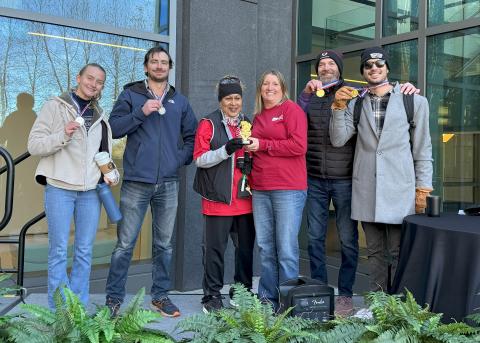
Colleagues stand together in winter coats, outside NCI-Shady Grove.
Scrimmage winners celebrate outside NCI-Shady Grove

Photo:  patricia voysest

Although this was the first event of its kind for NCI, NCATS hosted this annual cornhole event as a key part of their CFC efforts for several years pre-pandemic. With a competitive spirit in the air, NCATS showcased their well-honed skills, claiming both first and second place in the staff rounds. However, Lowery and cornhole partner Dr. Sanya Springfield, NCI acting deputy director for strategic engagement, clinched the coveted Cornhole Scrimmage trophy for NCI in the leadership round. They faced tough competition against Bekah Geiger, NCATS acting executive officer, and Andrew Kelly, NCATS acting deputy executive officer. 

This event prepared NCI and NCATS leaders to take on other institutes at the CFC Cornhole Throwdown on November 21. After the scrimmage, Bekah presented the trophy and medals to the winners, capping off a brisk but fantastic afternoon of friendly competition and community spirit. — Kelly Lawhead, Chris Maurer, Megan Moretz, Patricia Voysest
Image
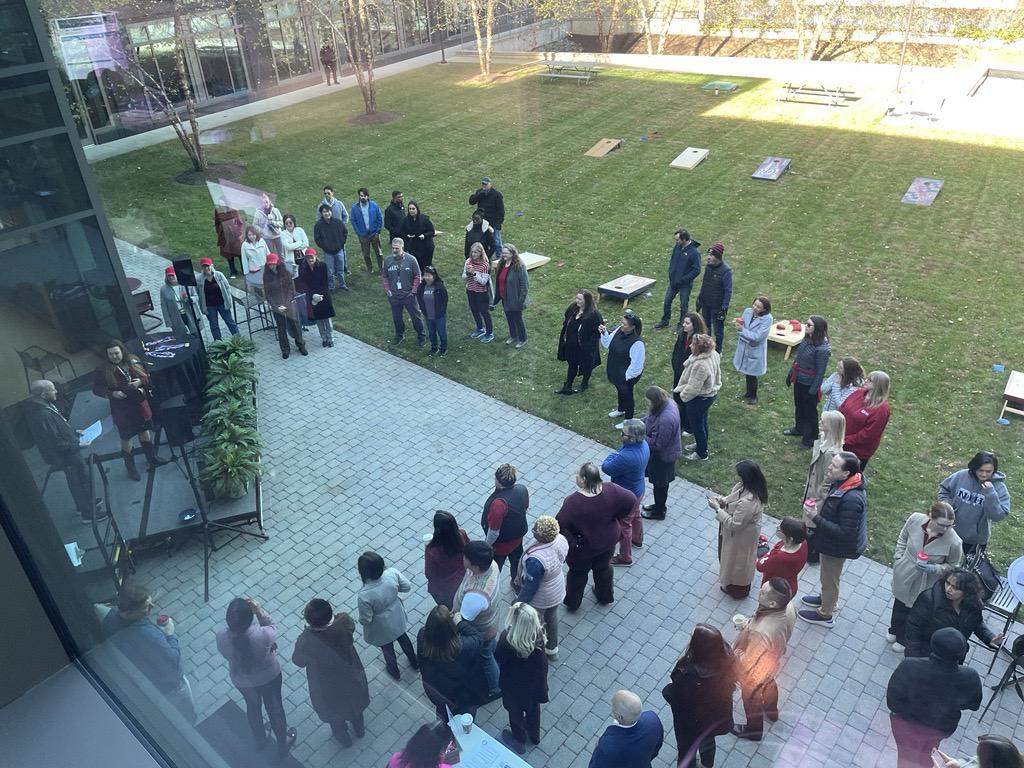
Overhead shot of people gathered outside NCI-Shady Grove with cornhole boards set up on the lawn
In this view from the second floor, colleagues gather for the scrimmage.

Photo:  Kenneth Voritskul

Relay Top 20 Finishers

Place Time # Team Name
1 12:43 109 Fellows Running Club
2 14:37 41 PEP in your stepTIDES
3 14:38 24 K-Space Invaders
4 15:01 108 Running into Debt
5 15:10 93 Calbindin Snap
6 15:18 21 qPAL: curing PD, AD and ALS
7 15:33 117 PCR: Postbac Chain Relay
8 16:04 84 CellCyclers
9 16:23 60 Smell you later
10 16:36 105 Host Busters
11 16:38 77 Wurtz Possible Runners
12 16:47 79 Hodgepodge
13 16:49 18 The Lymph Nodes
14 16:56 34 GMB Rocks
15 17:03 67 Ignorance is Blisters
16 17:04 56 CtU Later
17 17:06 39 READY, MarmoSET, GO!
18 17:31 25 Globetrotters
19 17:44 44 No Chasers
20 17:44 66 We’re just here for the ice cream

NCI Shady Grove Takes a Hike Too 

Image
Huge group gathers seated around NCI director.
NCI's Satellite Steppers

Photo:  Marleen Van Den Neste

More than 125 NIH staffers gathered June 6 at NCI Shady Grove for NIH’s annual Take-a-Hike Day. 

NCI Acting Executive Officer Amber Lowery welcomed staff and NCI Director Dr. Kimryn Rathmell kicked off the event with inspiring words and a reminder that “physical activity is good for your body but also good for our overall mission…good for our mental well-being and health… and for making connections. Everything that we do here is about the people, and how we work together as a team.” 
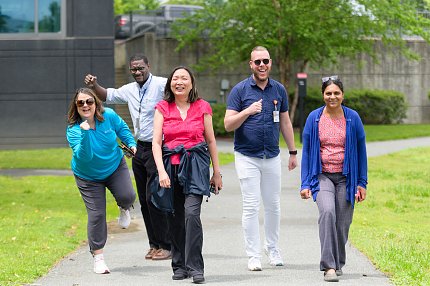
Group of smiling walkers in colorful clothes on the route
Staff at NCI Shady Grove get in on the hike.

Photo:  Marleen Van Den Neste

Rizzi Appeals for Accessible, Usable, Functional Digital Environments

Much of the digital world is inaccessible to people with disabilities, said Albert J. Rizzi, during the final DDM Seminar of 2023. That prevents them from living their life to the fullest. “When we make things universally accessible and usable for people with disabilities, we wind up making it a better place for people of all abilities,” said Rizzi.

Social Factors Help Explain Worse Cardiovascular Health in Rural Areas

An NIH-funded research team uncovered higher rates of heart disease and worse heart health affecting adults living in rural communities compared to urban areas and factors that likely drive these differences. More than 60 million U.S. adults live in rural communities, and heart disease remains the nation’s leading cause of death.

The researchers found adults living in rural areas were more likely to have heart disease, high blood pressure, high cholesterol, obesity and diabetes. Across all age groups, the differences in high blood pressure, obesity and diabetes were largest among adults ages 20–39 living in rural areas.

Investigators reviewed data from more than 27,000 adults who participated in the 2022 National Health Interview Survey to understand geographical differences in rates of heart disease and risk factors for conditions that affect the heart and blood vessels, such as high blood pressure, diabetes and obesity.

They found that factors such as levels of income and education, having enough food to eat and owning a home helped explain the higher rates of people in rural areas who had high blood pressure, diabetes and heart disease. Prior research has also shown how difficult circumstances, such as living in poverty, can affect cardiovascular health, including increased inflammation in the body.

Identifying factors driving the higher burden of heart disease and risk factors in rural regions remains a critical research priority.

Insights from this study could inform public health efforts and policies to support and improve the cardiovascular health of people — especially younger adults — living in rural areas.


Meet the 2024–2025 Cohort of Climate and Health Scholars

Dr. Sue Anne Bell
Associate Professor of Nursing, University of Michigan School of Nursing
Host: National Institute on Aging

Dr. Daniel Carrión
Assistant Professor of Epidemiology and Director of Education for Climate Change and Health, Yale School of Public Health
Host: National Institute on Minority Health and Health Disparities

Dr. José Guillermo Cedeño Laurent
Assistant Professor of Environmental and Occupational Health and Justice, Rutgers School of Public Health
Host: National Institute of Arthritis and Musculoskeletal and Skin Diseases

Dr. Jaime Madrigano
Associate Professor of American Health, Johns Hopkins Bloomberg School of Public Health 
Host: NIH Office of Disease Prevention

Dr. Kimberley Miner
Climate Scientist and Program Manager,
NASA Jet Propulsion Labs at the California Institute of Technology
Host: National Institute of Environmental Health Sciences

Dr. Eugene Richardson
Assistant Professor of Global Health and Social Medicine, Harvard Medical School
Host: NIH Office of Behavioral and Social Sciences Research

Dr. Jason Rohr
Professor of Biological Sciences and Chair of the Department of Biological Sciences, University of Notre Dame
Host: Fogarty International Center

Dr. Patrick Ryan
Professor of Pediatrics and Environmental and Public Health Sciences, University of Cincinnati
Host: National Institute of Allergy and Infectious Diseases 

Dr. Soko Setoguchi
Professor of Medicine and Epidemiology, Rutgers University
Host: National Cancer Institute

Dr. Christopher Uejio
Professor of Geography and Public Health, Florida State University
Host: National Institute of Neurological Disorders and Stroke

Dr. Leyao Wang
Assistant Professor of Epidemiology, University of Massachusetts Amherst
Host: National Heart, Lung, and Blood Institute

Dr. Joshua Wortzel
Child and Adolescent Psychiatrist and Clinical Scientist, Institute of Living - Hartford HealthCare; Adjunct Assistant Professor of Psychiatry, Yale School of Medicine
Host: National Institute of Mental Health

Dr. Jun Wu
Professor of Environmental and Occupational Health, University of California, Irvine
Host: NIH Office of Dietary Supplements

More information about each individual scholar and their research interests can be found by visiting go.nih.gov/4vxNO4w.

NCI, NCATS Scrimmage to Support CFC

Group stands together holding Give Happy sign.
Scrimmage organizers, from l, Megan Moretz (NCATS), Patricia Voysest (NCI), Kelly Lawhead (NCI), and Chris Maurer (NCATS)

Photo:  Amy Trenkle

On Nov. 13, the National Cancer Institute (NCI) and the National Center for Advancing Translational Sciences (NCATS) held their first-ever joint Cornhole Scrimmage at NCI’s Shady Grove campus to engage staff in the Combined Federal Campaign (CFC) efforts. 

This event offered the opportunity for these two institutes to come together for the CFC and for their staff to connect, especially since approximately 100 NCATS staff moved into the Shady Grove building over the summer. Amber Lowery, NCI’s deputy director for management and executive officer, kicked off the event with welcome remarks, and two local charities shared how the CFC supports their impactful work for the community, particularly for furry and feathery friends.

Colleagues stand together in winter coats, outside NCI-Shady Grove.
Scrimmage winners celebrate outside NCI-Shady Grove

Photo:  patricia voysest

Although this was the first event of its kind for NCI, NCATS hosted this annual cornhole event as a key part of their CFC efforts for several years pre-pandemic. With a competitive spirit in the air, NCATS showcased their well-honed skills, claiming both first and second place in the staff rounds. However, Lowery and cornhole partner Dr. Sanya Springfield, NCI acting deputy director for strategic engagement, clinched the coveted Cornhole Scrimmage trophy for NCI in the leadership round. They faced tough competition against Bekah Geiger, NCATS acting executive officer, and Andrew Kelly, NCATS acting deputy executive officer. 

This event prepared NCI and NCATS leaders to take on other institutes at the CFC Cornhole Throwdown on November 21. After the scrimmage, Bekah presented the trophy and medals to the winners, capping off a brisk but fantastic afternoon of friendly competition and community spirit. — Kelly Lawhead, Chris Maurer, Megan Moretz, Patricia Voysest

Image
Overhead shot of people gathered outside NCI-Shady Grove with cornhole boards set up on the lawn
In this view from the second floor, colleagues gather for the scrimmage.

Photo:  Kenneth Voritskul

Relay Top 20 Finishers

Place Time # Team Name
1 12:43 109 Fellows Running Club
2 14:37 41 PEP in your stepTIDES
3 14:38 24 K-Space Invaders
4 15:01 108 Running into Debt
5 15:10 93 Calbindin Snap
6 15:18 21 qPAL: curing PD, AD and ALS
7 15:33 117 PCR: Postbac Chain Relay
8 16:04 84 CellCyclers
9 16:23 60 Smell you later
10 16:36 105 Host Busters
11 16:38 77 Wurtz Possible Runners
12 16:47 79 Hodgepodge
13 16:49 18 The Lymph Nodes
14 16:56 34 GMB Rocks
15 17:03 67 Ignorance is Blisters
16 17:04 56 CtU Later
17 17:06 39 READY, MarmoSET, GO!
18 17:31 25 Globetrotters
19 17:44 44 No Chasers
20 17:44 66 We’re just here for the ice cream

NCI Shady Grove Takes a Hike Too 

Image
Huge group gathers seated around NCI director.
NCI's Satellite Steppers

Photo:  Marleen Van Den Neste

More than 125 NIH staffers gathered June 6 at NCI Shady Grove for NIH’s annual Take-a-Hike Day. 

NCI Acting Executive Officer Amber Lowery welcomed staff and NCI Director Dr. Kimryn Rathmell kicked off the event with inspiring words and a reminder that “physical activity is good for your body but also good for our overall mission…good for our mental well-being and health… and for making connections. Everything that we do here is about the people, and how we work together as a team.” 

Group of smiling walkers in colorful clothes on the route
Staff at NCI Shady Grove get in on the hike.

Photo:  Marleen Van Den Neste

Valenzuela Creates Test that Could Detect Exposure of Disease-Causing Insects

Diagnostic tests might one day show whether a person was bitten by a sand fly or a tick, and help determine increased risk of the disease transmitted by these vectors, said Dr. Jesus Valenzuela. His lab's efforts have brought such a test closer to fruition.

Social Factors Help Explain Worse Cardiovascular Health in Rural Areas

An NIH-funded research team uncovered higher rates of heart disease and worse heart health affecting adults living in rural communities compared to urban areas and factors that likely drive these differences. More than 60 million U.S. adults live in rural communities, and heart disease remains the nation’s leading cause of death.

The researchers found adults living in rural areas were more likely to have heart disease, high blood pressure, high cholesterol, obesity and diabetes. Across all age groups, the differences in high blood pressure, obesity and diabetes were largest among adults ages 20–39 living in rural areas.

Investigators reviewed data from more than 27,000 adults who participated in the 2022 National Health Interview Survey to understand geographical differences in rates of heart disease and risk factors for conditions that affect the heart and blood vessels, such as high blood pressure, diabetes and obesity.

They found that factors such as levels of income and education, having enough food to eat and owning a home helped explain the higher rates of people in rural areas who had high blood pressure, diabetes and heart disease. Prior research has also shown how difficult circumstances, such as living in poverty, can affect cardiovascular health, including increased inflammation in the body.

Identifying factors driving the higher burden of heart disease and risk factors in rural regions remains a critical research priority.

Insights from this study could inform public health efforts and policies to support and improve the cardiovascular health of people — especially younger adults — living in rural areas.


Meet the 2024–2025 Cohort of Climate and Health Scholars

Dr. Sue Anne Bell
Associate Professor of Nursing, University of Michigan School of Nursing
Host: National Institute on Aging

Dr. Daniel Carrión
Assistant Professor of Epidemiology and Director of Education for Climate Change and Health, Yale School of Public Health
Host: National Institute on Minority Health and Health Disparities

Dr. José Guillermo Cedeño Laurent
Assistant Professor of Environmental and Occupational Health and Justice, Rutgers School of Public Health
Host: National Institute of Arthritis and Musculoskeletal and Skin Diseases

Dr. Jaime Madrigano
Associate Professor of American Health, Johns Hopkins Bloomberg School of Public Health 
Host: NIH Office of Disease Prevention

Dr. Kimberley Miner
Climate Scientist and Program Manager,
NASA Jet Propulsion Labs at the California Institute of Technology
Host: National Institute of Environmental Health Sciences

Dr. Eugene Richardson
Assistant Professor of Global Health and Social Medicine, Harvard Medical School
Host: NIH Office of Behavioral and Social Sciences Research

Dr. Jason Rohr
Professor of Biological Sciences and Chair of the Department of Biological Sciences, University of Notre Dame
Host: Fogarty International Center

Dr. Patrick Ryan
Professor of Pediatrics and Environmental and Public Health Sciences, University of Cincinnati
Host: National Institute of Allergy and Infectious Diseases 

Dr. Soko Setoguchi
Professor of Medicine and Epidemiology, Rutgers University
Host: National Cancer Institute

Dr. Christopher Uejio
Professor of Geography and Public Health, Florida State University
Host: National Institute of Neurological Disorders and Stroke

Dr. Leyao Wang
Assistant Professor of Epidemiology, University of Massachusetts Amherst
Host: National Heart, Lung, and Blood Institute

Dr. Joshua Wortzel
Child and Adolescent Psychiatrist and Clinical Scientist, Institute of Living - Hartford HealthCare; Adjunct Assistant Professor of Psychiatry, Yale School of Medicine
Host: National Institute of Mental Health

Dr. Jun Wu
Professor of Environmental and Occupational Health, University of California, Irvine
Host: NIH Office of Dietary Supplements

More information about each individual scholar and their research interests can be found by visiting go.nih.gov/4vxNO4w.

NCI, NCATS Scrimmage to Support CFC

Group stands together holding Give Happy sign.
Scrimmage organizers, from l, Megan Moretz (NCATS), Patricia Voysest (NCI), Kelly Lawhead (NCI), and Chris Maurer (NCATS)

Photo:  Amy Trenkle

On Nov. 13, the National Cancer Institute (NCI) and the National Center for Advancing Translational Sciences (NCATS) held their first-ever joint Cornhole Scrimmage at NCI’s Shady Grove campus to engage staff in the Combined Federal Campaign (CFC) efforts. 

This event offered the opportunity for these two institutes to come together for the CFC and for their staff to connect, especially since approximately 100 NCATS staff moved into the Shady Grove building over the summer. Amber Lowery, NCI’s deputy director for management and executive officer, kicked off the event with welcome remarks, and two local charities shared how the CFC supports their impactful work for the community, particularly for furry and feathery friends.

Colleagues stand together in winter coats, outside NCI-Shady Grove.
Scrimmage winners celebrate outside NCI-Shady Grove

Photo:  patricia voysest

Although this was the first event of its kind for NCI, NCATS hosted this annual cornhole event as a key part of their CFC efforts for several years pre-pandemic. With a competitive spirit in the air, NCATS showcased their well-honed skills, claiming both first and second place in the staff rounds. However, Lowery and cornhole partner Dr. Sanya Springfield, NCI acting deputy director for strategic engagement, clinched the coveted Cornhole Scrimmage trophy for NCI in the leadership round. They faced tough competition against Bekah Geiger, NCATS acting executive officer, and Andrew Kelly, NCATS acting deputy executive officer. 

This event prepared NCI and NCATS leaders to take on other institutes at the CFC Cornhole Throwdown on November 21. After the scrimmage, Bekah presented the trophy and medals to the winners, capping off a brisk but fantastic afternoon of friendly competition and community spirit. — Kelly Lawhead, Chris Maurer, Megan Moretz, Patricia Voysest

Image
Overhead shot of people gathered outside NCI-Shady Grove with cornhole boards set up on the lawn
In this view from the second floor, colleagues gather for the scrimmage.

Photo:  Kenneth Voritskul

Relay Top 20 Finishers

Place Time # Team Name
1 12:43 109 Fellows Running Club
2 14:37 41 PEP in your stepTIDES
3 14:38 24 K-Space Invaders
4 15:01 108 Running into Debt
5 15:10 93 Calbindin Snap
6 15:18 21 qPAL: curing PD, AD and ALS
7 15:33 117 PCR: Postbac Chain Relay
8 16:04 84 CellCyclers
9 16:23 60 Smell you later
10 16:36 105 Host Busters
11 16:38 77 Wurtz Possible Runners
12 16:47 79 Hodgepodge
13 16:49 18 The Lymph Nodes
14 16:56 34 GMB Rocks
15 17:03 67 Ignorance is Blisters
16 17:04 56 CtU Later
17 17:06 39 READY, MarmoSET, GO!
18 17:31 25 Globetrotters
19 17:44 44 No Chasers
20 17:44 66 We’re just here for the ice cream

NCI Shady Grove Takes a Hike Too 

Image
Huge group gathers seated around NCI director.
NCI's Satellite Steppers

Photo:  Marleen Van Den Neste

More than 125 NIH staffers gathered June 6 at NCI Shady Grove for NIH’s annual Take-a-Hike Day. 

NCI Acting Executive Officer Amber Lowery welcomed staff and NCI Director Dr. Kimryn Rathmell kicked off the event with inspiring words and a reminder that “physical activity is good for your body but also good for our overall mission…good for our mental well-being and health… and for making connections. Everything that we do here is about the people, and how we work together as a team.” 

Group of smiling walkers in colorful clothes on the route
Staff at NCI Shady Grove get in on the hike.

Photo:  Marleen Van Den Neste

Proper Use of Pronouns Creates a More Welcoming NIH

NIH is working to ensure that everyone, including the lesbian, gay, bisexual, transgender and queer (LGBTQ+) community, can live authentically without prejudice or discrimination. Understanding the differences between sex and gender and the proper use of pronouns can help create a welcoming, respectful and inclusive workplace for sexual and gender minorities.

Social Factors Help Explain Worse Cardiovascular Health in Rural Areas

An NIH-funded research team uncovered higher rates of heart disease and worse heart health affecting adults living in rural communities compared to urban areas and factors that likely drive these differences. More than 60 million U.S. adults live in rural communities, and heart disease remains the nation’s leading cause of death.

The researchers found adults living in rural areas were more likely to have heart disease, high blood pressure, high cholesterol, obesity and diabetes. Across all age groups, the differences in high blood pressure, obesity and diabetes were largest among adults ages 20–39 living in rural areas.

Investigators reviewed data from more than 27,000 adults who participated in the 2022 National Health Interview Survey to understand geographical differences in rates of heart disease and risk factors for conditions that affect the heart and blood vessels, such as high blood pressure, diabetes and obesity.

They found that factors such as levels of income and education, having enough food to eat and owning a home helped explain the higher rates of people in rural areas who had high blood pressure, diabetes and heart disease. Prior research has also shown how difficult circumstances, such as living in poverty, can affect cardiovascular health, including increased inflammation in the body.

Identifying factors driving the higher burden of heart disease and risk factors in rural regions remains a critical research priority.

Insights from this study could inform public health efforts and policies to support and improve the cardiovascular health of people — especially younger adults — living in rural areas.


Meet the 2024–2025 Cohort of Climate and Health Scholars

Dr. Sue Anne Bell
Associate Professor of Nursing, University of Michigan School of Nursing
Host: National Institute on Aging

Dr. Daniel Carrión
Assistant Professor of Epidemiology and Director of Education for Climate Change and Health, Yale School of Public Health
Host: National Institute on Minority Health and Health Disparities

Dr. José Guillermo Cedeño Laurent
Assistant Professor of Environmental and Occupational Health and Justice, Rutgers School of Public Health
Host: National Institute of Arthritis and Musculoskeletal and Skin Diseases

Dr. Jaime Madrigano
Associate Professor of American Health, Johns Hopkins Bloomberg School of Public Health 
Host: NIH Office of Disease Prevention

Dr. Kimberley Miner
Climate Scientist and Program Manager,
NASA Jet Propulsion Labs at the California Institute of Technology
Host: National Institute of Environmental Health Sciences

Dr. Eugene Richardson
Assistant Professor of Global Health and Social Medicine, Harvard Medical School
Host: NIH Office of Behavioral and Social Sciences Research

Dr. Jason Rohr
Professor of Biological Sciences and Chair of the Department of Biological Sciences, University of Notre Dame
Host: Fogarty International Center

Dr. Patrick Ryan
Professor of Pediatrics and Environmental and Public Health Sciences, University of Cincinnati
Host: National Institute of Allergy and Infectious Diseases 

Dr. Soko Setoguchi
Professor of Medicine and Epidemiology, Rutgers University
Host: National Cancer Institute

Dr. Christopher Uejio
Professor of Geography and Public Health, Florida State University
Host: National Institute of Neurological Disorders and Stroke

Dr. Leyao Wang
Assistant Professor of Epidemiology, University of Massachusetts Amherst
Host: National Heart, Lung, and Blood Institute

Dr. Joshua Wortzel
Child and Adolescent Psychiatrist and Clinical Scientist, Institute of Living - Hartford HealthCare; Adjunct Assistant Professor of Psychiatry, Yale School of Medicine
Host: National Institute of Mental Health

Dr. Jun Wu
Professor of Environmental and Occupational Health, University of California, Irvine
Host: NIH Office of Dietary Supplements

More information about each individual scholar and their research interests can be found by visiting go.nih.gov/4vxNO4w.

NCI, NCATS Scrimmage to Support CFC

Group stands together holding Give Happy sign.
Scrimmage organizers, from l, Megan Moretz (NCATS), Patricia Voysest (NCI), Kelly Lawhead (NCI), and Chris Maurer (NCATS)

Photo:  Amy Trenkle

On Nov. 13, the National Cancer Institute (NCI) and the National Center for Advancing Translational Sciences (NCATS) held their first-ever joint Cornhole Scrimmage at NCI’s Shady Grove campus to engage staff in the Combined Federal Campaign (CFC) efforts. 

This event offered the opportunity for these two institutes to come together for the CFC and for their staff to connect, especially since approximately 100 NCATS staff moved into the Shady Grove building over the summer. Amber Lowery, NCI’s deputy director for management and executive officer, kicked off the event with welcome remarks, and two local charities shared how the CFC supports their impactful work for the community, particularly for furry and feathery friends.

Colleagues stand together in winter coats, outside NCI-Shady Grove.
Scrimmage winners celebrate outside NCI-Shady Grove

Photo:  patricia voysest

Although this was the first event of its kind for NCI, NCATS hosted this annual cornhole event as a key part of their CFC efforts for several years pre-pandemic. With a competitive spirit in the air, NCATS showcased their well-honed skills, claiming both first and second place in the staff rounds. However, Lowery and cornhole partner Dr. Sanya Springfield, NCI acting deputy director for strategic engagement, clinched the coveted Cornhole Scrimmage trophy for NCI in the leadership round. They faced tough competition against Bekah Geiger, NCATS acting executive officer, and Andrew Kelly, NCATS acting deputy executive officer. 

This event prepared NCI and NCATS leaders to take on other institutes at the CFC Cornhole Throwdown on November 21. After the scrimmage, Bekah presented the trophy and medals to the winners, capping off a brisk but fantastic afternoon of friendly competition and community spirit. — Kelly Lawhead, Chris Maurer, Megan Moretz, Patricia Voysest

Image
Overhead shot of people gathered outside NCI-Shady Grove with cornhole boards set up on the lawn
In this view from the second floor, colleagues gather for the scrimmage.

Photo:  Kenneth Voritskul

Relay Top 20 Finishers

Place Time # Team Name
1 12:43 109 Fellows Running Club
2 14:37 41 PEP in your stepTIDES
3 14:38 24 K-Space Invaders
4 15:01 108 Running into Debt
5 15:10 93 Calbindin Snap
6 15:18 21 qPAL: curing PD, AD and ALS
7 15:33 117 PCR: Postbac Chain Relay
8 16:04 84 CellCyclers
9 16:23 60 Smell you later
10 16:36 105 Host Busters
11 16:38 77 Wurtz Possible Runners
12 16:47 79 Hodgepodge
13 16:49 18 The Lymph Nodes
14 16:56 34 GMB Rocks
15 17:03 67 Ignorance is Blisters
16 17:04 56 CtU Later
17 17:06 39 READY, MarmoSET, GO!
18 17:31 25 Globetrotters
19 17:44 44 No Chasers
20 17:44 66 We’re just here for the ice cream

NCI Shady Grove Takes a Hike Too 

Image
Huge group gathers seated around NCI director.
NCI's Satellite Steppers

Photo:  Marleen Van Den Neste

More than 125 NIH staffers gathered June 6 at NCI Shady Grove for NIH’s annual Take-a-Hike Day. 

NCI Acting Executive Officer Amber Lowery welcomed staff and NCI Director Dr. Kimryn Rathmell kicked off the event with inspiring words and a reminder that “physical activity is good for your body but also good for our overall mission…good for our mental well-being and health… and for making connections. Everything that we do here is about the people, and how we work together as a team.” 

Group of smiling walkers in colorful clothes on the route
Staff at NCI Shady Grove get in on the hike.

Photo:  Marleen Van Den Neste

NCI Biologist Invents Safer Pepper Spray

An NCI scientist has invented a safer pepper spray for use by law enforcement and for personal protection. Larry Pearce and retired NCI investigator Dr. Peter M. Blumberg, developed a pepper spray that, when administered, causes a painful stimulation and incapacitates a person for only a brief period.

Social Factors Help Explain Worse Cardiovascular Health in Rural Areas

An NIH-funded research team uncovered higher rates of heart disease and worse heart health affecting adults living in rural communities compared to urban areas and factors that likely drive these differences. More than 60 million U.S. adults live in rural communities, and heart disease remains the nation’s leading cause of death.

The researchers found adults living in rural areas were more likely to have heart disease, high blood pressure, high cholesterol, obesity and diabetes. Across all age groups, the differences in high blood pressure, obesity and diabetes were largest among adults ages 20–39 living in rural areas.

Investigators reviewed data from more than 27,000 adults who participated in the 2022 National Health Interview Survey to understand geographical differences in rates of heart disease and risk factors for conditions that affect the heart and blood vessels, such as high blood pressure, diabetes and obesity.

They found that factors such as levels of income and education, having enough food to eat and owning a home helped explain the higher rates of people in rural areas who had high blood pressure, diabetes and heart disease. Prior research has also shown how difficult circumstances, such as living in poverty, can affect cardiovascular health, including increased inflammation in the body.

Identifying factors driving the higher burden of heart disease and risk factors in rural regions remains a critical research priority.

Insights from this study could inform public health efforts and policies to support and improve the cardiovascular health of people — especially younger adults — living in rural areas.


Meet the 2024–2025 Cohort of Climate and Health Scholars

Dr. Sue Anne Bell
Associate Professor of Nursing, University of Michigan School of Nursing
Host: National Institute on Aging

Dr. Daniel Carrión
Assistant Professor of Epidemiology and Director of Education for Climate Change and Health, Yale School of Public Health
Host: National Institute on Minority Health and Health Disparities

Dr. José Guillermo Cedeño Laurent
Assistant Professor of Environmental and Occupational Health and Justice, Rutgers School of Public Health
Host: National Institute of Arthritis and Musculoskeletal and Skin Diseases

Dr. Jaime Madrigano
Associate Professor of American Health, Johns Hopkins Bloomberg School of Public Health 
Host: NIH Office of Disease Prevention

Dr. Kimberley Miner
Climate Scientist and Program Manager,
NASA Jet Propulsion Labs at the California Institute of Technology
Host: National Institute of Environmental Health Sciences

Dr. Eugene Richardson
Assistant Professor of Global Health and Social Medicine, Harvard Medical School
Host: NIH Office of Behavioral and Social Sciences Research

Dr. Jason Rohr
Professor of Biological Sciences and Chair of the Department of Biological Sciences, University of Notre Dame
Host: Fogarty International Center

Dr. Patrick Ryan
Professor of Pediatrics and Environmental and Public Health Sciences, University of Cincinnati
Host: National Institute of Allergy and Infectious Diseases 

Dr. Soko Setoguchi
Professor of Medicine and Epidemiology, Rutgers University
Host: National Cancer Institute

Dr. Christopher Uejio
Professor of Geography and Public Health, Florida State University
Host: National Institute of Neurological Disorders and Stroke

Dr. Leyao Wang
Assistant Professor of Epidemiology, University of Massachusetts Amherst
Host: National Heart, Lung, and Blood Institute

Dr. Joshua Wortzel
Child and Adolescent Psychiatrist and Clinical Scientist, Institute of Living - Hartford HealthCare; Adjunct Assistant Professor of Psychiatry, Yale School of Medicine
Host: National Institute of Mental Health

Dr. Jun Wu
Professor of Environmental and Occupational Health, University of California, Irvine
Host: NIH Office of Dietary Supplements

More information about each individual scholar and their research interests can be found by visiting go.nih.gov/4vxNO4w.

NCI, NCATS Scrimmage to Support CFC

Group stands together holding Give Happy sign.
Scrimmage organizers, from l, Megan Moretz (NCATS), Patricia Voysest (NCI), Kelly Lawhead (NCI), and Chris Maurer (NCATS)

Photo:  Amy Trenkle

On Nov. 13, the National Cancer Institute (NCI) and the National Center for Advancing Translational Sciences (NCATS) held their first-ever joint Cornhole Scrimmage at NCI’s Shady Grove campus to engage staff in the Combined Federal Campaign (CFC) efforts. 

This event offered the opportunity for these two institutes to come together for the CFC and for their staff to connect, especially since approximately 100 NCATS staff moved into the Shady Grove building over the summer. Amber Lowery, NCI’s deputy director for management and executive officer, kicked off the event with welcome remarks, and two local charities shared how the CFC supports their impactful work for the community, particularly for furry and feathery friends.

Colleagues stand together in winter coats, outside NCI-Shady Grove.
Scrimmage winners celebrate outside NCI-Shady Grove

Photo:  patricia voysest

Although this was the first event of its kind for NCI, NCATS hosted this annual cornhole event as a key part of their CFC efforts for several years pre-pandemic. With a competitive spirit in the air, NCATS showcased their well-honed skills, claiming both first and second place in the staff rounds. However, Lowery and cornhole partner Dr. Sanya Springfield, NCI acting deputy director for strategic engagement, clinched the coveted Cornhole Scrimmage trophy for NCI in the leadership round. They faced tough competition against Bekah Geiger, NCATS acting executive officer, and Andrew Kelly, NCATS acting deputy executive officer. 

This event prepared NCI and NCATS leaders to take on other institutes at the CFC Cornhole Throwdown on November 21. After the scrimmage, Bekah presented the trophy and medals to the winners, capping off a brisk but fantastic afternoon of friendly competition and community spirit. — Kelly Lawhead, Chris Maurer, Megan Moretz, Patricia Voysest

Image
Overhead shot of people gathered outside NCI-Shady Grove with cornhole boards set up on the lawn
In this view from the second floor, colleagues gather for the scrimmage.

Photo:  Kenneth Voritskul

Relay Top 20 Finishers

Place Time # Team Name
1 12:43 109 Fellows Running Club
2 14:37 41 PEP in your stepTIDES
3 14:38 24 K-Space Invaders
4 15:01 108 Running into Debt
5 15:10 93 Calbindin Snap
6 15:18 21 qPAL: curing PD, AD and ALS
7 15:33 117 PCR: Postbac Chain Relay
8 16:04 84 CellCyclers
9 16:23 60 Smell you later
10 16:36 105 Host Busters
11 16:38 77 Wurtz Possible Runners
12 16:47 79 Hodgepodge
13 16:49 18 The Lymph Nodes
14 16:56 34 GMB Rocks
15 17:03 67 Ignorance is Blisters
16 17:04 56 CtU Later
17 17:06 39 READY, MarmoSET, GO!
18 17:31 25 Globetrotters
19 17:44 44 No Chasers
20 17:44 66 We’re just here for the ice cream

NCI Shady Grove Takes a Hike Too 

Image
Huge group gathers seated around NCI director.
NCI's Satellite Steppers

Photo:  Marleen Van Den Neste

More than 125 NIH staffers gathered June 6 at NCI Shady Grove for NIH’s annual Take-a-Hike Day. 

NCI Acting Executive Officer Amber Lowery welcomed staff and NCI Director Dr. Kimryn Rathmell kicked off the event with inspiring words and a reminder that “physical activity is good for your body but also good for our overall mission…good for our mental well-being and health… and for making connections. Everything that we do here is about the people, and how we work together as a team.” 

Group of smiling walkers in colorful clothes on the route
Staff at NCI Shady Grove get in on the hike.

Photo:  Marleen Van Den Neste

NIH Once Again Earns Bike to Work Honors

NIH won the 2023 Bike to Work Day (BTWD) Employer Challenge for being the organization with the most participants biking to work in the Washington, D.C. area. Nicholas Ramfos, director, Transportation Operations Programs of Metropolitan Washington Council of Governments, presented the first-place plaque to NIH during a recent luncheon in the Natcher Bldg.

Social Factors Help Explain Worse Cardiovascular Health in Rural Areas

An NIH-funded research team uncovered higher rates of heart disease and worse heart health affecting adults living in rural communities compared to urban areas and factors that likely drive these differences. More than 60 million U.S. adults live in rural communities, and heart disease remains the nation’s leading cause of death.

The researchers found adults living in rural areas were more likely to have heart disease, high blood pressure, high cholesterol, obesity and diabetes. Across all age groups, the differences in high blood pressure, obesity and diabetes were largest among adults ages 20–39 living in rural areas.

Investigators reviewed data from more than 27,000 adults who participated in the 2022 National Health Interview Survey to understand geographical differences in rates of heart disease and risk factors for conditions that affect the heart and blood vessels, such as high blood pressure, diabetes and obesity.

They found that factors such as levels of income and education, having enough food to eat and owning a home helped explain the higher rates of people in rural areas who had high blood pressure, diabetes and heart disease. Prior research has also shown how difficult circumstances, such as living in poverty, can affect cardiovascular health, including increased inflammation in the body.

Identifying factors driving the higher burden of heart disease and risk factors in rural regions remains a critical research priority.

Insights from this study could inform public health efforts and policies to support and improve the cardiovascular health of people — especially younger adults — living in rural areas.


Meet the 2024–2025 Cohort of Climate and Health Scholars

Dr. Sue Anne Bell
Associate Professor of Nursing, University of Michigan School of Nursing
Host: National Institute on Aging

Dr. Daniel Carrión
Assistant Professor of Epidemiology and Director of Education for Climate Change and Health, Yale School of Public Health
Host: National Institute on Minority Health and Health Disparities

Dr. José Guillermo Cedeño Laurent
Assistant Professor of Environmental and Occupational Health and Justice, Rutgers School of Public Health
Host: National Institute of Arthritis and Musculoskeletal and Skin Diseases

Dr. Jaime Madrigano
Associate Professor of American Health, Johns Hopkins Bloomberg School of Public Health 
Host: NIH Office of Disease Prevention

Dr. Kimberley Miner
Climate Scientist and Program Manager,
NASA Jet Propulsion Labs at the California Institute of Technology
Host: National Institute of Environmental Health Sciences

Dr. Eugene Richardson
Assistant Professor of Global Health and Social Medicine, Harvard Medical School
Host: NIH Office of Behavioral and Social Sciences Research

Dr. Jason Rohr
Professor of Biological Sciences and Chair of the Department of Biological Sciences, University of Notre Dame
Host: Fogarty International Center

Dr. Patrick Ryan
Professor of Pediatrics and Environmental and Public Health Sciences, University of Cincinnati
Host: National Institute of Allergy and Infectious Diseases 

Dr. Soko Setoguchi
Professor of Medicine and Epidemiology, Rutgers University
Host: National Cancer Institute

Dr. Christopher Uejio
Professor of Geography and Public Health, Florida State University
Host: National Institute of Neurological Disorders and Stroke

Dr. Leyao Wang
Assistant Professor of Epidemiology, University of Massachusetts Amherst
Host: National Heart, Lung, and Blood Institute

Dr. Joshua Wortzel
Child and Adolescent Psychiatrist and Clinical Scientist, Institute of Living - Hartford HealthCare; Adjunct Assistant Professor of Psychiatry, Yale School of Medicine
Host: National Institute of Mental Health

Dr. Jun Wu
Professor of Environmental and Occupational Health, University of California, Irvine
Host: NIH Office of Dietary Supplements

More information about each individual scholar and their research interests can be found by visiting go.nih.gov/4vxNO4w.

NCI, NCATS Scrimmage to Support CFC

Group stands together holding Give Happy sign.
Scrimmage organizers, from l, Megan Moretz (NCATS), Patricia Voysest (NCI), Kelly Lawhead (NCI), and Chris Maurer (NCATS)

Photo:  Amy Trenkle

On Nov. 13, the National Cancer Institute (NCI) and the National Center for Advancing Translational Sciences (NCATS) held their first-ever joint Cornhole Scrimmage at NCI’s Shady Grove campus to engage staff in the Combined Federal Campaign (CFC) efforts. 

This event offered the opportunity for these two institutes to come together for the CFC and for their staff to connect, especially since approximately 100 NCATS staff moved into the Shady Grove building over the summer. Amber Lowery, NCI’s deputy director for management and executive officer, kicked off the event with welcome remarks, and two local charities shared how the CFC supports their impactful work for the community, particularly for furry and feathery friends.

Colleagues stand together in winter coats, outside NCI-Shady Grove.
Scrimmage winners celebrate outside NCI-Shady Grove

Photo:  patricia voysest

Although this was the first event of its kind for NCI, NCATS hosted this annual cornhole event as a key part of their CFC efforts for several years pre-pandemic. With a competitive spirit in the air, NCATS showcased their well-honed skills, claiming both first and second place in the staff rounds. However, Lowery and cornhole partner Dr. Sanya Springfield, NCI acting deputy director for strategic engagement, clinched the coveted Cornhole Scrimmage trophy for NCI in the leadership round. They faced tough competition against Bekah Geiger, NCATS acting executive officer, and Andrew Kelly, NCATS acting deputy executive officer. 

This event prepared NCI and NCATS leaders to take on other institutes at the CFC Cornhole Throwdown on November 21. After the scrimmage, Bekah presented the trophy and medals to the winners, capping off a brisk but fantastic afternoon of friendly competition and community spirit. — Kelly Lawhead, Chris Maurer, Megan Moretz, Patricia Voysest

Image
Overhead shot of people gathered outside NCI-Shady Grove with cornhole boards set up on the lawn
In this view from the second floor, colleagues gather for the scrimmage.

Photo:  Kenneth Voritskul

Relay Top 20 Finishers

Place Time # Team Name
1 12:43 109 Fellows Running Club
2 14:37 41 PEP in your stepTIDES
3 14:38 24 K-Space Invaders
4 15:01 108 Running into Debt
5 15:10 93 Calbindin Snap
6 15:18 21 qPAL: curing PD, AD and ALS
7 15:33 117 PCR: Postbac Chain Relay
8 16:04 84 CellCyclers
9 16:23 60 Smell you later
10 16:36 105 Host Busters
11 16:38 77 Wurtz Possible Runners
12 16:47 79 Hodgepodge
13 16:49 18 The Lymph Nodes
14 16:56 34 GMB Rocks
15 17:03 67 Ignorance is Blisters
16 17:04 56 CtU Later
17 17:06 39 READY, MarmoSET, GO!
18 17:31 25 Globetrotters
19 17:44 44 No Chasers
20 17:44 66 We’re just here for the ice cream

NCI Shady Grove Takes a Hike Too 

Image
Huge group gathers seated around NCI director.
NCI's Satellite Steppers

Photo:  Marleen Van Den Neste

More than 125 NIH staffers gathered June 6 at NCI Shady Grove for NIH’s annual Take-a-Hike Day. 

NCI Acting Executive Officer Amber Lowery welcomed staff and NCI Director Dr. Kimryn Rathmell kicked off the event with inspiring words and a reminder that “physical activity is good for your body but also good for our overall mission…good for our mental well-being and health… and for making connections. Everything that we do here is about the people, and how we work together as a team.” 

Group of smiling walkers in colorful clothes on the route
Staff at NCI Shady Grove get in on the hike.

Photo:  Marleen Van Den Neste

Second DEIA Town Hall Provides Updates, Plans

Kevin Williams envisions an NIH that’s welcoming to all, a workplace free of racism, discrimination and biases that exclude underrepresented groups from leadership opportunities. “We want to create an environment that fosters psychological safety, so that everyone can share ideas and solutions,” said Williams, director of NIH’s Office of Equity, Diversity and Inclusion (EDI) during the 2nd Virtual Town Hall on Diversity, Equity, Inclusion and Accessibility (DEIA).

Social Factors Help Explain Worse Cardiovascular Health in Rural Areas

An NIH-funded research team uncovered higher rates of heart disease and worse heart health affecting adults living in rural communities compared to urban areas and factors that likely drive these differences. More than 60 million U.S. adults live in rural communities, and heart disease remains the nation’s leading cause of death.

The researchers found adults living in rural areas were more likely to have heart disease, high blood pressure, high cholesterol, obesity and diabetes. Across all age groups, the differences in high blood pressure, obesity and diabetes were largest among adults ages 20–39 living in rural areas.

Investigators reviewed data from more than 27,000 adults who participated in the 2022 National Health Interview Survey to understand geographical differences in rates of heart disease and risk factors for conditions that affect the heart and blood vessels, such as high blood pressure, diabetes and obesity.

They found that factors such as levels of income and education, having enough food to eat and owning a home helped explain the higher rates of people in rural areas who had high blood pressure, diabetes and heart disease. Prior research has also shown how difficult circumstances, such as living in poverty, can affect cardiovascular health, including increased inflammation in the body.

Identifying factors driving the higher burden of heart disease and risk factors in rural regions remains a critical research priority.

Insights from this study could inform public health efforts and policies to support and improve the cardiovascular health of people — especially younger adults — living in rural areas.


Meet the 2024–2025 Cohort of Climate and Health Scholars

Dr. Sue Anne Bell
Associate Professor of Nursing, University of Michigan School of Nursing
Host: National Institute on Aging

Dr. Daniel Carrión
Assistant Professor of Epidemiology and Director of Education for Climate Change and Health, Yale School of Public Health
Host: National Institute on Minority Health and Health Disparities

Dr. José Guillermo Cedeño Laurent
Assistant Professor of Environmental and Occupational Health and Justice, Rutgers School of Public Health
Host: National Institute of Arthritis and Musculoskeletal and Skin Diseases

Dr. Jaime Madrigano
Associate Professor of American Health, Johns Hopkins Bloomberg School of Public Health 
Host: NIH Office of Disease Prevention

Dr. Kimberley Miner
Climate Scientist and Program Manager,
NASA Jet Propulsion Labs at the California Institute of Technology
Host: National Institute of Environmental Health Sciences

Dr. Eugene Richardson
Assistant Professor of Global Health and Social Medicine, Harvard Medical School
Host: NIH Office of Behavioral and Social Sciences Research

Dr. Jason Rohr
Professor of Biological Sciences and Chair of the Department of Biological Sciences, University of Notre Dame
Host: Fogarty International Center

Dr. Patrick Ryan
Professor of Pediatrics and Environmental and Public Health Sciences, University of Cincinnati
Host: National Institute of Allergy and Infectious Diseases 

Dr. Soko Setoguchi
Professor of Medicine and Epidemiology, Rutgers University
Host: National Cancer Institute

Dr. Christopher Uejio
Professor of Geography and Public Health, Florida State University
Host: National Institute of Neurological Disorders and Stroke

Dr. Leyao Wang
Assistant Professor of Epidemiology, University of Massachusetts Amherst
Host: National Heart, Lung, and Blood Institute

Dr. Joshua Wortzel
Child and Adolescent Psychiatrist and Clinical Scientist, Institute of Living - Hartford HealthCare; Adjunct Assistant Professor of Psychiatry, Yale School of Medicine
Host: National Institute of Mental Health

Dr. Jun Wu
Professor of Environmental and Occupational Health, University of California, Irvine
Host: NIH Office of Dietary Supplements

More information about each individual scholar and their research interests can be found by visiting go.nih.gov/4vxNO4w.

NCI, NCATS Scrimmage to Support CFC

Group stands together holding Give Happy sign.
Scrimmage organizers, from l, Megan Moretz (NCATS), Patricia Voysest (NCI), Kelly Lawhead (NCI), and Chris Maurer (NCATS)

Photo:  Amy Trenkle

On Nov. 13, the National Cancer Institute (NCI) and the National Center for Advancing Translational Sciences (NCATS) held their first-ever joint Cornhole Scrimmage at NCI’s Shady Grove campus to engage staff in the Combined Federal Campaign (CFC) efforts. 

This event offered the opportunity for these two institutes to come together for the CFC and for their staff to connect, especially since approximately 100 NCATS staff moved into the Shady Grove building over the summer. Amber Lowery, NCI’s deputy director for management and executive officer, kicked off the event with welcome remarks, and two local charities shared how the CFC supports their impactful work for the community, particularly for furry and feathery friends.

Colleagues stand together in winter coats, outside NCI-Shady Grove.
Scrimmage winners celebrate outside NCI-Shady Grove

Photo:  patricia voysest

Although this was the first event of its kind for NCI, NCATS hosted this annual cornhole event as a key part of their CFC efforts for several years pre-pandemic. With a competitive spirit in the air, NCATS showcased their well-honed skills, claiming both first and second place in the staff rounds. However, Lowery and cornhole partner Dr. Sanya Springfield, NCI acting deputy director for strategic engagement, clinched the coveted Cornhole Scrimmage trophy for NCI in the leadership round. They faced tough competition against Bekah Geiger, NCATS acting executive officer, and Andrew Kelly, NCATS acting deputy executive officer. 

This event prepared NCI and NCATS leaders to take on other institutes at the CFC Cornhole Throwdown on November 21. After the scrimmage, Bekah presented the trophy and medals to the winners, capping off a brisk but fantastic afternoon of friendly competition and community spirit. — Kelly Lawhead, Chris Maurer, Megan Moretz, Patricia Voysest

Image
Overhead shot of people gathered outside NCI-Shady Grove with cornhole boards set up on the lawn
In this view from the second floor, colleagues gather for the scrimmage.

Photo:  Kenneth Voritskul

Relay Top 20 Finishers

Place Time # Team Name
1 12:43 109 Fellows Running Club
2 14:37 41 PEP in your stepTIDES
3 14:38 24 K-Space Invaders
4 15:01 108 Running into Debt
5 15:10 93 Calbindin Snap
6 15:18 21 qPAL: curing PD, AD and ALS
7 15:33 117 PCR: Postbac Chain Relay
8 16:04 84 CellCyclers
9 16:23 60 Smell you later
10 16:36 105 Host Busters
11 16:38 77 Wurtz Possible Runners
12 16:47 79 Hodgepodge
13 16:49 18 The Lymph Nodes
14 16:56 34 GMB Rocks
15 17:03 67 Ignorance is Blisters
16 17:04 56 CtU Later
17 17:06 39 READY, MarmoSET, GO!
18 17:31 25 Globetrotters
19 17:44 44 No Chasers
20 17:44 66 We’re just here for the ice cream

NCI Shady Grove Takes a Hike Too 

Image
Huge group gathers seated around NCI director.
NCI's Satellite Steppers

Photo:  Marleen Van Den Neste

More than 125 NIH staffers gathered June 6 at NCI Shady Grove for NIH’s annual Take-a-Hike Day. 

NCI Acting Executive Officer Amber Lowery welcomed staff and NCI Director Dr. Kimryn Rathmell kicked off the event with inspiring words and a reminder that “physical activity is good for your body but also good for our overall mission…good for our mental well-being and health… and for making connections. Everything that we do here is about the people, and how we work together as a team.” 

Group of smiling walkers in colorful clothes on the route
Staff at NCI Shady Grove get in on the hike.

Photo:  Marleen Van Den Neste

NIH Holds Groundbreaking Ceremony for New CC Wing

NIH marked the start of construction for the Clinical Center’s (CC) Surgery, Radiology and Laboratory Medicine wing at a groundbreaking event on May 16 at the site of the new structure. Representatives from NIH, HHS and industry came together to celebrate what Acting NIH Director Dr. Lawrence Tabak called “a new chapter in the history of the CC, our country’s ‘House of Hope.’”

Social Factors Help Explain Worse Cardiovascular Health in Rural Areas

An NIH-funded research team uncovered higher rates of heart disease and worse heart health affecting adults living in rural communities compared to urban areas and factors that likely drive these differences. More than 60 million U.S. adults live in rural communities, and heart disease remains the nation’s leading cause of death.

The researchers found adults living in rural areas were more likely to have heart disease, high blood pressure, high cholesterol, obesity and diabetes. Across all age groups, the differences in high blood pressure, obesity and diabetes were largest among adults ages 20–39 living in rural areas.

Investigators reviewed data from more than 27,000 adults who participated in the 2022 National Health Interview Survey to understand geographical differences in rates of heart disease and risk factors for conditions that affect the heart and blood vessels, such as high blood pressure, diabetes and obesity.

They found that factors such as levels of income and education, having enough food to eat and owning a home helped explain the higher rates of people in rural areas who had high blood pressure, diabetes and heart disease. Prior research has also shown how difficult circumstances, such as living in poverty, can affect cardiovascular health, including increased inflammation in the body.

Identifying factors driving the higher burden of heart disease and risk factors in rural regions remains a critical research priority.

Insights from this study could inform public health efforts and policies to support and improve the cardiovascular health of people — especially younger adults — living in rural areas.


Meet the 2024–2025 Cohort of Climate and Health Scholars

Dr. Sue Anne Bell
Associate Professor of Nursing, University of Michigan School of Nursing
Host: National Institute on Aging

Dr. Daniel Carrión
Assistant Professor of Epidemiology and Director of Education for Climate Change and Health, Yale School of Public Health
Host: National Institute on Minority Health and Health Disparities

Dr. José Guillermo Cedeño Laurent
Assistant Professor of Environmental and Occupational Health and Justice, Rutgers School of Public Health
Host: National Institute of Arthritis and Musculoskeletal and Skin Diseases

Dr. Jaime Madrigano
Associate Professor of American Health, Johns Hopkins Bloomberg School of Public Health 
Host: NIH Office of Disease Prevention

Dr. Kimberley Miner
Climate Scientist and Program Manager,
NASA Jet Propulsion Labs at the California Institute of Technology
Host: National Institute of Environmental Health Sciences

Dr. Eugene Richardson
Assistant Professor of Global Health and Social Medicine, Harvard Medical School
Host: NIH Office of Behavioral and Social Sciences Research

Dr. Jason Rohr
Professor of Biological Sciences and Chair of the Department of Biological Sciences, University of Notre Dame
Host: Fogarty International Center

Dr. Patrick Ryan
Professor of Pediatrics and Environmental and Public Health Sciences, University of Cincinnati
Host: National Institute of Allergy and Infectious Diseases 

Dr. Soko Setoguchi
Professor of Medicine and Epidemiology, Rutgers University
Host: National Cancer Institute

Dr. Christopher Uejio
Professor of Geography and Public Health, Florida State University
Host: National Institute of Neurological Disorders and Stroke

Dr. Leyao Wang
Assistant Professor of Epidemiology, University of Massachusetts Amherst
Host: National Heart, Lung, and Blood Institute

Dr. Joshua Wortzel
Child and Adolescent Psychiatrist and Clinical Scientist, Institute of Living - Hartford HealthCare; Adjunct Assistant Professor of Psychiatry, Yale School of Medicine
Host: National Institute of Mental Health

Dr. Jun Wu
Professor of Environmental and Occupational Health, University of California, Irvine
Host: NIH Office of Dietary Supplements

More information about each individual scholar and their research interests can be found by visiting go.nih.gov/4vxNO4w.

NCI, NCATS Scrimmage to Support CFC

Group stands together holding Give Happy sign.
Scrimmage organizers, from l, Megan Moretz (NCATS), Patricia Voysest (NCI), Kelly Lawhead (NCI), and Chris Maurer (NCATS)

Photo:  Amy Trenkle

On Nov. 13, the National Cancer Institute (NCI) and the National Center for Advancing Translational Sciences (NCATS) held their first-ever joint Cornhole Scrimmage at NCI’s Shady Grove campus to engage staff in the Combined Federal Campaign (CFC) efforts. 

This event offered the opportunity for these two institutes to come together for the CFC and for their staff to connect, especially since approximately 100 NCATS staff moved into the Shady Grove building over the summer. Amber Lowery, NCI’s deputy director for management and executive officer, kicked off the event with welcome remarks, and two local charities shared how the CFC supports their impactful work for the community, particularly for furry and feathery friends.

Colleagues stand together in winter coats, outside NCI-Shady Grove.
Scrimmage winners celebrate outside NCI-Shady Grove

Photo:  patricia voysest

Although this was the first event of its kind for NCI, NCATS hosted this annual cornhole event as a key part of their CFC efforts for several years pre-pandemic. With a competitive spirit in the air, NCATS showcased their well-honed skills, claiming both first and second place in the staff rounds. However, Lowery and cornhole partner Dr. Sanya Springfield, NCI acting deputy director for strategic engagement, clinched the coveted Cornhole Scrimmage trophy for NCI in the leadership round. They faced tough competition against Bekah Geiger, NCATS acting executive officer, and Andrew Kelly, NCATS acting deputy executive officer. 

This event prepared NCI and NCATS leaders to take on other institutes at the CFC Cornhole Throwdown on November 21. After the scrimmage, Bekah presented the trophy and medals to the winners, capping off a brisk but fantastic afternoon of friendly competition and community spirit. — Kelly Lawhead, Chris Maurer, Megan Moretz, Patricia Voysest

Image
Overhead shot of people gathered outside NCI-Shady Grove with cornhole boards set up on the lawn
In this view from the second floor, colleagues gather for the scrimmage.

Photo:  Kenneth Voritskul

Relay Top 20 Finishers

Place Time # Team Name
1 12:43 109 Fellows Running Club
2 14:37 41 PEP in your stepTIDES
3 14:38 24 K-Space Invaders
4 15:01 108 Running into Debt
5 15:10 93 Calbindin Snap
6 15:18 21 qPAL: curing PD, AD and ALS
7 15:33 117 PCR: Postbac Chain Relay
8 16:04 84 CellCyclers
9 16:23 60 Smell you later
10 16:36 105 Host Busters
11 16:38 77 Wurtz Possible Runners
12 16:47 79 Hodgepodge
13 16:49 18 The Lymph Nodes
14 16:56 34 GMB Rocks
15 17:03 67 Ignorance is Blisters
16 17:04 56 CtU Later
17 17:06 39 READY, MarmoSET, GO!
18 17:31 25 Globetrotters
19 17:44 44 No Chasers
20 17:44 66 We’re just here for the ice cream

NCI Shady Grove Takes a Hike Too 

Image
Huge group gathers seated around NCI director.
NCI's Satellite Steppers

Photo:  Marleen Van Den Neste

More than 125 NIH staffers gathered June 6 at NCI Shady Grove for NIH’s annual Take-a-Hike Day. 

NCI Acting Executive Officer Amber Lowery welcomed staff and NCI Director Dr. Kimryn Rathmell kicked off the event with inspiring words and a reminder that “physical activity is good for your body but also good for our overall mission…good for our mental well-being and health… and for making connections. Everything that we do here is about the people, and how we work together as a team.” 

Group of smiling walkers in colorful clothes on the route
Staff at NCI Shady Grove get in on the hike.

Photo:  Marleen Van Den Neste

Genomic Science Has Come a Long Way in 70 Years

Former NIH and NHGRI Director Dr. Francis Collins delivers lecture at DNA Day, which commemorates two milestones: the 20th anniversary of the Human Genome Project’s completion and the 70th anniversary of the discovery of the DNA double helix. The day featured panel discussions on genomics research as well as a friendly competition.

Social Factors Help Explain Worse Cardiovascular Health in Rural Areas

An NIH-funded research team uncovered higher rates of heart disease and worse heart health affecting adults living in rural communities compared to urban areas and factors that likely drive these differences. More than 60 million U.S. adults live in rural communities, and heart disease remains the nation’s leading cause of death.

The researchers found adults living in rural areas were more likely to have heart disease, high blood pressure, high cholesterol, obesity and diabetes. Across all age groups, the differences in high blood pressure, obesity and diabetes were largest among adults ages 20–39 living in rural areas.

Investigators reviewed data from more than 27,000 adults who participated in the 2022 National Health Interview Survey to understand geographical differences in rates of heart disease and risk factors for conditions that affect the heart and blood vessels, such as high blood pressure, diabetes and obesity.

They found that factors such as levels of income and education, having enough food to eat and owning a home helped explain the higher rates of people in rural areas who had high blood pressure, diabetes and heart disease. Prior research has also shown how difficult circumstances, such as living in poverty, can affect cardiovascular health, including increased inflammation in the body.

Identifying factors driving the higher burden of heart disease and risk factors in rural regions remains a critical research priority.

Insights from this study could inform public health efforts and policies to support and improve the cardiovascular health of people — especially younger adults — living in rural areas.


Meet the 2024–2025 Cohort of Climate and Health Scholars

Dr. Sue Anne Bell
Associate Professor of Nursing, University of Michigan School of Nursing
Host: National Institute on Aging

Dr. Daniel Carrión
Assistant Professor of Epidemiology and Director of Education for Climate Change and Health, Yale School of Public Health
Host: National Institute on Minority Health and Health Disparities

Dr. José Guillermo Cedeño Laurent
Assistant Professor of Environmental and Occupational Health and Justice, Rutgers School of Public Health
Host: National Institute of Arthritis and Musculoskeletal and Skin Diseases

Dr. Jaime Madrigano
Associate Professor of American Health, Johns Hopkins Bloomberg School of Public Health 
Host: NIH Office of Disease Prevention

Dr. Kimberley Miner
Climate Scientist and Program Manager,
NASA Jet Propulsion Labs at the California Institute of Technology
Host: National Institute of Environmental Health Sciences

Dr. Eugene Richardson
Assistant Professor of Global Health and Social Medicine, Harvard Medical School
Host: NIH Office of Behavioral and Social Sciences Research

Dr. Jason Rohr
Professor of Biological Sciences and Chair of the Department of Biological Sciences, University of Notre Dame
Host: Fogarty International Center

Dr. Patrick Ryan
Professor of Pediatrics and Environmental and Public Health Sciences, University of Cincinnati
Host: National Institute of Allergy and Infectious Diseases 

Dr. Soko Setoguchi
Professor of Medicine and Epidemiology, Rutgers University
Host: National Cancer Institute

Dr. Christopher Uejio
Professor of Geography and Public Health, Florida State University
Host: National Institute of Neurological Disorders and Stroke

Dr. Leyao Wang
Assistant Professor of Epidemiology, University of Massachusetts Amherst
Host: National Heart, Lung, and Blood Institute

Dr. Joshua Wortzel
Child and Adolescent Psychiatrist and Clinical Scientist, Institute of Living - Hartford HealthCare; Adjunct Assistant Professor of Psychiatry, Yale School of Medicine
Host: National Institute of Mental Health

Dr. Jun Wu
Professor of Environmental and Occupational Health, University of California, Irvine
Host: NIH Office of Dietary Supplements

More information about each individual scholar and their research interests can be found by visiting go.nih.gov/4vxNO4w.

NCI, NCATS Scrimmage to Support CFC

Group stands together holding Give Happy sign.
Scrimmage organizers, from l, Megan Moretz (NCATS), Patricia Voysest (NCI), Kelly Lawhead (NCI), and Chris Maurer (NCATS)

Photo:  Amy Trenkle

On Nov. 13, the National Cancer Institute (NCI) and the National Center for Advancing Translational Sciences (NCATS) held their first-ever joint Cornhole Scrimmage at NCI’s Shady Grove campus to engage staff in the Combined Federal Campaign (CFC) efforts. 

This event offered the opportunity for these two institutes to come together for the CFC and for their staff to connect, especially since approximately 100 NCATS staff moved into the Shady Grove building over the summer. Amber Lowery, NCI’s deputy director for management and executive officer, kicked off the event with welcome remarks, and two local charities shared how the CFC supports their impactful work for the community, particularly for furry and feathery friends.

Colleagues stand together in winter coats, outside NCI-Shady Grove.
Scrimmage winners celebrate outside NCI-Shady Grove

Photo:  patricia voysest

Although this was the first event of its kind for NCI, NCATS hosted this annual cornhole event as a key part of their CFC efforts for several years pre-pandemic. With a competitive spirit in the air, NCATS showcased their well-honed skills, claiming both first and second place in the staff rounds. However, Lowery and cornhole partner Dr. Sanya Springfield, NCI acting deputy director for strategic engagement, clinched the coveted Cornhole Scrimmage trophy for NCI in the leadership round. They faced tough competition against Bekah Geiger, NCATS acting executive officer, and Andrew Kelly, NCATS acting deputy executive officer. 

This event prepared NCI and NCATS leaders to take on other institutes at the CFC Cornhole Throwdown on November 21. After the scrimmage, Bekah presented the trophy and medals to the winners, capping off a brisk but fantastic afternoon of friendly competition and community spirit. — Kelly Lawhead, Chris Maurer, Megan Moretz, Patricia Voysest

Image
Overhead shot of people gathered outside NCI-Shady Grove with cornhole boards set up on the lawn
In this view from the second floor, colleagues gather for the scrimmage.

Photo:  Kenneth Voritskul

Relay Top 20 Finishers

Place Time # Team Name
1 12:43 109 Fellows Running Club
2 14:37 41 PEP in your stepTIDES
3 14:38 24 K-Space Invaders
4 15:01 108 Running into Debt
5 15:10 93 Calbindin Snap
6 15:18 21 qPAL: curing PD, AD and ALS
7 15:33 117 PCR: Postbac Chain Relay
8 16:04 84 CellCyclers
9 16:23 60 Smell you later
10 16:36 105 Host Busters
11 16:38 77 Wurtz Possible Runners
12 16:47 79 Hodgepodge
13 16:49 18 The Lymph Nodes
14 16:56 34 GMB Rocks
15 17:03 67 Ignorance is Blisters
16 17:04 56 CtU Later
17 17:06 39 READY, MarmoSET, GO!
18 17:31 25 Globetrotters
19 17:44 44 No Chasers
20 17:44 66 We’re just here for the ice cream

NCI Shady Grove Takes a Hike Too 

Image
Huge group gathers seated around NCI director.
NCI's Satellite Steppers

Photo:  Marleen Van Den Neste

More than 125 NIH staffers gathered June 6 at NCI Shady Grove for NIH’s annual Take-a-Hike Day. 

NCI Acting Executive Officer Amber Lowery welcomed staff and NCI Director Dr. Kimryn Rathmell kicked off the event with inspiring words and a reminder that “physical activity is good for your body but also good for our overall mission…good for our mental well-being and health… and for making connections. Everything that we do here is about the people, and how we work together as a team.” 

Group of smiling walkers in colorful clothes on the route
Staff at NCI Shady Grove get in on the hike.

Photo:  Marleen Van Den Neste

Bohnet Discusses Gender Bias in the Workplace

​Raising awareness is only the first step to addressing gender bias in the workplace, said Dr. Iris Bohnet during a recent Women’s Scientists Advisors 30th Anniversary Seminar Series lecture. “We have to apply real treatment to get real impacts,” said Bohnet, Albert Pratt professor of business and government and co-director of the Women and Public Policy Program at Harvard University’s Kennedy School of Government.

Social Factors Help Explain Worse Cardiovascular Health in Rural Areas

An NIH-funded research team uncovered higher rates of heart disease and worse heart health affecting adults living in rural communities compared to urban areas and factors that likely drive these differences. More than 60 million U.S. adults live in rural communities, and heart disease remains the nation’s leading cause of death.

The researchers found adults living in rural areas were more likely to have heart disease, high blood pressure, high cholesterol, obesity and diabetes. Across all age groups, the differences in high blood pressure, obesity and diabetes were largest among adults ages 20–39 living in rural areas.

Investigators reviewed data from more than 27,000 adults who participated in the 2022 National Health Interview Survey to understand geographical differences in rates of heart disease and risk factors for conditions that affect the heart and blood vessels, such as high blood pressure, diabetes and obesity.

They found that factors such as levels of income and education, having enough food to eat and owning a home helped explain the higher rates of people in rural areas who had high blood pressure, diabetes and heart disease. Prior research has also shown how difficult circumstances, such as living in poverty, can affect cardiovascular health, including increased inflammation in the body.

Identifying factors driving the higher burden of heart disease and risk factors in rural regions remains a critical research priority.

Insights from this study could inform public health efforts and policies to support and improve the cardiovascular health of people — especially younger adults — living in rural areas.


Meet the 2024–2025 Cohort of Climate and Health Scholars

Dr. Sue Anne Bell
Associate Professor of Nursing, University of Michigan School of Nursing
Host: National Institute on Aging

Dr. Daniel Carrión
Assistant Professor of Epidemiology and Director of Education for Climate Change and Health, Yale School of Public Health
Host: National Institute on Minority Health and Health Disparities

Dr. José Guillermo Cedeño Laurent
Assistant Professor of Environmental and Occupational Health and Justice, Rutgers School of Public Health
Host: National Institute of Arthritis and Musculoskeletal and Skin Diseases

Dr. Jaime Madrigano
Associate Professor of American Health, Johns Hopkins Bloomberg School of Public Health 
Host: NIH Office of Disease Prevention

Dr. Kimberley Miner
Climate Scientist and Program Manager,
NASA Jet Propulsion Labs at the California Institute of Technology
Host: National Institute of Environmental Health Sciences

Dr. Eugene Richardson
Assistant Professor of Global Health and Social Medicine, Harvard Medical School
Host: NIH Office of Behavioral and Social Sciences Research

Dr. Jason Rohr
Professor of Biological Sciences and Chair of the Department of Biological Sciences, University of Notre Dame
Host: Fogarty International Center

Dr. Patrick Ryan
Professor of Pediatrics and Environmental and Public Health Sciences, University of Cincinnati
Host: National Institute of Allergy and Infectious Diseases 

Dr. Soko Setoguchi
Professor of Medicine and Epidemiology, Rutgers University
Host: National Cancer Institute

Dr. Christopher Uejio
Professor of Geography and Public Health, Florida State University
Host: National Institute of Neurological Disorders and Stroke

Dr. Leyao Wang
Assistant Professor of Epidemiology, University of Massachusetts Amherst
Host: National Heart, Lung, and Blood Institute

Dr. Joshua Wortzel
Child and Adolescent Psychiatrist and Clinical Scientist, Institute of Living - Hartford HealthCare; Adjunct Assistant Professor of Psychiatry, Yale School of Medicine
Host: National Institute of Mental Health

Dr. Jun Wu
Professor of Environmental and Occupational Health, University of California, Irvine
Host: NIH Office of Dietary Supplements

More information about each individual scholar and their research interests can be found by visiting go.nih.gov/4vxNO4w.

NCI, NCATS Scrimmage to Support CFC

Group stands together holding Give Happy sign.
Scrimmage organizers, from l, Megan Moretz (NCATS), Patricia Voysest (NCI), Kelly Lawhead (NCI), and Chris Maurer (NCATS)

Photo:  Amy Trenkle

On Nov. 13, the National Cancer Institute (NCI) and the National Center for Advancing Translational Sciences (NCATS) held their first-ever joint Cornhole Scrimmage at NCI’s Shady Grove campus to engage staff in the Combined Federal Campaign (CFC) efforts. 

This event offered the opportunity for these two institutes to come together for the CFC and for their staff to connect, especially since approximately 100 NCATS staff moved into the Shady Grove building over the summer. Amber Lowery, NCI’s deputy director for management and executive officer, kicked off the event with welcome remarks, and two local charities shared how the CFC supports their impactful work for the community, particularly for furry and feathery friends.

Colleagues stand together in winter coats, outside NCI-Shady Grove.
Scrimmage winners celebrate outside NCI-Shady Grove

Photo:  patricia voysest

Although this was the first event of its kind for NCI, NCATS hosted this annual cornhole event as a key part of their CFC efforts for several years pre-pandemic. With a competitive spirit in the air, NCATS showcased their well-honed skills, claiming both first and second place in the staff rounds. However, Lowery and cornhole partner Dr. Sanya Springfield, NCI acting deputy director for strategic engagement, clinched the coveted Cornhole Scrimmage trophy for NCI in the leadership round. They faced tough competition against Bekah Geiger, NCATS acting executive officer, and Andrew Kelly, NCATS acting deputy executive officer. 

This event prepared NCI and NCATS leaders to take on other institutes at the CFC Cornhole Throwdown on November 21. After the scrimmage, Bekah presented the trophy and medals to the winners, capping off a brisk but fantastic afternoon of friendly competition and community spirit. — Kelly Lawhead, Chris Maurer, Megan Moretz, Patricia Voysest

Image
Overhead shot of people gathered outside NCI-Shady Grove with cornhole boards set up on the lawn
In this view from the second floor, colleagues gather for the scrimmage.

Photo:  Kenneth Voritskul

Relay Top 20 Finishers

Place Time # Team Name
1 12:43 109 Fellows Running Club
2 14:37 41 PEP in your stepTIDES
3 14:38 24 K-Space Invaders
4 15:01 108 Running into Debt
5 15:10 93 Calbindin Snap
6 15:18 21 qPAL: curing PD, AD and ALS
7 15:33 117 PCR: Postbac Chain Relay
8 16:04 84 CellCyclers
9 16:23 60 Smell you later
10 16:36 105 Host Busters
11 16:38 77 Wurtz Possible Runners
12 16:47 79 Hodgepodge
13 16:49 18 The Lymph Nodes
14 16:56 34 GMB Rocks
15 17:03 67 Ignorance is Blisters
16 17:04 56 CtU Later
17 17:06 39 READY, MarmoSET, GO!
18 17:31 25 Globetrotters
19 17:44 44 No Chasers
20 17:44 66 We’re just here for the ice cream

NCI Shady Grove Takes a Hike Too 

Image
Huge group gathers seated around NCI director.
NCI's Satellite Steppers

Photo:  Marleen Van Den Neste

More than 125 NIH staffers gathered June 6 at NCI Shady Grove for NIH’s annual Take-a-Hike Day. 

NCI Acting Executive Officer Amber Lowery welcomed staff and NCI Director Dr. Kimryn Rathmell kicked off the event with inspiring words and a reminder that “physical activity is good for your body but also good for our overall mission…good for our mental well-being and health… and for making connections. Everything that we do here is about the people, and how we work together as a team.” 

Group of smiling walkers in colorful clothes on the route
Staff at NCI Shady Grove get in on the hike.

Photo:  Marleen Van Den Neste

The NIH Record

The NIH Record, founded in 1949, is the biweekly newsletter for employees of the National Institutes of Health.

Published 25 times each year, it comes out on payday Fridays.

Editor: Dana Talesnik
Dana.Talesnik@nih.gov

Assistant Editor: Eric Bock
Eric.Bock@nih.gov

Assistant Editor: Amber Snyder
Amber.Snyder@nih.gov