NIH Record - National Institutes of Health

NIH Leadership Recognizes DRS Efforts During Pandemic

At the latest “Gratitude Tour” stop, NIH leadership thanked ORS’s Division of Radiation Safety (DRS) staff for ensuring radiation sources and radioactive materials used in biomedical research were handled safely during the pandemic.

Social Factors Help Explain Worse Cardiovascular Health in Rural Areas

An NIH-funded research team uncovered higher rates of heart disease and worse heart health affecting adults living in rural communities compared to urban areas and factors that likely drive these differences. More than 60 million U.S. adults live in rural communities, and heart disease remains the nation’s leading cause of death.

The researchers found adults living in rural areas were more likely to have heart disease, high blood pressure, high cholesterol, obesity and diabetes. Across all age groups, the differences in high blood pressure, obesity and diabetes were largest among adults ages 20–39 living in rural areas.

Investigators reviewed data from more than 27,000 adults who participated in the 2022 National Health Interview Survey to understand geographical differences in rates of heart disease and risk factors for conditions that affect the heart and blood vessels, such as high blood pressure, diabetes and obesity.

They found that factors such as levels of income and education, having enough food to eat and owning a home helped explain the higher rates of people in rural areas who had high blood pressure, diabetes and heart disease. Prior research has also shown how difficult circumstances, such as living in poverty, can affect cardiovascular health, including increased inflammation in the body.

Identifying factors driving the higher burden of heart disease and risk factors in rural regions remains a critical research priority.

Insights from this study could inform public health efforts and policies to support and improve the cardiovascular health of people — especially younger adults — living in rural areas.


Meet the 2024–2025 Cohort of Climate and Health Scholars

Dr. Sue Anne Bell
Associate Professor of Nursing, University of Michigan School of Nursing
Host: National Institute on Aging

Dr. Daniel Carrión
Assistant Professor of Epidemiology and Director of Education for Climate Change and Health, Yale School of Public Health
Host: National Institute on Minority Health and Health Disparities

Dr. José Guillermo Cedeño Laurent
Assistant Professor of Environmental and Occupational Health and Justice, Rutgers School of Public Health
Host: National Institute of Arthritis and Musculoskeletal and Skin Diseases

Dr. Jaime Madrigano
Associate Professor of American Health, Johns Hopkins Bloomberg School of Public Health 
Host: NIH Office of Disease Prevention

Dr. Kimberley Miner
Climate Scientist and Program Manager,
NASA Jet Propulsion Labs at the California Institute of Technology
Host: National Institute of Environmental Health Sciences

Dr. Eugene Richardson
Assistant Professor of Global Health and Social Medicine, Harvard Medical School
Host: NIH Office of Behavioral and Social Sciences Research

Dr. Jason Rohr
Professor of Biological Sciences and Chair of the Department of Biological Sciences, University of Notre Dame
Host: Fogarty International Center

Dr. Patrick Ryan
Professor of Pediatrics and Environmental and Public Health Sciences, University of Cincinnati
Host: National Institute of Allergy and Infectious Diseases 

Dr. Soko Setoguchi
Professor of Medicine and Epidemiology, Rutgers University
Host: National Cancer Institute

Dr. Christopher Uejio
Professor of Geography and Public Health, Florida State University
Host: National Institute of Neurological Disorders and Stroke

Dr. Leyao Wang
Assistant Professor of Epidemiology, University of Massachusetts Amherst
Host: National Heart, Lung, and Blood Institute

Dr. Joshua Wortzel
Child and Adolescent Psychiatrist and Clinical Scientist, Institute of Living - Hartford HealthCare; Adjunct Assistant Professor of Psychiatry, Yale School of Medicine
Host: National Institute of Mental Health

Dr. Jun Wu
Professor of Environmental and Occupational Health, University of California, Irvine
Host: NIH Office of Dietary Supplements

More information about each individual scholar and their research interests can be found by visiting go.nih.gov/4vxNO4w.

NCI, NCATS Scrimmage to Support CFC

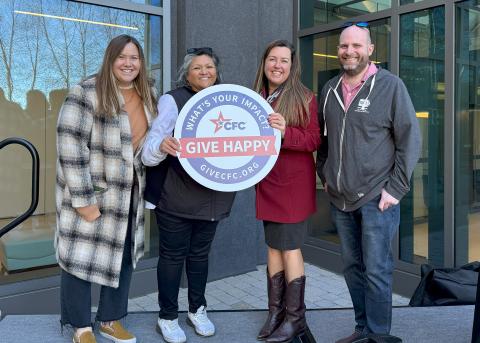
Group stands together holding Give Happy sign.
Scrimmage organizers, from l, Megan Moretz (NCATS), Patricia Voysest (NCI), Kelly Lawhead (NCI), and Chris Maurer (NCATS)

Photo:  Amy Trenkle

On Nov. 13, the National Cancer Institute (NCI) and the National Center for Advancing Translational Sciences (NCATS) held their first-ever joint Cornhole Scrimmage at NCI’s Shady Grove campus to engage staff in the Combined Federal Campaign (CFC) efforts. 

This event offered the opportunity for these two institutes to come together for the CFC and for their staff to connect, especially since approximately 100 NCATS staff moved into the Shady Grove building over the summer. Amber Lowery, NCI’s deputy director for management and executive officer, kicked off the event with welcome remarks, and two local charities shared how the CFC supports their impactful work for the community, particularly for furry and feathery friends.
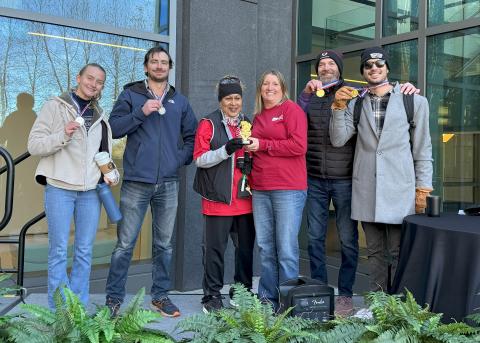
Colleagues stand together in winter coats, outside NCI-Shady Grove.
Scrimmage winners celebrate outside NCI-Shady Grove

Photo:  patricia voysest

Although this was the first event of its kind for NCI, NCATS hosted this annual cornhole event as a key part of their CFC efforts for several years pre-pandemic. With a competitive spirit in the air, NCATS showcased their well-honed skills, claiming both first and second place in the staff rounds. However, Lowery and cornhole partner Dr. Sanya Springfield, NCI acting deputy director for strategic engagement, clinched the coveted Cornhole Scrimmage trophy for NCI in the leadership round. They faced tough competition against Bekah Geiger, NCATS acting executive officer, and Andrew Kelly, NCATS acting deputy executive officer. 

This event prepared NCI and NCATS leaders to take on other institutes at the CFC Cornhole Throwdown on November 21. After the scrimmage, Bekah presented the trophy and medals to the winners, capping off a brisk but fantastic afternoon of friendly competition and community spirit. — Kelly Lawhead, Chris Maurer, Megan Moretz, Patricia Voysest
Image
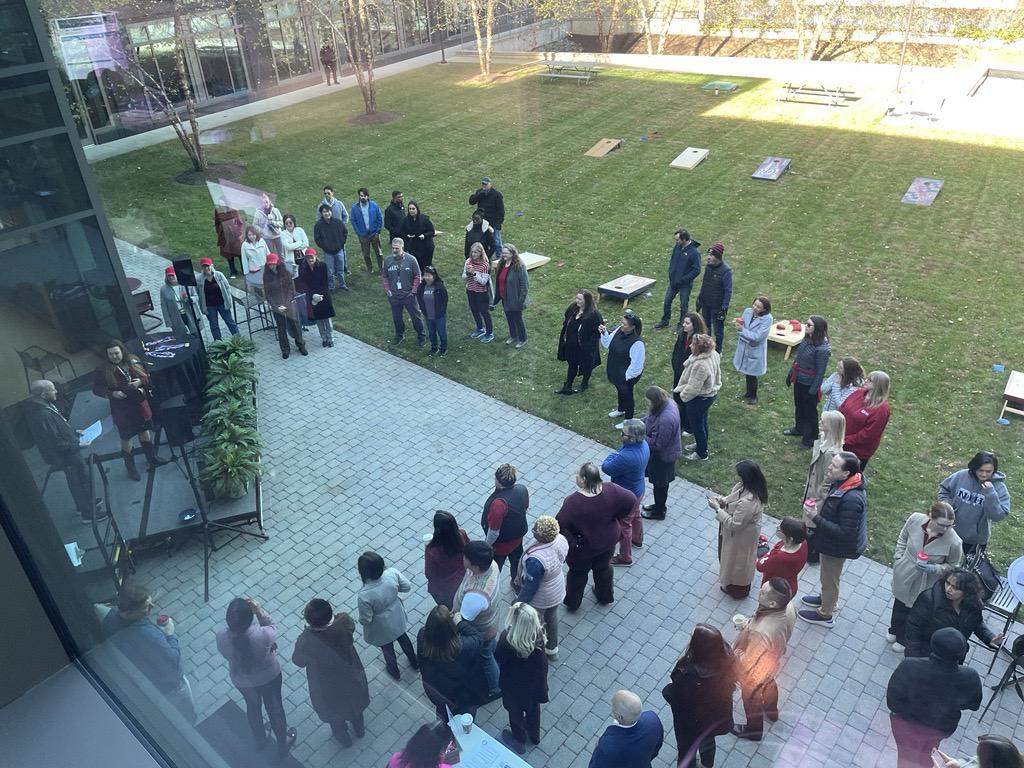
Overhead shot of people gathered outside NCI-Shady Grove with cornhole boards set up on the lawn
In this view from the second floor, colleagues gather for the scrimmage.

Photo:  Kenneth Voritskul

Relay Top 20 Finishers

Place Time # Team Name
1 12:43 109 Fellows Running Club
2 14:37 41 PEP in your stepTIDES
3 14:38 24 K-Space Invaders
4 15:01 108 Running into Debt
5 15:10 93 Calbindin Snap
6 15:18 21 qPAL: curing PD, AD and ALS
7 15:33 117 PCR: Postbac Chain Relay
8 16:04 84 CellCyclers
9 16:23 60 Smell you later
10 16:36 105 Host Busters
11 16:38 77 Wurtz Possible Runners
12 16:47 79 Hodgepodge
13 16:49 18 The Lymph Nodes
14 16:56 34 GMB Rocks
15 17:03 67 Ignorance is Blisters
16 17:04 56 CtU Later
17 17:06 39 READY, MarmoSET, GO!
18 17:31 25 Globetrotters
19 17:44 44 No Chasers
20 17:44 66 We’re just here for the ice cream

NCI Shady Grove Takes a Hike Too 

Image
Huge group gathers seated around NCI director.
NCI's Satellite Steppers

Photo:  Marleen Van Den Neste

More than 125 NIH staffers gathered June 6 at NCI Shady Grove for NIH’s annual Take-a-Hike Day. 

NCI Acting Executive Officer Amber Lowery welcomed staff and NCI Director Dr. Kimryn Rathmell kicked off the event with inspiring words and a reminder that “physical activity is good for your body but also good for our overall mission…good for our mental well-being and health… and for making connections. Everything that we do here is about the people, and how we work together as a team.” 
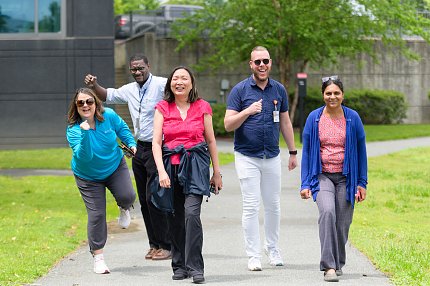
Group of smiling walkers in colorful clothes on the route
Staff at NCI Shady Grove get in on the hike.

Photo:  Marleen Van Den Neste

Historic Officer’s Quarters Undergo Renovations

Two buildings that are part of NIH’s historic core are undergoing renovations. Located on the north part of campus, Bldgs. 15H and 15I are part of a group of houses known as the “Officer’s Quarters.” These are the only small-scale residences on campus. Constructed around 1940, Bldgs. 15H and 15I and six nearby duplexes were originally reserved as living quarters for Public Health Service officers and HHS and NIH senior staff.

Social Factors Help Explain Worse Cardiovascular Health in Rural Areas

An NIH-funded research team uncovered higher rates of heart disease and worse heart health affecting adults living in rural communities compared to urban areas and factors that likely drive these differences. More than 60 million U.S. adults live in rural communities, and heart disease remains the nation’s leading cause of death.

The researchers found adults living in rural areas were more likely to have heart disease, high blood pressure, high cholesterol, obesity and diabetes. Across all age groups, the differences in high blood pressure, obesity and diabetes were largest among adults ages 20–39 living in rural areas.

Investigators reviewed data from more than 27,000 adults who participated in the 2022 National Health Interview Survey to understand geographical differences in rates of heart disease and risk factors for conditions that affect the heart and blood vessels, such as high blood pressure, diabetes and obesity.

They found that factors such as levels of income and education, having enough food to eat and owning a home helped explain the higher rates of people in rural areas who had high blood pressure, diabetes and heart disease. Prior research has also shown how difficult circumstances, such as living in poverty, can affect cardiovascular health, including increased inflammation in the body.

Identifying factors driving the higher burden of heart disease and risk factors in rural regions remains a critical research priority.

Insights from this study could inform public health efforts and policies to support and improve the cardiovascular health of people — especially younger adults — living in rural areas.


Meet the 2024–2025 Cohort of Climate and Health Scholars

Dr. Sue Anne Bell
Associate Professor of Nursing, University of Michigan School of Nursing
Host: National Institute on Aging

Dr. Daniel Carrión
Assistant Professor of Epidemiology and Director of Education for Climate Change and Health, Yale School of Public Health
Host: National Institute on Minority Health and Health Disparities

Dr. José Guillermo Cedeño Laurent
Assistant Professor of Environmental and Occupational Health and Justice, Rutgers School of Public Health
Host: National Institute of Arthritis and Musculoskeletal and Skin Diseases

Dr. Jaime Madrigano
Associate Professor of American Health, Johns Hopkins Bloomberg School of Public Health 
Host: NIH Office of Disease Prevention

Dr. Kimberley Miner
Climate Scientist and Program Manager,
NASA Jet Propulsion Labs at the California Institute of Technology
Host: National Institute of Environmental Health Sciences

Dr. Eugene Richardson
Assistant Professor of Global Health and Social Medicine, Harvard Medical School
Host: NIH Office of Behavioral and Social Sciences Research

Dr. Jason Rohr
Professor of Biological Sciences and Chair of the Department of Biological Sciences, University of Notre Dame
Host: Fogarty International Center

Dr. Patrick Ryan
Professor of Pediatrics and Environmental and Public Health Sciences, University of Cincinnati
Host: National Institute of Allergy and Infectious Diseases 

Dr. Soko Setoguchi
Professor of Medicine and Epidemiology, Rutgers University
Host: National Cancer Institute

Dr. Christopher Uejio
Professor of Geography and Public Health, Florida State University
Host: National Institute of Neurological Disorders and Stroke

Dr. Leyao Wang
Assistant Professor of Epidemiology, University of Massachusetts Amherst
Host: National Heart, Lung, and Blood Institute

Dr. Joshua Wortzel
Child and Adolescent Psychiatrist and Clinical Scientist, Institute of Living - Hartford HealthCare; Adjunct Assistant Professor of Psychiatry, Yale School of Medicine
Host: National Institute of Mental Health

Dr. Jun Wu
Professor of Environmental and Occupational Health, University of California, Irvine
Host: NIH Office of Dietary Supplements

More information about each individual scholar and their research interests can be found by visiting go.nih.gov/4vxNO4w.

NCI, NCATS Scrimmage to Support CFC

Group stands together holding Give Happy sign.
Scrimmage organizers, from l, Megan Moretz (NCATS), Patricia Voysest (NCI), Kelly Lawhead (NCI), and Chris Maurer (NCATS)

Photo:  Amy Trenkle

On Nov. 13, the National Cancer Institute (NCI) and the National Center for Advancing Translational Sciences (NCATS) held their first-ever joint Cornhole Scrimmage at NCI’s Shady Grove campus to engage staff in the Combined Federal Campaign (CFC) efforts. 

This event offered the opportunity for these two institutes to come together for the CFC and for their staff to connect, especially since approximately 100 NCATS staff moved into the Shady Grove building over the summer. Amber Lowery, NCI’s deputy director for management and executive officer, kicked off the event with welcome remarks, and two local charities shared how the CFC supports their impactful work for the community, particularly for furry and feathery friends.

Colleagues stand together in winter coats, outside NCI-Shady Grove.
Scrimmage winners celebrate outside NCI-Shady Grove

Photo:  patricia voysest

Although this was the first event of its kind for NCI, NCATS hosted this annual cornhole event as a key part of their CFC efforts for several years pre-pandemic. With a competitive spirit in the air, NCATS showcased their well-honed skills, claiming both first and second place in the staff rounds. However, Lowery and cornhole partner Dr. Sanya Springfield, NCI acting deputy director for strategic engagement, clinched the coveted Cornhole Scrimmage trophy for NCI in the leadership round. They faced tough competition against Bekah Geiger, NCATS acting executive officer, and Andrew Kelly, NCATS acting deputy executive officer. 

This event prepared NCI and NCATS leaders to take on other institutes at the CFC Cornhole Throwdown on November 21. After the scrimmage, Bekah presented the trophy and medals to the winners, capping off a brisk but fantastic afternoon of friendly competition and community spirit. — Kelly Lawhead, Chris Maurer, Megan Moretz, Patricia Voysest

Image
Overhead shot of people gathered outside NCI-Shady Grove with cornhole boards set up on the lawn
In this view from the second floor, colleagues gather for the scrimmage.

Photo:  Kenneth Voritskul

Relay Top 20 Finishers

Place Time # Team Name
1 12:43 109 Fellows Running Club
2 14:37 41 PEP in your stepTIDES
3 14:38 24 K-Space Invaders
4 15:01 108 Running into Debt
5 15:10 93 Calbindin Snap
6 15:18 21 qPAL: curing PD, AD and ALS
7 15:33 117 PCR: Postbac Chain Relay
8 16:04 84 CellCyclers
9 16:23 60 Smell you later
10 16:36 105 Host Busters
11 16:38 77 Wurtz Possible Runners
12 16:47 79 Hodgepodge
13 16:49 18 The Lymph Nodes
14 16:56 34 GMB Rocks
15 17:03 67 Ignorance is Blisters
16 17:04 56 CtU Later
17 17:06 39 READY, MarmoSET, GO!
18 17:31 25 Globetrotters
19 17:44 44 No Chasers
20 17:44 66 We’re just here for the ice cream

NCI Shady Grove Takes a Hike Too 

Image
Huge group gathers seated around NCI director.
NCI's Satellite Steppers

Photo:  Marleen Van Den Neste

More than 125 NIH staffers gathered June 6 at NCI Shady Grove for NIH’s annual Take-a-Hike Day. 

NCI Acting Executive Officer Amber Lowery welcomed staff and NCI Director Dr. Kimryn Rathmell kicked off the event with inspiring words and a reminder that “physical activity is good for your body but also good for our overall mission…good for our mental well-being and health… and for making connections. Everything that we do here is about the people, and how we work together as a team.” 

Group of smiling walkers in colorful clothes on the route
Staff at NCI Shady Grove get in on the hike.

Photo:  Marleen Van Den Neste

UNITE Shares Insights from First Progress Report

Diversity is more than a buzzword—it’s critical to NIH being able to achieve its mission, said Dr. Kenneth Gibbs during “Conversations on Racial and Ethnic Equity,” a virtual event about UNITE’s first progress report. A workforce that includes people from a range of backgrounds and experiences is better positioned to address the health challenges of our increasingly diverse society, he said.

Social Factors Help Explain Worse Cardiovascular Health in Rural Areas

An NIH-funded research team uncovered higher rates of heart disease and worse heart health affecting adults living in rural communities compared to urban areas and factors that likely drive these differences. More than 60 million U.S. adults live in rural communities, and heart disease remains the nation’s leading cause of death.

The researchers found adults living in rural areas were more likely to have heart disease, high blood pressure, high cholesterol, obesity and diabetes. Across all age groups, the differences in high blood pressure, obesity and diabetes were largest among adults ages 20–39 living in rural areas.

Investigators reviewed data from more than 27,000 adults who participated in the 2022 National Health Interview Survey to understand geographical differences in rates of heart disease and risk factors for conditions that affect the heart and blood vessels, such as high blood pressure, diabetes and obesity.

They found that factors such as levels of income and education, having enough food to eat and owning a home helped explain the higher rates of people in rural areas who had high blood pressure, diabetes and heart disease. Prior research has also shown how difficult circumstances, such as living in poverty, can affect cardiovascular health, including increased inflammation in the body.

Identifying factors driving the higher burden of heart disease and risk factors in rural regions remains a critical research priority.

Insights from this study could inform public health efforts and policies to support and improve the cardiovascular health of people — especially younger adults — living in rural areas.


Meet the 2024–2025 Cohort of Climate and Health Scholars

Dr. Sue Anne Bell
Associate Professor of Nursing, University of Michigan School of Nursing
Host: National Institute on Aging

Dr. Daniel Carrión
Assistant Professor of Epidemiology and Director of Education for Climate Change and Health, Yale School of Public Health
Host: National Institute on Minority Health and Health Disparities

Dr. José Guillermo Cedeño Laurent
Assistant Professor of Environmental and Occupational Health and Justice, Rutgers School of Public Health
Host: National Institute of Arthritis and Musculoskeletal and Skin Diseases

Dr. Jaime Madrigano
Associate Professor of American Health, Johns Hopkins Bloomberg School of Public Health 
Host: NIH Office of Disease Prevention

Dr. Kimberley Miner
Climate Scientist and Program Manager,
NASA Jet Propulsion Labs at the California Institute of Technology
Host: National Institute of Environmental Health Sciences

Dr. Eugene Richardson
Assistant Professor of Global Health and Social Medicine, Harvard Medical School
Host: NIH Office of Behavioral and Social Sciences Research

Dr. Jason Rohr
Professor of Biological Sciences and Chair of the Department of Biological Sciences, University of Notre Dame
Host: Fogarty International Center

Dr. Patrick Ryan
Professor of Pediatrics and Environmental and Public Health Sciences, University of Cincinnati
Host: National Institute of Allergy and Infectious Diseases 

Dr. Soko Setoguchi
Professor of Medicine and Epidemiology, Rutgers University
Host: National Cancer Institute

Dr. Christopher Uejio
Professor of Geography and Public Health, Florida State University
Host: National Institute of Neurological Disorders and Stroke

Dr. Leyao Wang
Assistant Professor of Epidemiology, University of Massachusetts Amherst
Host: National Heart, Lung, and Blood Institute

Dr. Joshua Wortzel
Child and Adolescent Psychiatrist and Clinical Scientist, Institute of Living - Hartford HealthCare; Adjunct Assistant Professor of Psychiatry, Yale School of Medicine
Host: National Institute of Mental Health

Dr. Jun Wu
Professor of Environmental and Occupational Health, University of California, Irvine
Host: NIH Office of Dietary Supplements

More information about each individual scholar and their research interests can be found by visiting go.nih.gov/4vxNO4w.

NCI, NCATS Scrimmage to Support CFC

Group stands together holding Give Happy sign.
Scrimmage organizers, from l, Megan Moretz (NCATS), Patricia Voysest (NCI), Kelly Lawhead (NCI), and Chris Maurer (NCATS)

Photo:  Amy Trenkle

On Nov. 13, the National Cancer Institute (NCI) and the National Center for Advancing Translational Sciences (NCATS) held their first-ever joint Cornhole Scrimmage at NCI’s Shady Grove campus to engage staff in the Combined Federal Campaign (CFC) efforts. 

This event offered the opportunity for these two institutes to come together for the CFC and for their staff to connect, especially since approximately 100 NCATS staff moved into the Shady Grove building over the summer. Amber Lowery, NCI’s deputy director for management and executive officer, kicked off the event with welcome remarks, and two local charities shared how the CFC supports their impactful work for the community, particularly for furry and feathery friends.

Colleagues stand together in winter coats, outside NCI-Shady Grove.
Scrimmage winners celebrate outside NCI-Shady Grove

Photo:  patricia voysest

Although this was the first event of its kind for NCI, NCATS hosted this annual cornhole event as a key part of their CFC efforts for several years pre-pandemic. With a competitive spirit in the air, NCATS showcased their well-honed skills, claiming both first and second place in the staff rounds. However, Lowery and cornhole partner Dr. Sanya Springfield, NCI acting deputy director for strategic engagement, clinched the coveted Cornhole Scrimmage trophy for NCI in the leadership round. They faced tough competition against Bekah Geiger, NCATS acting executive officer, and Andrew Kelly, NCATS acting deputy executive officer. 

This event prepared NCI and NCATS leaders to take on other institutes at the CFC Cornhole Throwdown on November 21. After the scrimmage, Bekah presented the trophy and medals to the winners, capping off a brisk but fantastic afternoon of friendly competition and community spirit. — Kelly Lawhead, Chris Maurer, Megan Moretz, Patricia Voysest

Image
Overhead shot of people gathered outside NCI-Shady Grove with cornhole boards set up on the lawn
In this view from the second floor, colleagues gather for the scrimmage.

Photo:  Kenneth Voritskul

Relay Top 20 Finishers

Place Time # Team Name
1 12:43 109 Fellows Running Club
2 14:37 41 PEP in your stepTIDES
3 14:38 24 K-Space Invaders
4 15:01 108 Running into Debt
5 15:10 93 Calbindin Snap
6 15:18 21 qPAL: curing PD, AD and ALS
7 15:33 117 PCR: Postbac Chain Relay
8 16:04 84 CellCyclers
9 16:23 60 Smell you later
10 16:36 105 Host Busters
11 16:38 77 Wurtz Possible Runners
12 16:47 79 Hodgepodge
13 16:49 18 The Lymph Nodes
14 16:56 34 GMB Rocks
15 17:03 67 Ignorance is Blisters
16 17:04 56 CtU Later
17 17:06 39 READY, MarmoSET, GO!
18 17:31 25 Globetrotters
19 17:44 44 No Chasers
20 17:44 66 We’re just here for the ice cream

NCI Shady Grove Takes a Hike Too 

Image
Huge group gathers seated around NCI director.
NCI's Satellite Steppers

Photo:  Marleen Van Den Neste

More than 125 NIH staffers gathered June 6 at NCI Shady Grove for NIH’s annual Take-a-Hike Day. 

NCI Acting Executive Officer Amber Lowery welcomed staff and NCI Director Dr. Kimryn Rathmell kicked off the event with inspiring words and a reminder that “physical activity is good for your body but also good for our overall mission…good for our mental well-being and health… and for making connections. Everything that we do here is about the people, and how we work together as a team.” 

Group of smiling walkers in colorful clothes on the route
Staff at NCI Shady Grove get in on the hike.

Photo:  Marleen Van Den Neste

Stress, Adversity in Early Life Have Impact Across Lifespan

Our environment and experiences over the first 1,000 days of life have an enormous influence on our growing brain and long-term wellbeing, said Dr. Laura Stroud at the annual Stephen E. Straus Distinguished Lecture in the Science of Complementary Therapies. “Things that happen to us when we’re very young have a much larger impact. This is a sensitive period of brain development and lifelong health,” she said.

Social Factors Help Explain Worse Cardiovascular Health in Rural Areas

An NIH-funded research team uncovered higher rates of heart disease and worse heart health affecting adults living in rural communities compared to urban areas and factors that likely drive these differences. More than 60 million U.S. adults live in rural communities, and heart disease remains the nation’s leading cause of death.

The researchers found adults living in rural areas were more likely to have heart disease, high blood pressure, high cholesterol, obesity and diabetes. Across all age groups, the differences in high blood pressure, obesity and diabetes were largest among adults ages 20–39 living in rural areas.

Investigators reviewed data from more than 27,000 adults who participated in the 2022 National Health Interview Survey to understand geographical differences in rates of heart disease and risk factors for conditions that affect the heart and blood vessels, such as high blood pressure, diabetes and obesity.

They found that factors such as levels of income and education, having enough food to eat and owning a home helped explain the higher rates of people in rural areas who had high blood pressure, diabetes and heart disease. Prior research has also shown how difficult circumstances, such as living in poverty, can affect cardiovascular health, including increased inflammation in the body.

Identifying factors driving the higher burden of heart disease and risk factors in rural regions remains a critical research priority.

Insights from this study could inform public health efforts and policies to support and improve the cardiovascular health of people — especially younger adults — living in rural areas.


Meet the 2024–2025 Cohort of Climate and Health Scholars

Dr. Sue Anne Bell
Associate Professor of Nursing, University of Michigan School of Nursing
Host: National Institute on Aging

Dr. Daniel Carrión
Assistant Professor of Epidemiology and Director of Education for Climate Change and Health, Yale School of Public Health
Host: National Institute on Minority Health and Health Disparities

Dr. José Guillermo Cedeño Laurent
Assistant Professor of Environmental and Occupational Health and Justice, Rutgers School of Public Health
Host: National Institute of Arthritis and Musculoskeletal and Skin Diseases

Dr. Jaime Madrigano
Associate Professor of American Health, Johns Hopkins Bloomberg School of Public Health 
Host: NIH Office of Disease Prevention

Dr. Kimberley Miner
Climate Scientist and Program Manager,
NASA Jet Propulsion Labs at the California Institute of Technology
Host: National Institute of Environmental Health Sciences

Dr. Eugene Richardson
Assistant Professor of Global Health and Social Medicine, Harvard Medical School
Host: NIH Office of Behavioral and Social Sciences Research

Dr. Jason Rohr
Professor of Biological Sciences and Chair of the Department of Biological Sciences, University of Notre Dame
Host: Fogarty International Center

Dr. Patrick Ryan
Professor of Pediatrics and Environmental and Public Health Sciences, University of Cincinnati
Host: National Institute of Allergy and Infectious Diseases 

Dr. Soko Setoguchi
Professor of Medicine and Epidemiology, Rutgers University
Host: National Cancer Institute

Dr. Christopher Uejio
Professor of Geography and Public Health, Florida State University
Host: National Institute of Neurological Disorders and Stroke

Dr. Leyao Wang
Assistant Professor of Epidemiology, University of Massachusetts Amherst
Host: National Heart, Lung, and Blood Institute

Dr. Joshua Wortzel
Child and Adolescent Psychiatrist and Clinical Scientist, Institute of Living - Hartford HealthCare; Adjunct Assistant Professor of Psychiatry, Yale School of Medicine
Host: National Institute of Mental Health

Dr. Jun Wu
Professor of Environmental and Occupational Health, University of California, Irvine
Host: NIH Office of Dietary Supplements

More information about each individual scholar and their research interests can be found by visiting go.nih.gov/4vxNO4w.

NCI, NCATS Scrimmage to Support CFC

Group stands together holding Give Happy sign.
Scrimmage organizers, from l, Megan Moretz (NCATS), Patricia Voysest (NCI), Kelly Lawhead (NCI), and Chris Maurer (NCATS)

Photo:  Amy Trenkle

On Nov. 13, the National Cancer Institute (NCI) and the National Center for Advancing Translational Sciences (NCATS) held their first-ever joint Cornhole Scrimmage at NCI’s Shady Grove campus to engage staff in the Combined Federal Campaign (CFC) efforts. 

This event offered the opportunity for these two institutes to come together for the CFC and for their staff to connect, especially since approximately 100 NCATS staff moved into the Shady Grove building over the summer. Amber Lowery, NCI’s deputy director for management and executive officer, kicked off the event with welcome remarks, and two local charities shared how the CFC supports their impactful work for the community, particularly for furry and feathery friends.

Colleagues stand together in winter coats, outside NCI-Shady Grove.
Scrimmage winners celebrate outside NCI-Shady Grove

Photo:  patricia voysest

Although this was the first event of its kind for NCI, NCATS hosted this annual cornhole event as a key part of their CFC efforts for several years pre-pandemic. With a competitive spirit in the air, NCATS showcased their well-honed skills, claiming both first and second place in the staff rounds. However, Lowery and cornhole partner Dr. Sanya Springfield, NCI acting deputy director for strategic engagement, clinched the coveted Cornhole Scrimmage trophy for NCI in the leadership round. They faced tough competition against Bekah Geiger, NCATS acting executive officer, and Andrew Kelly, NCATS acting deputy executive officer. 

This event prepared NCI and NCATS leaders to take on other institutes at the CFC Cornhole Throwdown on November 21. After the scrimmage, Bekah presented the trophy and medals to the winners, capping off a brisk but fantastic afternoon of friendly competition and community spirit. — Kelly Lawhead, Chris Maurer, Megan Moretz, Patricia Voysest

Image
Overhead shot of people gathered outside NCI-Shady Grove with cornhole boards set up on the lawn
In this view from the second floor, colleagues gather for the scrimmage.

Photo:  Kenneth Voritskul

Relay Top 20 Finishers

Place Time # Team Name
1 12:43 109 Fellows Running Club
2 14:37 41 PEP in your stepTIDES
3 14:38 24 K-Space Invaders
4 15:01 108 Running into Debt
5 15:10 93 Calbindin Snap
6 15:18 21 qPAL: curing PD, AD and ALS
7 15:33 117 PCR: Postbac Chain Relay
8 16:04 84 CellCyclers
9 16:23 60 Smell you later
10 16:36 105 Host Busters
11 16:38 77 Wurtz Possible Runners
12 16:47 79 Hodgepodge
13 16:49 18 The Lymph Nodes
14 16:56 34 GMB Rocks
15 17:03 67 Ignorance is Blisters
16 17:04 56 CtU Later
17 17:06 39 READY, MarmoSET, GO!
18 17:31 25 Globetrotters
19 17:44 44 No Chasers
20 17:44 66 We’re just here for the ice cream

NCI Shady Grove Takes a Hike Too 

Image
Huge group gathers seated around NCI director.
NCI's Satellite Steppers

Photo:  Marleen Van Den Neste

More than 125 NIH staffers gathered June 6 at NCI Shady Grove for NIH’s annual Take-a-Hike Day. 

NCI Acting Executive Officer Amber Lowery welcomed staff and NCI Director Dr. Kimryn Rathmell kicked off the event with inspiring words and a reminder that “physical activity is good for your body but also good for our overall mission…good for our mental well-being and health… and for making connections. Everything that we do here is about the people, and how we work together as a team.” 

Group of smiling walkers in colorful clothes on the route
Staff at NCI Shady Grove get in on the hike.

Photo:  Marleen Van Den Neste

New Treatments for OCD Show Promise

Dr. Carolyn Rodriguez spoke about novel treatments for obsessive compulsive disorder (OCD) that are in development, during a recent CC Grand Rounds lecture. “I’m really excited for what’s on the horizon and have hope for the field,” said Rodriguez, associate dean at Stanford University and professor of psychiatry and behavioral sciences.

Social Factors Help Explain Worse Cardiovascular Health in Rural Areas

An NIH-funded research team uncovered higher rates of heart disease and worse heart health affecting adults living in rural communities compared to urban areas and factors that likely drive these differences. More than 60 million U.S. adults live in rural communities, and heart disease remains the nation’s leading cause of death.

The researchers found adults living in rural areas were more likely to have heart disease, high blood pressure, high cholesterol, obesity and diabetes. Across all age groups, the differences in high blood pressure, obesity and diabetes were largest among adults ages 20–39 living in rural areas.

Investigators reviewed data from more than 27,000 adults who participated in the 2022 National Health Interview Survey to understand geographical differences in rates of heart disease and risk factors for conditions that affect the heart and blood vessels, such as high blood pressure, diabetes and obesity.

They found that factors such as levels of income and education, having enough food to eat and owning a home helped explain the higher rates of people in rural areas who had high blood pressure, diabetes and heart disease. Prior research has also shown how difficult circumstances, such as living in poverty, can affect cardiovascular health, including increased inflammation in the body.

Identifying factors driving the higher burden of heart disease and risk factors in rural regions remains a critical research priority.

Insights from this study could inform public health efforts and policies to support and improve the cardiovascular health of people — especially younger adults — living in rural areas.


Meet the 2024–2025 Cohort of Climate and Health Scholars

Dr. Sue Anne Bell
Associate Professor of Nursing, University of Michigan School of Nursing
Host: National Institute on Aging

Dr. Daniel Carrión
Assistant Professor of Epidemiology and Director of Education for Climate Change and Health, Yale School of Public Health
Host: National Institute on Minority Health and Health Disparities

Dr. José Guillermo Cedeño Laurent
Assistant Professor of Environmental and Occupational Health and Justice, Rutgers School of Public Health
Host: National Institute of Arthritis and Musculoskeletal and Skin Diseases

Dr. Jaime Madrigano
Associate Professor of American Health, Johns Hopkins Bloomberg School of Public Health 
Host: NIH Office of Disease Prevention

Dr. Kimberley Miner
Climate Scientist and Program Manager,
NASA Jet Propulsion Labs at the California Institute of Technology
Host: National Institute of Environmental Health Sciences

Dr. Eugene Richardson
Assistant Professor of Global Health and Social Medicine, Harvard Medical School
Host: NIH Office of Behavioral and Social Sciences Research

Dr. Jason Rohr
Professor of Biological Sciences and Chair of the Department of Biological Sciences, University of Notre Dame
Host: Fogarty International Center

Dr. Patrick Ryan
Professor of Pediatrics and Environmental and Public Health Sciences, University of Cincinnati
Host: National Institute of Allergy and Infectious Diseases 

Dr. Soko Setoguchi
Professor of Medicine and Epidemiology, Rutgers University
Host: National Cancer Institute

Dr. Christopher Uejio
Professor of Geography and Public Health, Florida State University
Host: National Institute of Neurological Disorders and Stroke

Dr. Leyao Wang
Assistant Professor of Epidemiology, University of Massachusetts Amherst
Host: National Heart, Lung, and Blood Institute

Dr. Joshua Wortzel
Child and Adolescent Psychiatrist and Clinical Scientist, Institute of Living - Hartford HealthCare; Adjunct Assistant Professor of Psychiatry, Yale School of Medicine
Host: National Institute of Mental Health

Dr. Jun Wu
Professor of Environmental and Occupational Health, University of California, Irvine
Host: NIH Office of Dietary Supplements

More information about each individual scholar and their research interests can be found by visiting go.nih.gov/4vxNO4w.

NCI, NCATS Scrimmage to Support CFC

Group stands together holding Give Happy sign.
Scrimmage organizers, from l, Megan Moretz (NCATS), Patricia Voysest (NCI), Kelly Lawhead (NCI), and Chris Maurer (NCATS)

Photo:  Amy Trenkle

On Nov. 13, the National Cancer Institute (NCI) and the National Center for Advancing Translational Sciences (NCATS) held their first-ever joint Cornhole Scrimmage at NCI’s Shady Grove campus to engage staff in the Combined Federal Campaign (CFC) efforts. 

This event offered the opportunity for these two institutes to come together for the CFC and for their staff to connect, especially since approximately 100 NCATS staff moved into the Shady Grove building over the summer. Amber Lowery, NCI’s deputy director for management and executive officer, kicked off the event with welcome remarks, and two local charities shared how the CFC supports their impactful work for the community, particularly for furry and feathery friends.

Colleagues stand together in winter coats, outside NCI-Shady Grove.
Scrimmage winners celebrate outside NCI-Shady Grove

Photo:  patricia voysest

Although this was the first event of its kind for NCI, NCATS hosted this annual cornhole event as a key part of their CFC efforts for several years pre-pandemic. With a competitive spirit in the air, NCATS showcased their well-honed skills, claiming both first and second place in the staff rounds. However, Lowery and cornhole partner Dr. Sanya Springfield, NCI acting deputy director for strategic engagement, clinched the coveted Cornhole Scrimmage trophy for NCI in the leadership round. They faced tough competition against Bekah Geiger, NCATS acting executive officer, and Andrew Kelly, NCATS acting deputy executive officer. 

This event prepared NCI and NCATS leaders to take on other institutes at the CFC Cornhole Throwdown on November 21. After the scrimmage, Bekah presented the trophy and medals to the winners, capping off a brisk but fantastic afternoon of friendly competition and community spirit. — Kelly Lawhead, Chris Maurer, Megan Moretz, Patricia Voysest

Image
Overhead shot of people gathered outside NCI-Shady Grove with cornhole boards set up on the lawn
In this view from the second floor, colleagues gather for the scrimmage.

Photo:  Kenneth Voritskul

Relay Top 20 Finishers

Place Time # Team Name
1 12:43 109 Fellows Running Club
2 14:37 41 PEP in your stepTIDES
3 14:38 24 K-Space Invaders
4 15:01 108 Running into Debt
5 15:10 93 Calbindin Snap
6 15:18 21 qPAL: curing PD, AD and ALS
7 15:33 117 PCR: Postbac Chain Relay
8 16:04 84 CellCyclers
9 16:23 60 Smell you later
10 16:36 105 Host Busters
11 16:38 77 Wurtz Possible Runners
12 16:47 79 Hodgepodge
13 16:49 18 The Lymph Nodes
14 16:56 34 GMB Rocks
15 17:03 67 Ignorance is Blisters
16 17:04 56 CtU Later
17 17:06 39 READY, MarmoSET, GO!
18 17:31 25 Globetrotters
19 17:44 44 No Chasers
20 17:44 66 We’re just here for the ice cream

NCI Shady Grove Takes a Hike Too 

Image
Huge group gathers seated around NCI director.
NCI's Satellite Steppers

Photo:  Marleen Van Den Neste

More than 125 NIH staffers gathered June 6 at NCI Shady Grove for NIH’s annual Take-a-Hike Day. 

NCI Acting Executive Officer Amber Lowery welcomed staff and NCI Director Dr. Kimryn Rathmell kicked off the event with inspiring words and a reminder that “physical activity is good for your body but also good for our overall mission…good for our mental well-being and health… and for making connections. Everything that we do here is about the people, and how we work together as a team.” 

Group of smiling walkers in colorful clothes on the route
Staff at NCI Shady Grove get in on the hike.

Photo:  Marleen Van Den Neste

Vosshall’s Research Reveals Some People Really Are Mosquito Magnets

​No, you’re not imagining it. You might really be a “mosquito magnet.” And the smell of your skin is the reason, said Dr. Leslie Vosshall during a recent NIH Director’s Lecture in Lipsett Amphitheater. “There’s nothing that we can do about any of this.”

Social Factors Help Explain Worse Cardiovascular Health in Rural Areas

An NIH-funded research team uncovered higher rates of heart disease and worse heart health affecting adults living in rural communities compared to urban areas and factors that likely drive these differences. More than 60 million U.S. adults live in rural communities, and heart disease remains the nation’s leading cause of death.

The researchers found adults living in rural areas were more likely to have heart disease, high blood pressure, high cholesterol, obesity and diabetes. Across all age groups, the differences in high blood pressure, obesity and diabetes were largest among adults ages 20–39 living in rural areas.

Investigators reviewed data from more than 27,000 adults who participated in the 2022 National Health Interview Survey to understand geographical differences in rates of heart disease and risk factors for conditions that affect the heart and blood vessels, such as high blood pressure, diabetes and obesity.

They found that factors such as levels of income and education, having enough food to eat and owning a home helped explain the higher rates of people in rural areas who had high blood pressure, diabetes and heart disease. Prior research has also shown how difficult circumstances, such as living in poverty, can affect cardiovascular health, including increased inflammation in the body.

Identifying factors driving the higher burden of heart disease and risk factors in rural regions remains a critical research priority.

Insights from this study could inform public health efforts and policies to support and improve the cardiovascular health of people — especially younger adults — living in rural areas.


Meet the 2024–2025 Cohort of Climate and Health Scholars

Dr. Sue Anne Bell
Associate Professor of Nursing, University of Michigan School of Nursing
Host: National Institute on Aging

Dr. Daniel Carrión
Assistant Professor of Epidemiology and Director of Education for Climate Change and Health, Yale School of Public Health
Host: National Institute on Minority Health and Health Disparities

Dr. José Guillermo Cedeño Laurent
Assistant Professor of Environmental and Occupational Health and Justice, Rutgers School of Public Health
Host: National Institute of Arthritis and Musculoskeletal and Skin Diseases

Dr. Jaime Madrigano
Associate Professor of American Health, Johns Hopkins Bloomberg School of Public Health 
Host: NIH Office of Disease Prevention

Dr. Kimberley Miner
Climate Scientist and Program Manager,
NASA Jet Propulsion Labs at the California Institute of Technology
Host: National Institute of Environmental Health Sciences

Dr. Eugene Richardson
Assistant Professor of Global Health and Social Medicine, Harvard Medical School
Host: NIH Office of Behavioral and Social Sciences Research

Dr. Jason Rohr
Professor of Biological Sciences and Chair of the Department of Biological Sciences, University of Notre Dame
Host: Fogarty International Center

Dr. Patrick Ryan
Professor of Pediatrics and Environmental and Public Health Sciences, University of Cincinnati
Host: National Institute of Allergy and Infectious Diseases 

Dr. Soko Setoguchi
Professor of Medicine and Epidemiology, Rutgers University
Host: National Cancer Institute

Dr. Christopher Uejio
Professor of Geography and Public Health, Florida State University
Host: National Institute of Neurological Disorders and Stroke

Dr. Leyao Wang
Assistant Professor of Epidemiology, University of Massachusetts Amherst
Host: National Heart, Lung, and Blood Institute

Dr. Joshua Wortzel
Child and Adolescent Psychiatrist and Clinical Scientist, Institute of Living - Hartford HealthCare; Adjunct Assistant Professor of Psychiatry, Yale School of Medicine
Host: National Institute of Mental Health

Dr. Jun Wu
Professor of Environmental and Occupational Health, University of California, Irvine
Host: NIH Office of Dietary Supplements

More information about each individual scholar and their research interests can be found by visiting go.nih.gov/4vxNO4w.

NCI, NCATS Scrimmage to Support CFC

Group stands together holding Give Happy sign.
Scrimmage organizers, from l, Megan Moretz (NCATS), Patricia Voysest (NCI), Kelly Lawhead (NCI), and Chris Maurer (NCATS)

Photo:  Amy Trenkle

On Nov. 13, the National Cancer Institute (NCI) and the National Center for Advancing Translational Sciences (NCATS) held their first-ever joint Cornhole Scrimmage at NCI’s Shady Grove campus to engage staff in the Combined Federal Campaign (CFC) efforts. 

This event offered the opportunity for these two institutes to come together for the CFC and for their staff to connect, especially since approximately 100 NCATS staff moved into the Shady Grove building over the summer. Amber Lowery, NCI’s deputy director for management and executive officer, kicked off the event with welcome remarks, and two local charities shared how the CFC supports their impactful work for the community, particularly for furry and feathery friends.

Colleagues stand together in winter coats, outside NCI-Shady Grove.
Scrimmage winners celebrate outside NCI-Shady Grove

Photo:  patricia voysest

Although this was the first event of its kind for NCI, NCATS hosted this annual cornhole event as a key part of their CFC efforts for several years pre-pandemic. With a competitive spirit in the air, NCATS showcased their well-honed skills, claiming both first and second place in the staff rounds. However, Lowery and cornhole partner Dr. Sanya Springfield, NCI acting deputy director for strategic engagement, clinched the coveted Cornhole Scrimmage trophy for NCI in the leadership round. They faced tough competition against Bekah Geiger, NCATS acting executive officer, and Andrew Kelly, NCATS acting deputy executive officer. 

This event prepared NCI and NCATS leaders to take on other institutes at the CFC Cornhole Throwdown on November 21. After the scrimmage, Bekah presented the trophy and medals to the winners, capping off a brisk but fantastic afternoon of friendly competition and community spirit. — Kelly Lawhead, Chris Maurer, Megan Moretz, Patricia Voysest

Image
Overhead shot of people gathered outside NCI-Shady Grove with cornhole boards set up on the lawn
In this view from the second floor, colleagues gather for the scrimmage.

Photo:  Kenneth Voritskul

Relay Top 20 Finishers

Place Time # Team Name
1 12:43 109 Fellows Running Club
2 14:37 41 PEP in your stepTIDES
3 14:38 24 K-Space Invaders
4 15:01 108 Running into Debt
5 15:10 93 Calbindin Snap
6 15:18 21 qPAL: curing PD, AD and ALS
7 15:33 117 PCR: Postbac Chain Relay
8 16:04 84 CellCyclers
9 16:23 60 Smell you later
10 16:36 105 Host Busters
11 16:38 77 Wurtz Possible Runners
12 16:47 79 Hodgepodge
13 16:49 18 The Lymph Nodes
14 16:56 34 GMB Rocks
15 17:03 67 Ignorance is Blisters
16 17:04 56 CtU Later
17 17:06 39 READY, MarmoSET, GO!
18 17:31 25 Globetrotters
19 17:44 44 No Chasers
20 17:44 66 We’re just here for the ice cream

NCI Shady Grove Takes a Hike Too 

Image
Huge group gathers seated around NCI director.
NCI's Satellite Steppers

Photo:  Marleen Van Den Neste

More than 125 NIH staffers gathered June 6 at NCI Shady Grove for NIH’s annual Take-a-Hike Day. 

NCI Acting Executive Officer Amber Lowery welcomed staff and NCI Director Dr. Kimryn Rathmell kicked off the event with inspiring words and a reminder that “physical activity is good for your body but also good for our overall mission…good for our mental well-being and health… and for making connections. Everything that we do here is about the people, and how we work together as a team.” 

Group of smiling walkers in colorful clothes on the route
Staff at NCI Shady Grove get in on the hike.

Photo:  Marleen Van Den Neste

NIH Begins Conversion to Zero-Emissions Fleet

​NIH has begun the transition to a zero-emissions vehicle fleet, as required by an executive order. The transition must be completed in the next 5 years. In December 2021, President Joe Biden signed Executive Order 14057, ​“Catalyzing Clean Energy Industries and Jobs Through Feder​al Sustainability.”

Social Factors Help Explain Worse Cardiovascular Health in Rural Areas

An NIH-funded research team uncovered higher rates of heart disease and worse heart health affecting adults living in rural communities compared to urban areas and factors that likely drive these differences. More than 60 million U.S. adults live in rural communities, and heart disease remains the nation’s leading cause of death.

The researchers found adults living in rural areas were more likely to have heart disease, high blood pressure, high cholesterol, obesity and diabetes. Across all age groups, the differences in high blood pressure, obesity and diabetes were largest among adults ages 20–39 living in rural areas.

Investigators reviewed data from more than 27,000 adults who participated in the 2022 National Health Interview Survey to understand geographical differences in rates of heart disease and risk factors for conditions that affect the heart and blood vessels, such as high blood pressure, diabetes and obesity.

They found that factors such as levels of income and education, having enough food to eat and owning a home helped explain the higher rates of people in rural areas who had high blood pressure, diabetes and heart disease. Prior research has also shown how difficult circumstances, such as living in poverty, can affect cardiovascular health, including increased inflammation in the body.

Identifying factors driving the higher burden of heart disease and risk factors in rural regions remains a critical research priority.

Insights from this study could inform public health efforts and policies to support and improve the cardiovascular health of people — especially younger adults — living in rural areas.


Meet the 2024–2025 Cohort of Climate and Health Scholars

Dr. Sue Anne Bell
Associate Professor of Nursing, University of Michigan School of Nursing
Host: National Institute on Aging

Dr. Daniel Carrión
Assistant Professor of Epidemiology and Director of Education for Climate Change and Health, Yale School of Public Health
Host: National Institute on Minority Health and Health Disparities

Dr. José Guillermo Cedeño Laurent
Assistant Professor of Environmental and Occupational Health and Justice, Rutgers School of Public Health
Host: National Institute of Arthritis and Musculoskeletal and Skin Diseases

Dr. Jaime Madrigano
Associate Professor of American Health, Johns Hopkins Bloomberg School of Public Health 
Host: NIH Office of Disease Prevention

Dr. Kimberley Miner
Climate Scientist and Program Manager,
NASA Jet Propulsion Labs at the California Institute of Technology
Host: National Institute of Environmental Health Sciences

Dr. Eugene Richardson
Assistant Professor of Global Health and Social Medicine, Harvard Medical School
Host: NIH Office of Behavioral and Social Sciences Research

Dr. Jason Rohr
Professor of Biological Sciences and Chair of the Department of Biological Sciences, University of Notre Dame
Host: Fogarty International Center

Dr. Patrick Ryan
Professor of Pediatrics and Environmental and Public Health Sciences, University of Cincinnati
Host: National Institute of Allergy and Infectious Diseases 

Dr. Soko Setoguchi
Professor of Medicine and Epidemiology, Rutgers University
Host: National Cancer Institute

Dr. Christopher Uejio
Professor of Geography and Public Health, Florida State University
Host: National Institute of Neurological Disorders and Stroke

Dr. Leyao Wang
Assistant Professor of Epidemiology, University of Massachusetts Amherst
Host: National Heart, Lung, and Blood Institute

Dr. Joshua Wortzel
Child and Adolescent Psychiatrist and Clinical Scientist, Institute of Living - Hartford HealthCare; Adjunct Assistant Professor of Psychiatry, Yale School of Medicine
Host: National Institute of Mental Health

Dr. Jun Wu
Professor of Environmental and Occupational Health, University of California, Irvine
Host: NIH Office of Dietary Supplements

More information about each individual scholar and their research interests can be found by visiting go.nih.gov/4vxNO4w.

NCI, NCATS Scrimmage to Support CFC

Group stands together holding Give Happy sign.
Scrimmage organizers, from l, Megan Moretz (NCATS), Patricia Voysest (NCI), Kelly Lawhead (NCI), and Chris Maurer (NCATS)

Photo:  Amy Trenkle

On Nov. 13, the National Cancer Institute (NCI) and the National Center for Advancing Translational Sciences (NCATS) held their first-ever joint Cornhole Scrimmage at NCI’s Shady Grove campus to engage staff in the Combined Federal Campaign (CFC) efforts. 

This event offered the opportunity for these two institutes to come together for the CFC and for their staff to connect, especially since approximately 100 NCATS staff moved into the Shady Grove building over the summer. Amber Lowery, NCI’s deputy director for management and executive officer, kicked off the event with welcome remarks, and two local charities shared how the CFC supports their impactful work for the community, particularly for furry and feathery friends.

Colleagues stand together in winter coats, outside NCI-Shady Grove.
Scrimmage winners celebrate outside NCI-Shady Grove

Photo:  patricia voysest

Although this was the first event of its kind for NCI, NCATS hosted this annual cornhole event as a key part of their CFC efforts for several years pre-pandemic. With a competitive spirit in the air, NCATS showcased their well-honed skills, claiming both first and second place in the staff rounds. However, Lowery and cornhole partner Dr. Sanya Springfield, NCI acting deputy director for strategic engagement, clinched the coveted Cornhole Scrimmage trophy for NCI in the leadership round. They faced tough competition against Bekah Geiger, NCATS acting executive officer, and Andrew Kelly, NCATS acting deputy executive officer. 

This event prepared NCI and NCATS leaders to take on other institutes at the CFC Cornhole Throwdown on November 21. After the scrimmage, Bekah presented the trophy and medals to the winners, capping off a brisk but fantastic afternoon of friendly competition and community spirit. — Kelly Lawhead, Chris Maurer, Megan Moretz, Patricia Voysest

Image
Overhead shot of people gathered outside NCI-Shady Grove with cornhole boards set up on the lawn
In this view from the second floor, colleagues gather for the scrimmage.

Photo:  Kenneth Voritskul

Relay Top 20 Finishers

Place Time # Team Name
1 12:43 109 Fellows Running Club
2 14:37 41 PEP in your stepTIDES
3 14:38 24 K-Space Invaders
4 15:01 108 Running into Debt
5 15:10 93 Calbindin Snap
6 15:18 21 qPAL: curing PD, AD and ALS
7 15:33 117 PCR: Postbac Chain Relay
8 16:04 84 CellCyclers
9 16:23 60 Smell you later
10 16:36 105 Host Busters
11 16:38 77 Wurtz Possible Runners
12 16:47 79 Hodgepodge
13 16:49 18 The Lymph Nodes
14 16:56 34 GMB Rocks
15 17:03 67 Ignorance is Blisters
16 17:04 56 CtU Later
17 17:06 39 READY, MarmoSET, GO!
18 17:31 25 Globetrotters
19 17:44 44 No Chasers
20 17:44 66 We’re just here for the ice cream

NCI Shady Grove Takes a Hike Too 

Image
Huge group gathers seated around NCI director.
NCI's Satellite Steppers

Photo:  Marleen Van Den Neste

More than 125 NIH staffers gathered June 6 at NCI Shady Grove for NIH’s annual Take-a-Hike Day. 

NCI Acting Executive Officer Amber Lowery welcomed staff and NCI Director Dr. Kimryn Rathmell kicked off the event with inspiring words and a reminder that “physical activity is good for your body but also good for our overall mission…good for our mental well-being and health… and for making connections. Everything that we do here is about the people, and how we work together as a team.” 

Group of smiling walkers in colorful clothes on the route
Staff at NCI Shady Grove get in on the hike.

Photo:  Marleen Van Den Neste

Tabak, NIMHD Launch Annual CFC Effort at NIH

The NIH community works hard every day to advance medical research, said Dr. Lawrence Tabak, who is performing the duties of NIH director, during the 2022 NIH Combined Federal Campaign (CFC) virtual kickoff event on Oct. 12. “Your generosity and support of the CFC is another way you can help make the world a better place,” he said.

Social Factors Help Explain Worse Cardiovascular Health in Rural Areas

An NIH-funded research team uncovered higher rates of heart disease and worse heart health affecting adults living in rural communities compared to urban areas and factors that likely drive these differences. More than 60 million U.S. adults live in rural communities, and heart disease remains the nation’s leading cause of death.

The researchers found adults living in rural areas were more likely to have heart disease, high blood pressure, high cholesterol, obesity and diabetes. Across all age groups, the differences in high blood pressure, obesity and diabetes were largest among adults ages 20–39 living in rural areas.

Investigators reviewed data from more than 27,000 adults who participated in the 2022 National Health Interview Survey to understand geographical differences in rates of heart disease and risk factors for conditions that affect the heart and blood vessels, such as high blood pressure, diabetes and obesity.

They found that factors such as levels of income and education, having enough food to eat and owning a home helped explain the higher rates of people in rural areas who had high blood pressure, diabetes and heart disease. Prior research has also shown how difficult circumstances, such as living in poverty, can affect cardiovascular health, including increased inflammation in the body.

Identifying factors driving the higher burden of heart disease and risk factors in rural regions remains a critical research priority.

Insights from this study could inform public health efforts and policies to support and improve the cardiovascular health of people — especially younger adults — living in rural areas.


Meet the 2024–2025 Cohort of Climate and Health Scholars

Dr. Sue Anne Bell
Associate Professor of Nursing, University of Michigan School of Nursing
Host: National Institute on Aging

Dr. Daniel Carrión
Assistant Professor of Epidemiology and Director of Education for Climate Change and Health, Yale School of Public Health
Host: National Institute on Minority Health and Health Disparities

Dr. José Guillermo Cedeño Laurent
Assistant Professor of Environmental and Occupational Health and Justice, Rutgers School of Public Health
Host: National Institute of Arthritis and Musculoskeletal and Skin Diseases

Dr. Jaime Madrigano
Associate Professor of American Health, Johns Hopkins Bloomberg School of Public Health 
Host: NIH Office of Disease Prevention

Dr. Kimberley Miner
Climate Scientist and Program Manager,
NASA Jet Propulsion Labs at the California Institute of Technology
Host: National Institute of Environmental Health Sciences

Dr. Eugene Richardson
Assistant Professor of Global Health and Social Medicine, Harvard Medical School
Host: NIH Office of Behavioral and Social Sciences Research

Dr. Jason Rohr
Professor of Biological Sciences and Chair of the Department of Biological Sciences, University of Notre Dame
Host: Fogarty International Center

Dr. Patrick Ryan
Professor of Pediatrics and Environmental and Public Health Sciences, University of Cincinnati
Host: National Institute of Allergy and Infectious Diseases 

Dr. Soko Setoguchi
Professor of Medicine and Epidemiology, Rutgers University
Host: National Cancer Institute

Dr. Christopher Uejio
Professor of Geography and Public Health, Florida State University
Host: National Institute of Neurological Disorders and Stroke

Dr. Leyao Wang
Assistant Professor of Epidemiology, University of Massachusetts Amherst
Host: National Heart, Lung, and Blood Institute

Dr. Joshua Wortzel
Child and Adolescent Psychiatrist and Clinical Scientist, Institute of Living - Hartford HealthCare; Adjunct Assistant Professor of Psychiatry, Yale School of Medicine
Host: National Institute of Mental Health

Dr. Jun Wu
Professor of Environmental and Occupational Health, University of California, Irvine
Host: NIH Office of Dietary Supplements

More information about each individual scholar and their research interests can be found by visiting go.nih.gov/4vxNO4w.

NCI, NCATS Scrimmage to Support CFC

Group stands together holding Give Happy sign.
Scrimmage organizers, from l, Megan Moretz (NCATS), Patricia Voysest (NCI), Kelly Lawhead (NCI), and Chris Maurer (NCATS)

Photo:  Amy Trenkle

On Nov. 13, the National Cancer Institute (NCI) and the National Center for Advancing Translational Sciences (NCATS) held their first-ever joint Cornhole Scrimmage at NCI’s Shady Grove campus to engage staff in the Combined Federal Campaign (CFC) efforts. 

This event offered the opportunity for these two institutes to come together for the CFC and for their staff to connect, especially since approximately 100 NCATS staff moved into the Shady Grove building over the summer. Amber Lowery, NCI’s deputy director for management and executive officer, kicked off the event with welcome remarks, and two local charities shared how the CFC supports their impactful work for the community, particularly for furry and feathery friends.

Colleagues stand together in winter coats, outside NCI-Shady Grove.
Scrimmage winners celebrate outside NCI-Shady Grove

Photo:  patricia voysest

Although this was the first event of its kind for NCI, NCATS hosted this annual cornhole event as a key part of their CFC efforts for several years pre-pandemic. With a competitive spirit in the air, NCATS showcased their well-honed skills, claiming both first and second place in the staff rounds. However, Lowery and cornhole partner Dr. Sanya Springfield, NCI acting deputy director for strategic engagement, clinched the coveted Cornhole Scrimmage trophy for NCI in the leadership round. They faced tough competition against Bekah Geiger, NCATS acting executive officer, and Andrew Kelly, NCATS acting deputy executive officer. 

This event prepared NCI and NCATS leaders to take on other institutes at the CFC Cornhole Throwdown on November 21. After the scrimmage, Bekah presented the trophy and medals to the winners, capping off a brisk but fantastic afternoon of friendly competition and community spirit. — Kelly Lawhead, Chris Maurer, Megan Moretz, Patricia Voysest

Image
Overhead shot of people gathered outside NCI-Shady Grove with cornhole boards set up on the lawn
In this view from the second floor, colleagues gather for the scrimmage.

Photo:  Kenneth Voritskul

Relay Top 20 Finishers

Place Time # Team Name
1 12:43 109 Fellows Running Club
2 14:37 41 PEP in your stepTIDES
3 14:38 24 K-Space Invaders
4 15:01 108 Running into Debt
5 15:10 93 Calbindin Snap
6 15:18 21 qPAL: curing PD, AD and ALS
7 15:33 117 PCR: Postbac Chain Relay
8 16:04 84 CellCyclers
9 16:23 60 Smell you later
10 16:36 105 Host Busters
11 16:38 77 Wurtz Possible Runners
12 16:47 79 Hodgepodge
13 16:49 18 The Lymph Nodes
14 16:56 34 GMB Rocks
15 17:03 67 Ignorance is Blisters
16 17:04 56 CtU Later
17 17:06 39 READY, MarmoSET, GO!
18 17:31 25 Globetrotters
19 17:44 44 No Chasers
20 17:44 66 We’re just here for the ice cream

NCI Shady Grove Takes a Hike Too 

Image
Huge group gathers seated around NCI director.
NCI's Satellite Steppers

Photo:  Marleen Van Den Neste

More than 125 NIH staffers gathered June 6 at NCI Shady Grove for NIH’s annual Take-a-Hike Day. 

NCI Acting Executive Officer Amber Lowery welcomed staff and NCI Director Dr. Kimryn Rathmell kicked off the event with inspiring words and a reminder that “physical activity is good for your body but also good for our overall mission…good for our mental well-being and health… and for making connections. Everything that we do here is about the people, and how we work together as a team.” 

Group of smiling walkers in colorful clothes on the route
Staff at NCI Shady Grove get in on the hike.

Photo:  Marleen Van Den Neste

NIH Dedicates Alzheimer’s Research Facility to Blunt

NIH recently dedicated its new intramural Center for Alzheimer’s and Related Dementias (CARD) research facility to Sen. Roy Blunt (R-MO), a longtime champion of public health research funding. “I’m so pleased to be associated with NIH,” he said. “I’m particularly pleased to be associated with this critically important building for the future of families and the future of aging and the future of people caring about other people.”

Social Factors Help Explain Worse Cardiovascular Health in Rural Areas

An NIH-funded research team uncovered higher rates of heart disease and worse heart health affecting adults living in rural communities compared to urban areas and factors that likely drive these differences. More than 60 million U.S. adults live in rural communities, and heart disease remains the nation’s leading cause of death.

The researchers found adults living in rural areas were more likely to have heart disease, high blood pressure, high cholesterol, obesity and diabetes. Across all age groups, the differences in high blood pressure, obesity and diabetes were largest among adults ages 20–39 living in rural areas.

Investigators reviewed data from more than 27,000 adults who participated in the 2022 National Health Interview Survey to understand geographical differences in rates of heart disease and risk factors for conditions that affect the heart and blood vessels, such as high blood pressure, diabetes and obesity.

They found that factors such as levels of income and education, having enough food to eat and owning a home helped explain the higher rates of people in rural areas who had high blood pressure, diabetes and heart disease. Prior research has also shown how difficult circumstances, such as living in poverty, can affect cardiovascular health, including increased inflammation in the body.

Identifying factors driving the higher burden of heart disease and risk factors in rural regions remains a critical research priority.

Insights from this study could inform public health efforts and policies to support and improve the cardiovascular health of people — especially younger adults — living in rural areas.


Meet the 2024–2025 Cohort of Climate and Health Scholars

Dr. Sue Anne Bell
Associate Professor of Nursing, University of Michigan School of Nursing
Host: National Institute on Aging

Dr. Daniel Carrión
Assistant Professor of Epidemiology and Director of Education for Climate Change and Health, Yale School of Public Health
Host: National Institute on Minority Health and Health Disparities

Dr. José Guillermo Cedeño Laurent
Assistant Professor of Environmental and Occupational Health and Justice, Rutgers School of Public Health
Host: National Institute of Arthritis and Musculoskeletal and Skin Diseases

Dr. Jaime Madrigano
Associate Professor of American Health, Johns Hopkins Bloomberg School of Public Health 
Host: NIH Office of Disease Prevention

Dr. Kimberley Miner
Climate Scientist and Program Manager,
NASA Jet Propulsion Labs at the California Institute of Technology
Host: National Institute of Environmental Health Sciences

Dr. Eugene Richardson
Assistant Professor of Global Health and Social Medicine, Harvard Medical School
Host: NIH Office of Behavioral and Social Sciences Research

Dr. Jason Rohr
Professor of Biological Sciences and Chair of the Department of Biological Sciences, University of Notre Dame
Host: Fogarty International Center

Dr. Patrick Ryan
Professor of Pediatrics and Environmental and Public Health Sciences, University of Cincinnati
Host: National Institute of Allergy and Infectious Diseases 

Dr. Soko Setoguchi
Professor of Medicine and Epidemiology, Rutgers University
Host: National Cancer Institute

Dr. Christopher Uejio
Professor of Geography and Public Health, Florida State University
Host: National Institute of Neurological Disorders and Stroke

Dr. Leyao Wang
Assistant Professor of Epidemiology, University of Massachusetts Amherst
Host: National Heart, Lung, and Blood Institute

Dr. Joshua Wortzel
Child and Adolescent Psychiatrist and Clinical Scientist, Institute of Living - Hartford HealthCare; Adjunct Assistant Professor of Psychiatry, Yale School of Medicine
Host: National Institute of Mental Health

Dr. Jun Wu
Professor of Environmental and Occupational Health, University of California, Irvine
Host: NIH Office of Dietary Supplements

More information about each individual scholar and their research interests can be found by visiting go.nih.gov/4vxNO4w.

NCI, NCATS Scrimmage to Support CFC

Group stands together holding Give Happy sign.
Scrimmage organizers, from l, Megan Moretz (NCATS), Patricia Voysest (NCI), Kelly Lawhead (NCI), and Chris Maurer (NCATS)

Photo:  Amy Trenkle

On Nov. 13, the National Cancer Institute (NCI) and the National Center for Advancing Translational Sciences (NCATS) held their first-ever joint Cornhole Scrimmage at NCI’s Shady Grove campus to engage staff in the Combined Federal Campaign (CFC) efforts. 

This event offered the opportunity for these two institutes to come together for the CFC and for their staff to connect, especially since approximately 100 NCATS staff moved into the Shady Grove building over the summer. Amber Lowery, NCI’s deputy director for management and executive officer, kicked off the event with welcome remarks, and two local charities shared how the CFC supports their impactful work for the community, particularly for furry and feathery friends.

Colleagues stand together in winter coats, outside NCI-Shady Grove.
Scrimmage winners celebrate outside NCI-Shady Grove

Photo:  patricia voysest

Although this was the first event of its kind for NCI, NCATS hosted this annual cornhole event as a key part of their CFC efforts for several years pre-pandemic. With a competitive spirit in the air, NCATS showcased their well-honed skills, claiming both first and second place in the staff rounds. However, Lowery and cornhole partner Dr. Sanya Springfield, NCI acting deputy director for strategic engagement, clinched the coveted Cornhole Scrimmage trophy for NCI in the leadership round. They faced tough competition against Bekah Geiger, NCATS acting executive officer, and Andrew Kelly, NCATS acting deputy executive officer. 

This event prepared NCI and NCATS leaders to take on other institutes at the CFC Cornhole Throwdown on November 21. After the scrimmage, Bekah presented the trophy and medals to the winners, capping off a brisk but fantastic afternoon of friendly competition and community spirit. — Kelly Lawhead, Chris Maurer, Megan Moretz, Patricia Voysest

Image
Overhead shot of people gathered outside NCI-Shady Grove with cornhole boards set up on the lawn
In this view from the second floor, colleagues gather for the scrimmage.

Photo:  Kenneth Voritskul

Relay Top 20 Finishers

Place Time # Team Name
1 12:43 109 Fellows Running Club
2 14:37 41 PEP in your stepTIDES
3 14:38 24 K-Space Invaders
4 15:01 108 Running into Debt
5 15:10 93 Calbindin Snap
6 15:18 21 qPAL: curing PD, AD and ALS
7 15:33 117 PCR: Postbac Chain Relay
8 16:04 84 CellCyclers
9 16:23 60 Smell you later
10 16:36 105 Host Busters
11 16:38 77 Wurtz Possible Runners
12 16:47 79 Hodgepodge
13 16:49 18 The Lymph Nodes
14 16:56 34 GMB Rocks
15 17:03 67 Ignorance is Blisters
16 17:04 56 CtU Later
17 17:06 39 READY, MarmoSET, GO!
18 17:31 25 Globetrotters
19 17:44 44 No Chasers
20 17:44 66 We’re just here for the ice cream

NCI Shady Grove Takes a Hike Too 

Image
Huge group gathers seated around NCI director.
NCI's Satellite Steppers

Photo:  Marleen Van Den Neste

More than 125 NIH staffers gathered June 6 at NCI Shady Grove for NIH’s annual Take-a-Hike Day. 

NCI Acting Executive Officer Amber Lowery welcomed staff and NCI Director Dr. Kimryn Rathmell kicked off the event with inspiring words and a reminder that “physical activity is good for your body but also good for our overall mission…good for our mental well-being and health… and for making connections. Everything that we do here is about the people, and how we work together as a team.” 

Group of smiling walkers in colorful clothes on the route
Staff at NCI Shady Grove get in on the hike.

Photo:  Marleen Van Den Neste

NIH’ers Featured on Celebrity Renovation Show

Two NIH scientists recently appeared on CBS’s Secret Celebrity Renovation. In the episode, which aired on Aug. 26, NCI’s Dr. Suresh Ambudkar and NIDCR’s Dr. Indu Ambudkar received a surprise deck and home office renovation from their son, actor Utkarsh Ambudkar.

Social Factors Help Explain Worse Cardiovascular Health in Rural Areas

An NIH-funded research team uncovered higher rates of heart disease and worse heart health affecting adults living in rural communities compared to urban areas and factors that likely drive these differences. More than 60 million U.S. adults live in rural communities, and heart disease remains the nation’s leading cause of death.

The researchers found adults living in rural areas were more likely to have heart disease, high blood pressure, high cholesterol, obesity and diabetes. Across all age groups, the differences in high blood pressure, obesity and diabetes were largest among adults ages 20–39 living in rural areas.

Investigators reviewed data from more than 27,000 adults who participated in the 2022 National Health Interview Survey to understand geographical differences in rates of heart disease and risk factors for conditions that affect the heart and blood vessels, such as high blood pressure, diabetes and obesity.

They found that factors such as levels of income and education, having enough food to eat and owning a home helped explain the higher rates of people in rural areas who had high blood pressure, diabetes and heart disease. Prior research has also shown how difficult circumstances, such as living in poverty, can affect cardiovascular health, including increased inflammation in the body.

Identifying factors driving the higher burden of heart disease and risk factors in rural regions remains a critical research priority.

Insights from this study could inform public health efforts and policies to support and improve the cardiovascular health of people — especially younger adults — living in rural areas.


Meet the 2024–2025 Cohort of Climate and Health Scholars

Dr. Sue Anne Bell
Associate Professor of Nursing, University of Michigan School of Nursing
Host: National Institute on Aging

Dr. Daniel Carrión
Assistant Professor of Epidemiology and Director of Education for Climate Change and Health, Yale School of Public Health
Host: National Institute on Minority Health and Health Disparities

Dr. José Guillermo Cedeño Laurent
Assistant Professor of Environmental and Occupational Health and Justice, Rutgers School of Public Health
Host: National Institute of Arthritis and Musculoskeletal and Skin Diseases

Dr. Jaime Madrigano
Associate Professor of American Health, Johns Hopkins Bloomberg School of Public Health 
Host: NIH Office of Disease Prevention

Dr. Kimberley Miner
Climate Scientist and Program Manager,
NASA Jet Propulsion Labs at the California Institute of Technology
Host: National Institute of Environmental Health Sciences

Dr. Eugene Richardson
Assistant Professor of Global Health and Social Medicine, Harvard Medical School
Host: NIH Office of Behavioral and Social Sciences Research

Dr. Jason Rohr
Professor of Biological Sciences and Chair of the Department of Biological Sciences, University of Notre Dame
Host: Fogarty International Center

Dr. Patrick Ryan
Professor of Pediatrics and Environmental and Public Health Sciences, University of Cincinnati
Host: National Institute of Allergy and Infectious Diseases 

Dr. Soko Setoguchi
Professor of Medicine and Epidemiology, Rutgers University
Host: National Cancer Institute

Dr. Christopher Uejio
Professor of Geography and Public Health, Florida State University
Host: National Institute of Neurological Disorders and Stroke

Dr. Leyao Wang
Assistant Professor of Epidemiology, University of Massachusetts Amherst
Host: National Heart, Lung, and Blood Institute

Dr. Joshua Wortzel
Child and Adolescent Psychiatrist and Clinical Scientist, Institute of Living - Hartford HealthCare; Adjunct Assistant Professor of Psychiatry, Yale School of Medicine
Host: National Institute of Mental Health

Dr. Jun Wu
Professor of Environmental and Occupational Health, University of California, Irvine
Host: NIH Office of Dietary Supplements

More information about each individual scholar and their research interests can be found by visiting go.nih.gov/4vxNO4w.

NCI, NCATS Scrimmage to Support CFC

Group stands together holding Give Happy sign.
Scrimmage organizers, from l, Megan Moretz (NCATS), Patricia Voysest (NCI), Kelly Lawhead (NCI), and Chris Maurer (NCATS)

Photo:  Amy Trenkle

On Nov. 13, the National Cancer Institute (NCI) and the National Center for Advancing Translational Sciences (NCATS) held their first-ever joint Cornhole Scrimmage at NCI’s Shady Grove campus to engage staff in the Combined Federal Campaign (CFC) efforts. 

This event offered the opportunity for these two institutes to come together for the CFC and for their staff to connect, especially since approximately 100 NCATS staff moved into the Shady Grove building over the summer. Amber Lowery, NCI’s deputy director for management and executive officer, kicked off the event with welcome remarks, and two local charities shared how the CFC supports their impactful work for the community, particularly for furry and feathery friends.

Colleagues stand together in winter coats, outside NCI-Shady Grove.
Scrimmage winners celebrate outside NCI-Shady Grove

Photo:  patricia voysest

Although this was the first event of its kind for NCI, NCATS hosted this annual cornhole event as a key part of their CFC efforts for several years pre-pandemic. With a competitive spirit in the air, NCATS showcased their well-honed skills, claiming both first and second place in the staff rounds. However, Lowery and cornhole partner Dr. Sanya Springfield, NCI acting deputy director for strategic engagement, clinched the coveted Cornhole Scrimmage trophy for NCI in the leadership round. They faced tough competition against Bekah Geiger, NCATS acting executive officer, and Andrew Kelly, NCATS acting deputy executive officer. 

This event prepared NCI and NCATS leaders to take on other institutes at the CFC Cornhole Throwdown on November 21. After the scrimmage, Bekah presented the trophy and medals to the winners, capping off a brisk but fantastic afternoon of friendly competition and community spirit. — Kelly Lawhead, Chris Maurer, Megan Moretz, Patricia Voysest

Image
Overhead shot of people gathered outside NCI-Shady Grove with cornhole boards set up on the lawn
In this view from the second floor, colleagues gather for the scrimmage.

Photo:  Kenneth Voritskul

Relay Top 20 Finishers

Place Time # Team Name
1 12:43 109 Fellows Running Club
2 14:37 41 PEP in your stepTIDES
3 14:38 24 K-Space Invaders
4 15:01 108 Running into Debt
5 15:10 93 Calbindin Snap
6 15:18 21 qPAL: curing PD, AD and ALS
7 15:33 117 PCR: Postbac Chain Relay
8 16:04 84 CellCyclers
9 16:23 60 Smell you later
10 16:36 105 Host Busters
11 16:38 77 Wurtz Possible Runners
12 16:47 79 Hodgepodge
13 16:49 18 The Lymph Nodes
14 16:56 34 GMB Rocks
15 17:03 67 Ignorance is Blisters
16 17:04 56 CtU Later
17 17:06 39 READY, MarmoSET, GO!
18 17:31 25 Globetrotters
19 17:44 44 No Chasers
20 17:44 66 We’re just here for the ice cream

NCI Shady Grove Takes a Hike Too 

Image
Huge group gathers seated around NCI director.
NCI's Satellite Steppers

Photo:  Marleen Van Den Neste

More than 125 NIH staffers gathered June 6 at NCI Shady Grove for NIH’s annual Take-a-Hike Day. 

NCI Acting Executive Officer Amber Lowery welcomed staff and NCI Director Dr. Kimryn Rathmell kicked off the event with inspiring words and a reminder that “physical activity is good for your body but also good for our overall mission…good for our mental well-being and health… and for making connections. Everything that we do here is about the people, and how we work together as a team.” 

Group of smiling walkers in colorful clothes on the route
Staff at NCI Shady Grove get in on the hike.

Photo:  Marleen Van Den Neste

The NIH Record

The NIH Record, founded in 1949, is the biweekly newsletter for employees of the National Institutes of Health.

Published 25 times each year, it comes out on payday Fridays.

Editor: Dana Talesnik
Dana.Talesnik@nih.gov

Assistant Editor: Eric Bock
Eric.Bock@nih.gov

Assistant Editor: Amber Snyder
Amber.Snyder@nih.gov