Congressional Staff See NIH Innovation in Action
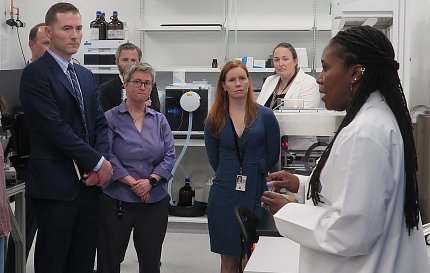
Photo: NCATS
NIH’s National Center for Advancing Translational Sciences (NCATS) hosted four congressional staffers on Sept. 5. The group was given a hands-on tour of NCATS labs in Shady Grove and met with NCATS leaders and researchers who are helping realize a future of more treatments for all people more quickly.
The staffers represented the offices of Sen. John Boozman (R-AR); Sen. Shelley Moore Capito (R-WV); Sen. Mike Rounds (R-SD) and Rep. Diana DeGette (D-CO).
During a roundtable with NCATS leaders, congressional staff learned about NCATS efforts to apply translational science approaches to address diseases with unmet needs, particularly rare diseases. These efforts include gene therapies, New Approach Methodologies (NAMS), and artificial intelligence/machine learning (AI/ML) tools in the areas of electronic health records, drug repurposing and biomedical literature.
“At NCATS, we build platforms,” said NCATS Director Dr. Joni Rutter. “A gene therapy for one rare disease can inform many, and AI applied to health data can unlock insights across conditions. That’s the essence of the translational science mission.”
The group visited several labs led by NCATS researchers. At the 3D bioprinting lab, Dr. Marc Ferrer, NCATS acting director of the Early Translation Branch, and colleagues demonstrated tissue-engineering techniques including 3D-bioprinted cardiac tissues.
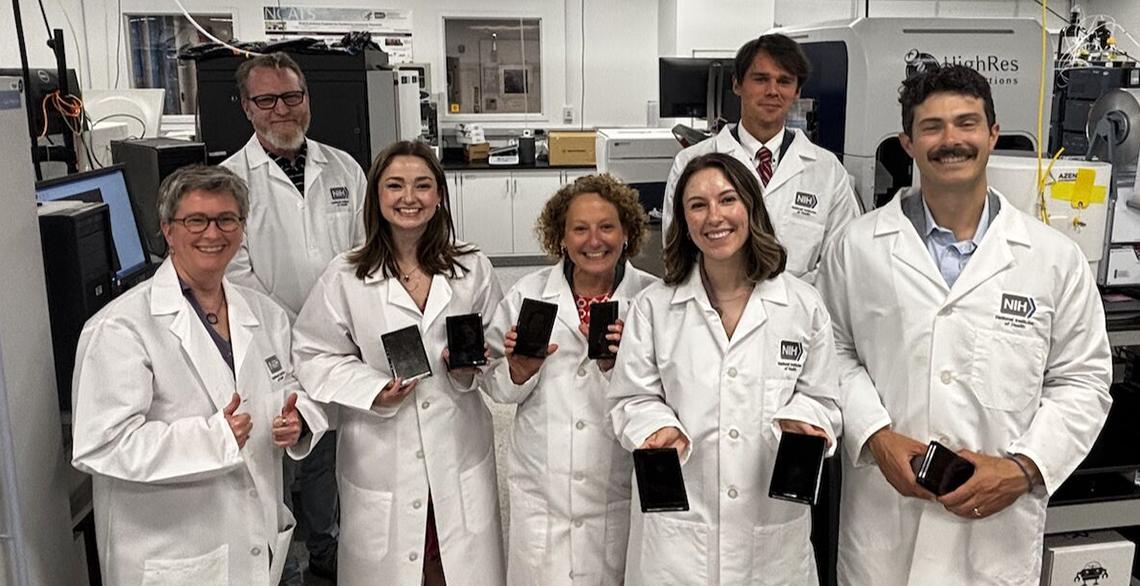
Photo: NCATS
NCATS Scientific Director Dr. Matt Hall showed the group high-throughput screening robots, which can rapidly test thousands of compounds–including FDA-approved drugs for potential new uses—with world-class speed and data quality. Staffers then saw an automated tissue culture system, capable of culturing up to 90 cell lines at once (compared to just a few in a typical lab). This automation drives reproducibility, scalability and efficiency—hallmarks of NCATS’ translational science platform.
Efficient translational science also requires innovative management of research resources like chemical libraries. Staffers saw the compound management lab where the NCATS pharmaceutical collection is stored, along with more than a million molecules and natural product fractions. Among the 350,000 compounds at NCATS, the pharmaceutical collection is a comprehensive, publicly accessible collection of nearly 3,000 small molecular entities that have been approved for clinical use by U.S., European Union, Japanese, Australian and Canadian authorities for high-throughput screening. This collection provides a valuable resource for validating new models of disease and speeding drug repurposing. The NCATS compound management group supports researchers via compound storage, registration, and shipping drug candidates to collaborators across the country.
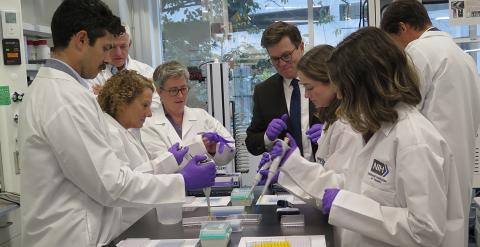
Photo: NCATS
Congressional staff ended their visit with a firsthand demonstration of the power of NCATS’ automation labs. They took on the role of a researcher manually pipetting, or distributing, liquids in measured volumes into a plate for a research experiment, racing against an NCATS automatic pipetter setting up 3 plates at the same time.
“It really brings home the power of NCATS’ approach to have the experience of the conventional, manual pipetting process, which is prone to human error,” said Hall. “We can highlight the automatic, standardized pipetting robot and what that means for the speed and reproducibility of our science. Our lab investments and operations are unique, which is why our intramural program is collaborative.” The robot, not surprisingly, won the race, and produced an image of the Capitol building.
From automation to AI, NCATS shows how building shared platforms can accelerate discoveries across diseases, fulfilling NIH’s mission to turn science into better health for all.
This lab tour was organized by the NCATS Alliance, which supports a new generation of innovative methods and technologies that will catalyze the development of new diagnostics and therapies to detect and treat a wide range of human disease. NCATS works across all diseases and all NIH ICs to support and accelerate therapeutic breakthroughs.
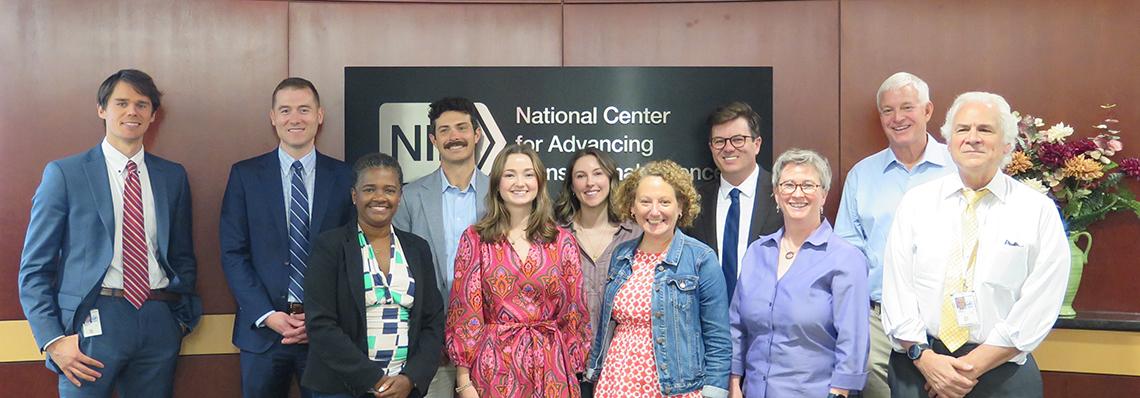
Photo: NCATS