A Crisis of Connection
Engineers, Building Team Come to the Rescue During Boiler Outage

Photo: Amber Snyder
It was the eve of an important cell harvesting event when things went awry.
Room temperatures began to decrease and relative humidity rose, disrupting the delicate balance required for the NIH’s National Cancer Institute’s (NCI) Cell processing Modular facility’s function—to produce tumor infiltrating lymphocytes (TIL), specialized immune cells that recognize and kill cancer cells.
Patients with difficult-to-treat cancer may not produce enough TILs on their own. A therapy developed by NCI researchers lets doctors extract TILs from the patient, grow and expand them in Bldg. T30, and then reinfuse the modified TILs into the patient at a much higher concentration to treat certain types of cancer. Environmental conditions in the building such as pressure and temperature need to be tightly controlled to support this work.
But on the evening of Sept. 18, 2024, one day before a patient in the Clinical Center was due to undergo this process, the humidity was climbing in Bldg. T30, home to one of NCI’s TIL labs. The building’s reheat boilers —which heat water to warm the air and provide precise temperature and humidity control via an automated control system—had shut down.
The loss of temperature and humidity control is critically important in T30 because it is an Aseptic Processing Facility (APF), a cleanroom which processes or supports the processing of drugs and/or biologic products in accordance with current good manufacturing practices (cGMP) for human use. Precise environmental control is vital to the functioning of T30 and the other APFs on main campus.

Photo: Amber Snyder
NCI needed the facility to be fully functioning as soon as possible so the scientists could complete the critical cell processing for their patient. But without the boilers, the scientists couldn’t accurately control the temperature in the building.
Who could reconnect the boilers?
The APF team within the Division of Facilities Operations and Maintenance (DFOM) immediately got to work.
“If the facilities are doing their job, people may not think about us—which is a good thing,” said Derrick Lam, a supervisory general engineer on the APF team. “But we are constantly working in the background to maintain facilities and provide physical spaces to do science.”
For Lam and his colleagues, that means monitoring and performing upkeep on the automated systems that control the environment of each APF on main campus. It takes a village: the DFOM APF team is split into an engineering team and a building team, which work together to plan, coordinate, troubleshoot and document events with the APF end users and quality assurance teams. In this case, that was the NCI Surgery Branch (SB) Cell Production Facility (CPF) unit management (UM) and quality assurance (QA).
Within minutes of the initial incident on Sept. 18, the APF team started troubleshooting. Lam and his APF colleagues immediately got to work, some even staying onsite through the night as they worked to troubleshoot and keep the NCI CPF UM and QA teams abreast of the situation.
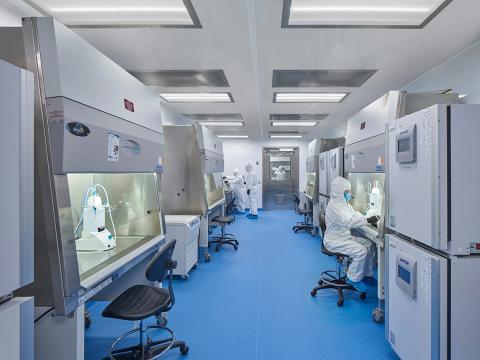
Photo: NCI
“DFOM APF continued to follow up and provide information on the timeline of events, allowing NCI SB and the Division of Technical Resources’ Facilities Compliance and Inspection Branch to capture the incident in their respective reporting systems,” explained Jack Fisher, a QA manager with the NCI SB.
The temperature and humidity controls in T30 were restored mid-morning on the 19th, in time for the patient’s cell harvesting event.
“The timely and ongoing communication between DFOM APF, CPF UM and SB QA enabled a successful harvest of cell product for patient treatment without risk to the safety of the product, and only a slight delay,” reported Fisher.
For Lam, the experience helped drive home his team’s role in the greater NIH mission.
Although the circumstances were stressful, the experience demonstrated the importance of understanding the urgency of each other’s work, and the value of interdisciplinary teams at NIH.
“The DFOM APF building team, engineers and NCI scientists worked really well together by understanding and appreciating the criticality of each other’s work,” Lam concluded.
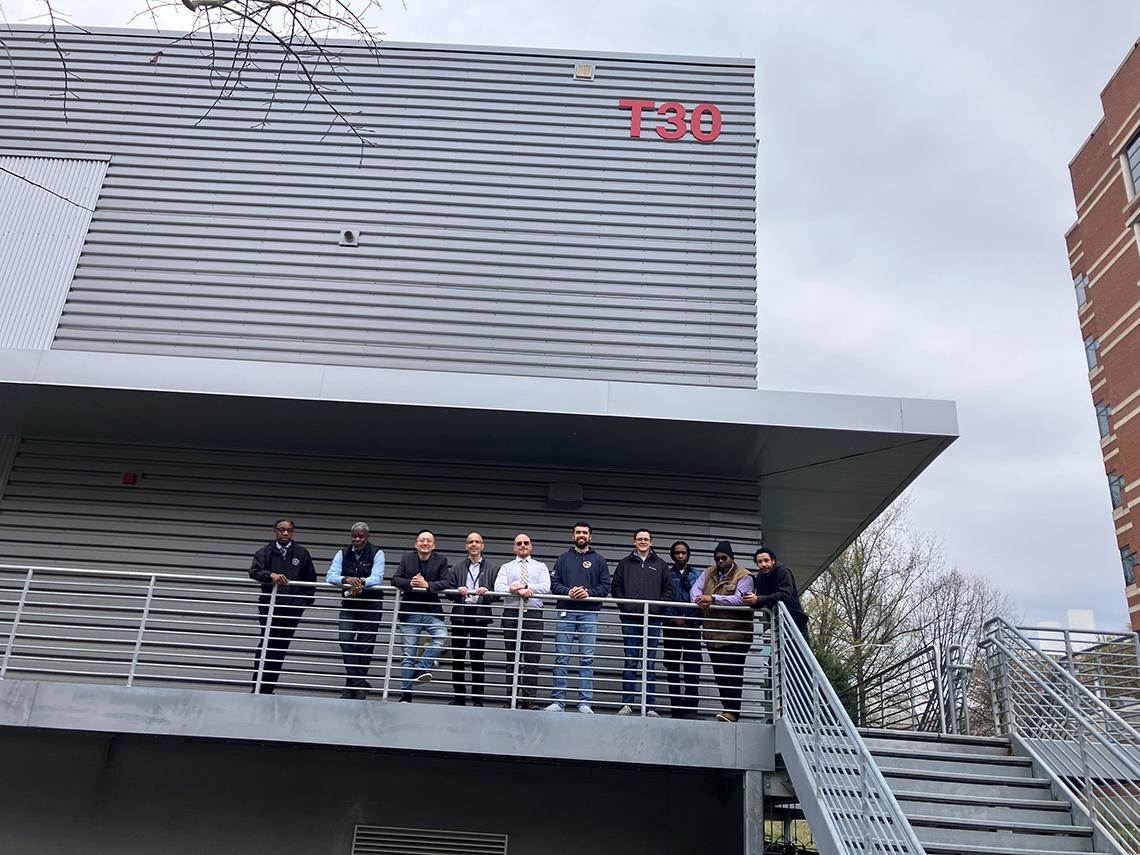
Photo: Amber Snyder