NCI’s Pommier Retires
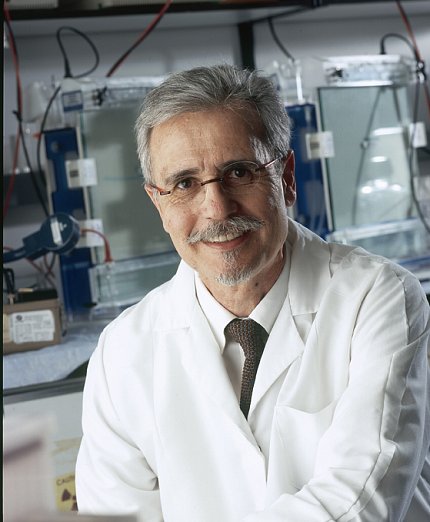
Dr. Yves Pommier, a molecular pharmacologist who has conducted pioneering work on the mechanisms of topoisomerase and PARP inhibition as well as on the discovery of novel biomarkers for anti-cancer drug responses, is retiring after 45 years at NIH’s National Cancer Institute (NCI).
Pommier grew up in Caen, France, near the famed World War II beaches of Normandy. He attended medical school there before moving to Paris for his residency in hematology/oncology.
“It was very fortunate that the chair of my school in France was a good friend of Bruce Chabner, who was director of what was then called the Division of Cancer Treatment at [the National Cancer Institute] NCI. My Parisian chair and Bruce started a little program where they selected two or three students a year to come to the U.S. who they thought would be the future of academia in France. My chair got me involved, got me connected to come, and Bruce was my first mentor,” said Pommier.
Early in his NCI career, with Dr. Kurt Kohn and others, Pommier helped discover how topoisomerase (TOP1) inhibitors work and expanded the understanding of how bioregulatory networks operate. “It was such an exciting time, and I was so happy at NIH that I just couldn’t go back to Europe. They wanted me to come back to Paris, but I had too much pleasure doing what I was doing here.”
For the past four decades, Pommier has been a leader in the field of DNA topoisomerase biology, biochemistry, molecular pharmacology and its cancer relevance. As chief of the Developmental Therapeutics Branch, he has overseen the branch’s clinical/translational research program, which emphasizes new approaches to cancer treatments targeting DNA and connected biomarkers.
Pommier is internationally recognized for the discovery and development of TOP1 inhibitors. Three of his TOP1 inhibitors are in phase 1/2 clinical development and all show potent activity in clinical studies and in patient-derived xenograft models of triple-negative breast cancers.
To help advance finding the best treatments for each patient, he developed a tool called CellMiner to perform genomic analyses in patient-derived cancer cell lines. While developing these tools, Pommier discovered the broad relevance of an interferon-inducible gene, Schlafen 11 (SLFN11), which has become one of his latest contributions. He recently showed its inactivation in approximately half of patient-derived cell lines and tumors and how the gene irreversibly arrests the replication of cells with replicative DNA damage while stabilizing proteins.
Pommier received an NIH Merit Award in 1992 as well as three NIH Director’s Awards since 2011. Over the course of his career, he has authored more than 800 publications, holds more than 30 patents and has mentored dozens of fellows and trainees who went into medical and scientific careers.