Building Health Infrastructure to Prevent Childhood Obesity in Samoa
For families in the Pacific region, cardiometabolic diseases—such as diabetes, stroke, and diseases of the heart, kidneys and liver—are a leading cause of premature and preventable deaths.
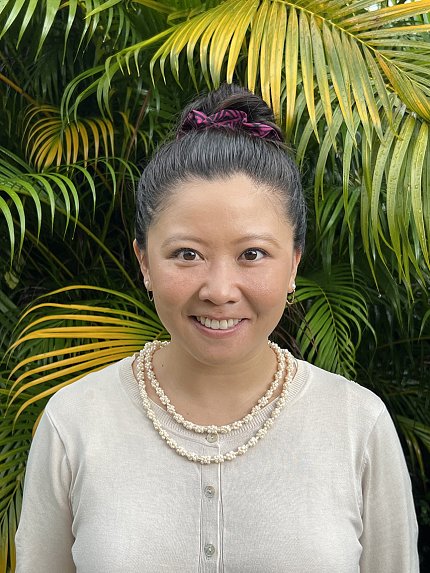
Dr. Courtney Choy studies chronic diseases including obesity, diabetes, cancer and hypertension in Samoa, a small Pacific Island nation with a rich culture and a high prevalence of such chronic diseases. She seeks to understand risk factors and protective strategies to help prevent obesity and its related cardiometabolic conditions.
For 10 years Choy, a two-time NIH Fogarty International Center fellow and postdoctoral fellow at the Yale School of Public Health, has been engaged with the Ola Tuputupua’e (“Growing Up”) study.
“The project has evolved into a longitudinal observational cohort that is uniquely situated to understand child growth and development,” she said.
Choy follows a cohort of Samoan children and their primary caregivers, who entered the study in 2015 at ages 2 to 4 years old, to study factors associated with healthy growth and development and how the health of families is changing.
Choy has watched these children grow up and is considering ways to better support their health and well-being over time. “As scientists, we tend to focus on the things putting them at risk, yet they are still very resilient.” She hopes her team eventually will be able to track health across the life course and across generations, and that her work will lead to better programs and interventions, since the current offerings are not enough.
What is needed is not only research, but a translation of the data into action and solutions that bridge services, not only in public health, but across education, judicial systems, commerce, industry, agriculture, communication and information technology.

Choy said, “I love the work I do because every day we’re always thinking not only about public health but also sharing knowledge with each other so that there can be greater capacity to address the high and rising burden of chronic diseases. That’s a big part of what Fogarty taught me.”
Choy said her Fogarty fellowship led to publication of her findings in several peer-reviewed journals, while her research has also been highlighted in the community, on the radio and in the local newspaper.
Her work is also used in programs to improve school nutrition and health in Samoa, to try to better understand the burden of disease, identify opportunities to intervene and encourage healthier lifestyles for children.
The Fogarty fellowship helped her build networks and collaborations to make an impact and move her research forward.
“Individuals who have that passion, drive and willingness to listen, learn and work collaboratively have the best experiences as a Fogarty fellow,” she said.
Although Choy conducts research in the South Pacific, a heavy burden of chronic disease also exists worldwide.
“We’ve all seen how a child affected by obesity and these related chronic diseases may have a harder time paying attention in school,” she said. “Their energy level changes to the point where it impacts their activity, engagement and even their social skills.” Choy urged support to sustain programs that address the needs of different communities in the U.S. and worldwide.
“That’s part of what makes America great. We’ve always risen to the challenge of doing better than what’s been done before.”