USPHS Raises Flag, Honors its History
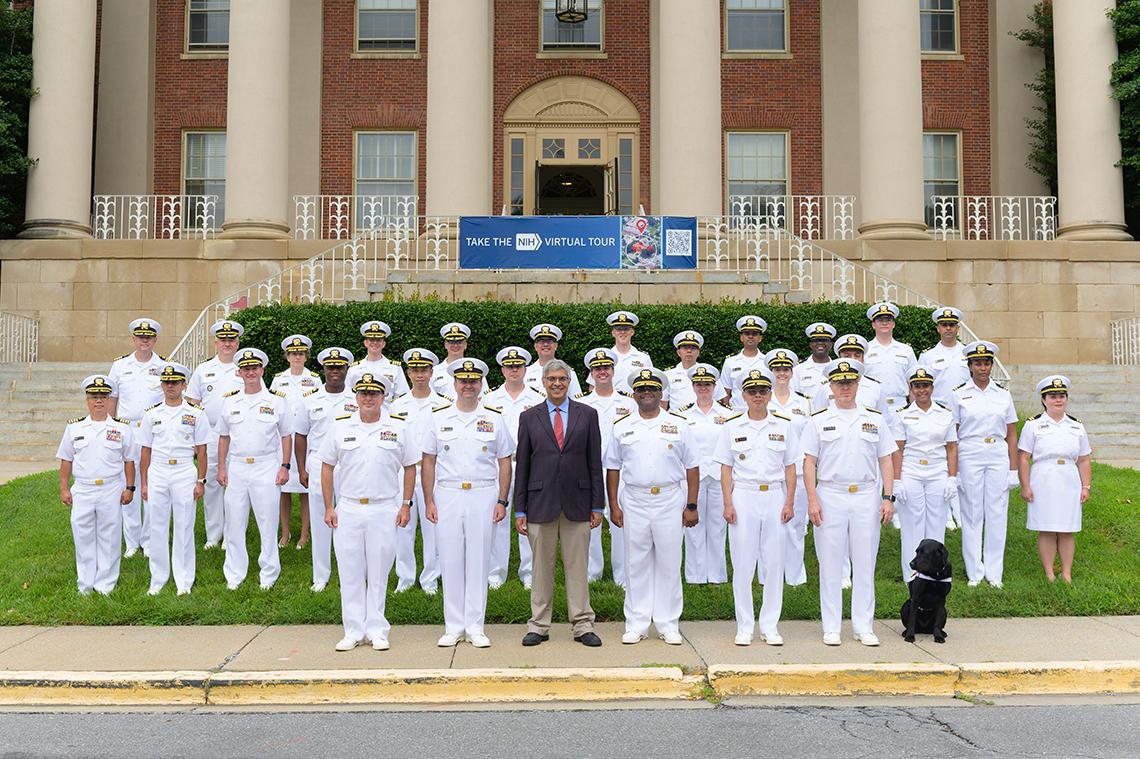
Photo: Marleen Van Den Neste
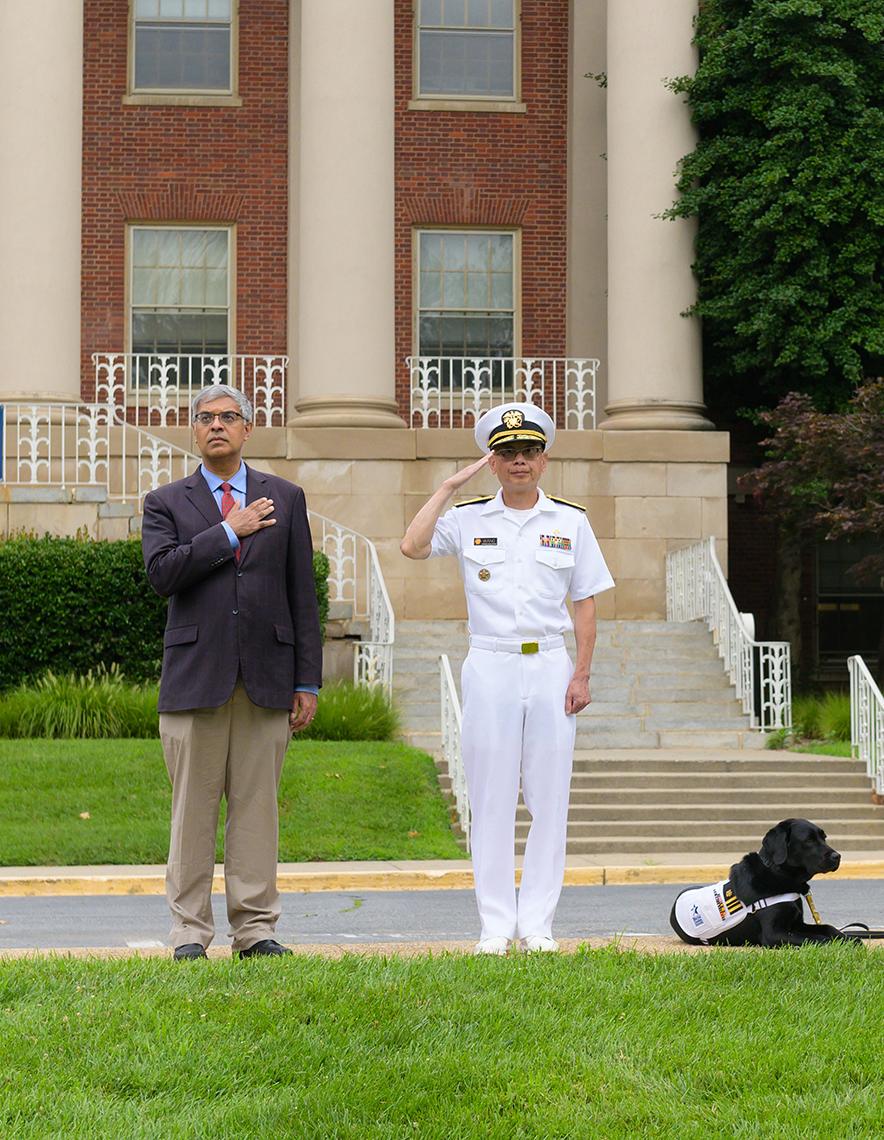
Photo: Marleen Van Den Neste
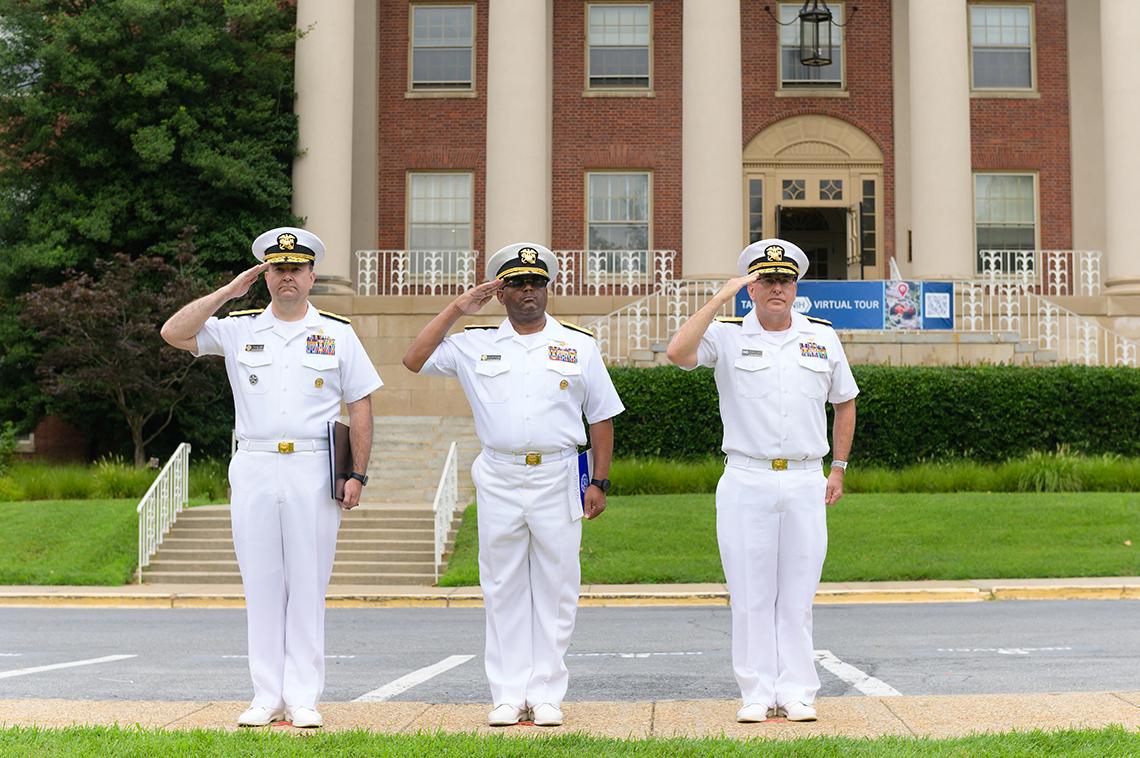
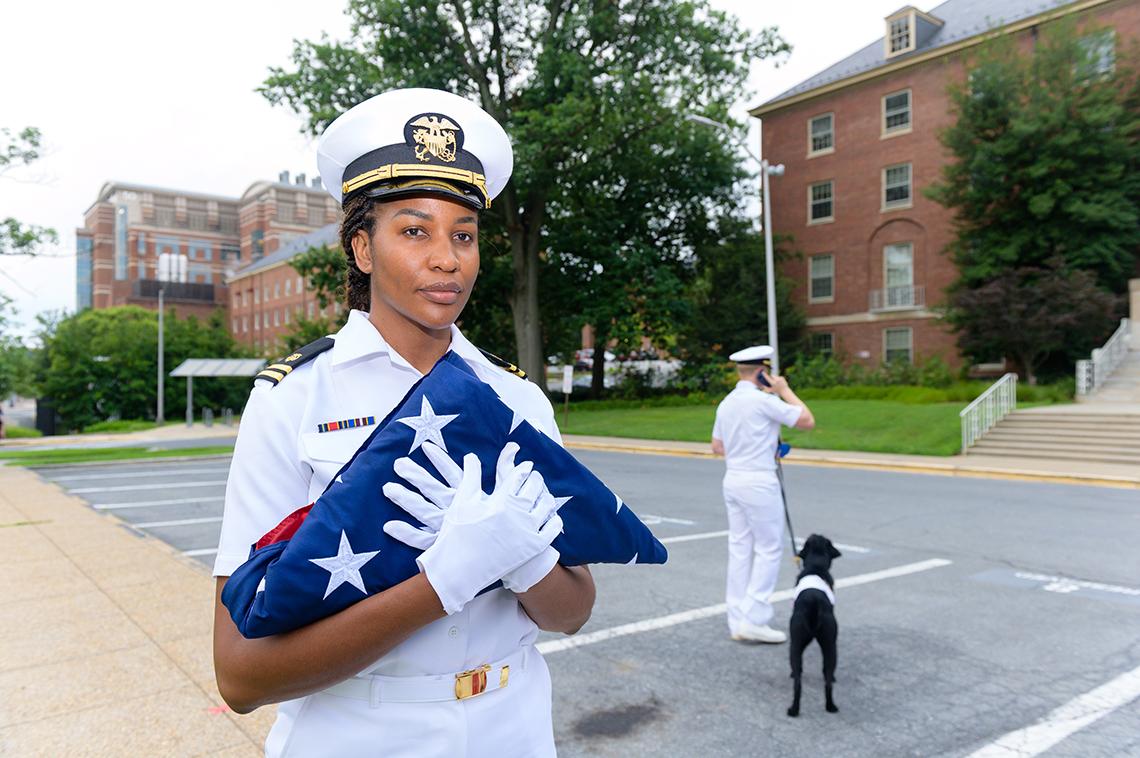
Photo: Marleen Van Den Neste
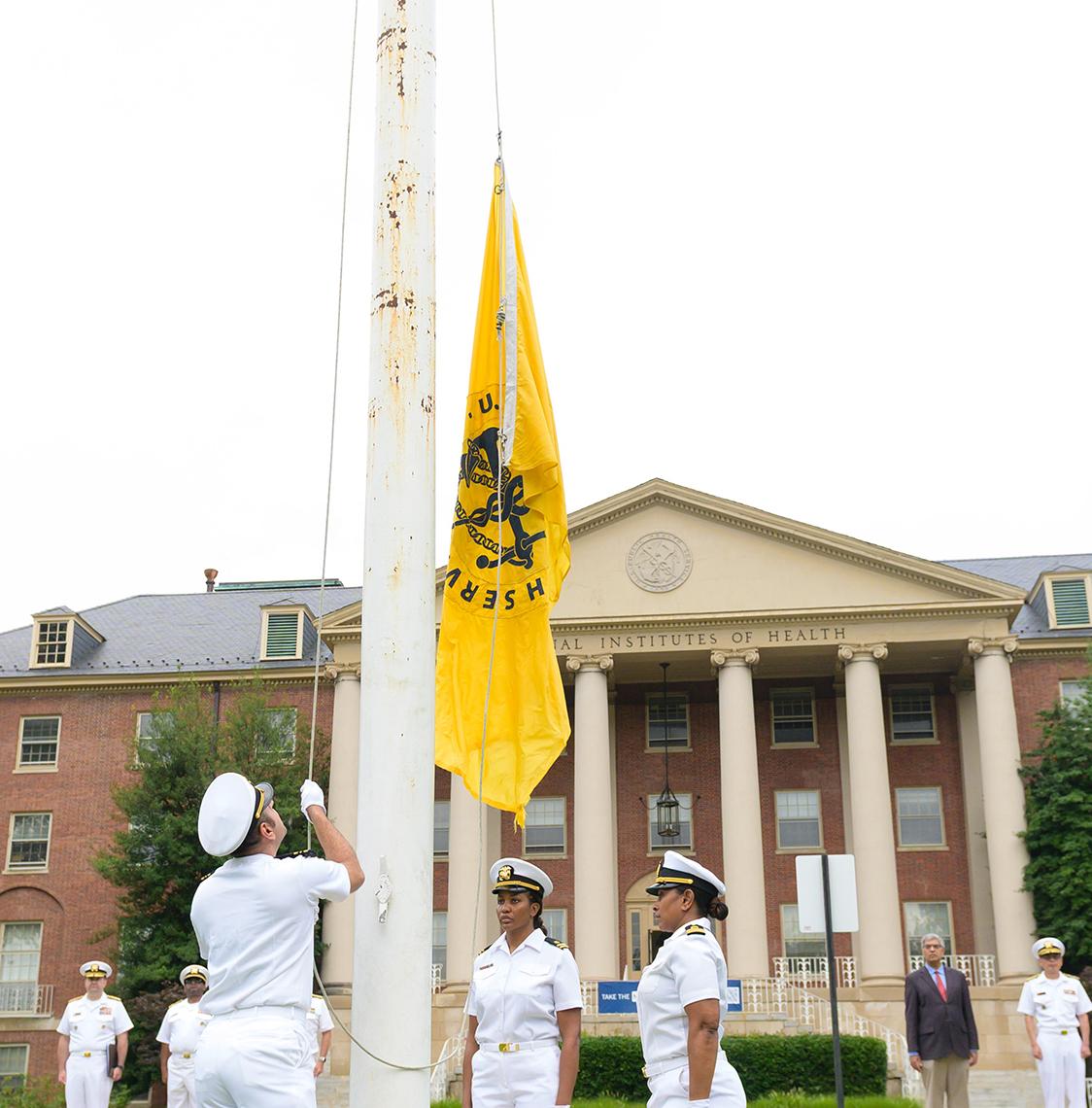
Photo: Marleen Van Den Neste
On July 16, 1798, President John Adams signed into law the Act for the Relief of Sick and Disabled Seamen, which established the Marine Hospital Service and paved the way for the founding of the U.S. Public Health Service (USPHS) and—almost a century later—NIH.
Each year on July 16, Commissioned Corps officers from the USPHS raise the American and PHS flags on the NIH Bethesda campus outside Bldg. 1 to mark the historic anniversary. This year’s ceremony, which marked the 227th anniversary, included remarks from NIH’s own RADM Richard Childs, scientific director of NIH’s National Heart, Lung and Blood Institute.
The PHS and NIH have an intertwined history that dates back to 1879 with the creation of the first federal medical research institution—the National Board of Health. The Hygienic Laboratory was then established as a one-room lab in the Staten Island Marine Hospital by Dr. Joseph Kinyoun, a newly commissioned USPHS officer. He moved his lab to Washington and continued to expand operations. In 1938, NIH relocated to its current home in Bethesda and construction began under the direction of USPHS officer Dr. Lewis Thompson, NIH’s fifth director.
Today, the Commissioned Corps continues its mission as a readily deployable force responding to public health emergencies, providing essential services in underserved communities, fighting disease and conducting research. More than 6,000 uniformed health officers in the Commissioned Corps serve in 800 locations across the country and around the world. NIH is currently served by 153 USPHS officers who have been instrumental in leading research trials while responding to the urgent public health needs of our nation.
At the ceremony, Childs said, “Let today be a celebration of our past, the accomplishments we strive for today, and a reminder of the future prospects ahead.”