OACU Hosts Aspiring Science Writers
If a career in science communications doesn’t work out, there’s always punk rock, right?
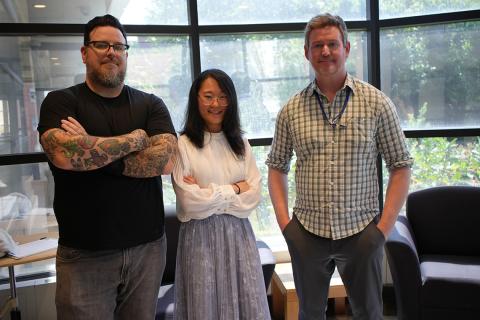
According to Jeffrey Everett, art director for NIH’s Division of Medical Arts, there are more similarities than differences when it comes to designing artwork for NIH scientists and your favorite musicians.
“Posters about the microbiome and Covid are not that much different than doing posters for the Foo Fighters,” he said. “They have the same issues that need to be addressed—how to best connect with the intended audience and help them understand the information.”
The rock n’ roll designer-turned NIH artist delivered remarks as part of a larger series of presentations for an organization called Curious Science Writers (cSw). Hosted by Americans for Medical Progress (AMP), this high school-focused program has brought students to tour NIH several times in recent years.
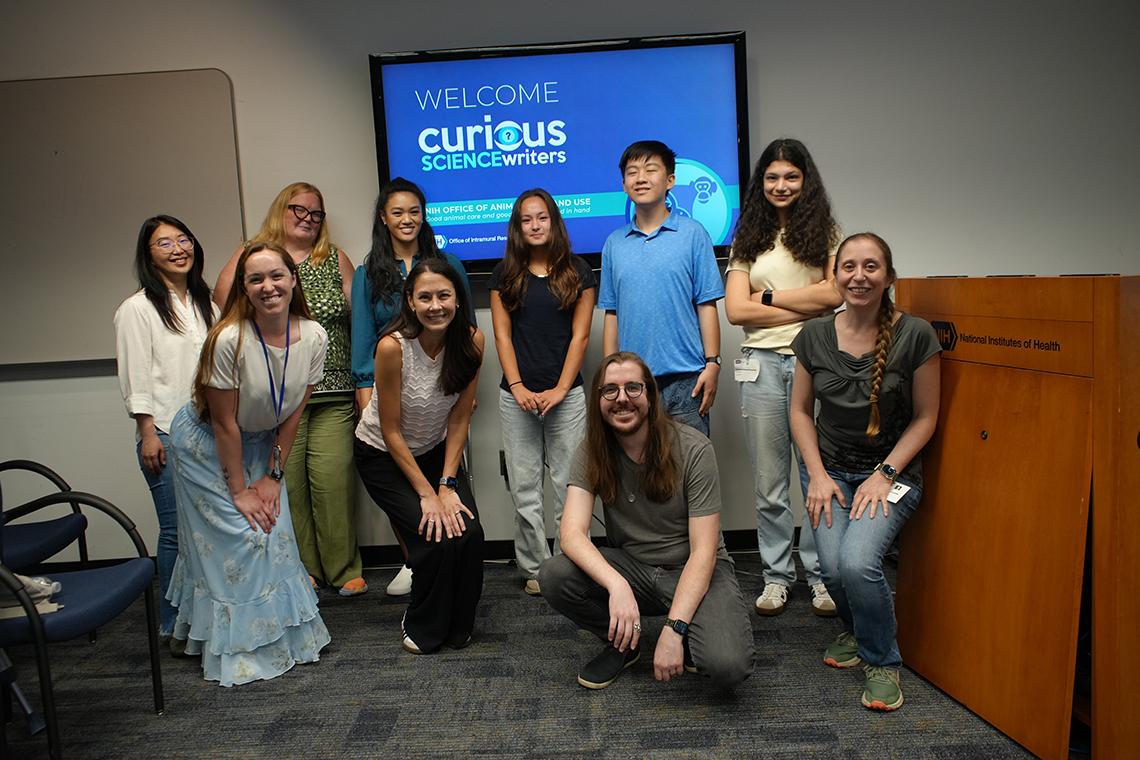
NIH’s Office of Animal Care and Use (OACU) hosted high schoolers and aspiring science writers Olivia Wood, Shanthi Everett and Eric Yang in July. As part of cSw, each student researches and writes an article on a scientific topic. They also work with a science writing mentor to help guide them along the way. Science communicators at NIH often lend their talents as mentors.
This year’s visit featured remarks from NIH communications staff as well as program analysts, researchers and animal care staff.
The students learned about NIH and the OACU from program analyst Angela Szwec, then listened to lectures from science communicators and researchers. They ended the day with an animal facility tour.
The lectures explored complex research topics under NIH’s National Institute of Neurological Disorders and Stroke (NINDS) and National Eye Institute (NEI).
Everett emphasized the importance of communicating research in a way the public can comprehend. “What you do with science doesn’t mean anything unless people can understand it,” he said.
Prior to his work at NIH, he designed posters for punk rock bands, and his years of experience have helped him learn to convey the essence of a topic. His colleagues in the Medical Arts Branch (MAB) work directly with scientists to design and illustrate visuals that clarify their research. He was joined by fellow MAB presenters Erina He and Ethan Tyler.
“Science needs storytellers,” said medical illustrator He. There are many ways to tell the story, but it should inspire its audience to care about scientific knowledge.
The cSw students spent the remainder of their summer honing their craft and producing their own bit of finished science storytelling. The articles will be published on https://curioussciencewriters.org/.
To read about cSw visits from previous years, see: go.nih.gov/Q5wtogX; go.nih.gov/yvaZAjz and go.nih.gov/lWhQHQu.