Educating All Ages
Viswanathan Shares Neuroscience Knowledge in Children's Book
How do lemurs navigate at night?
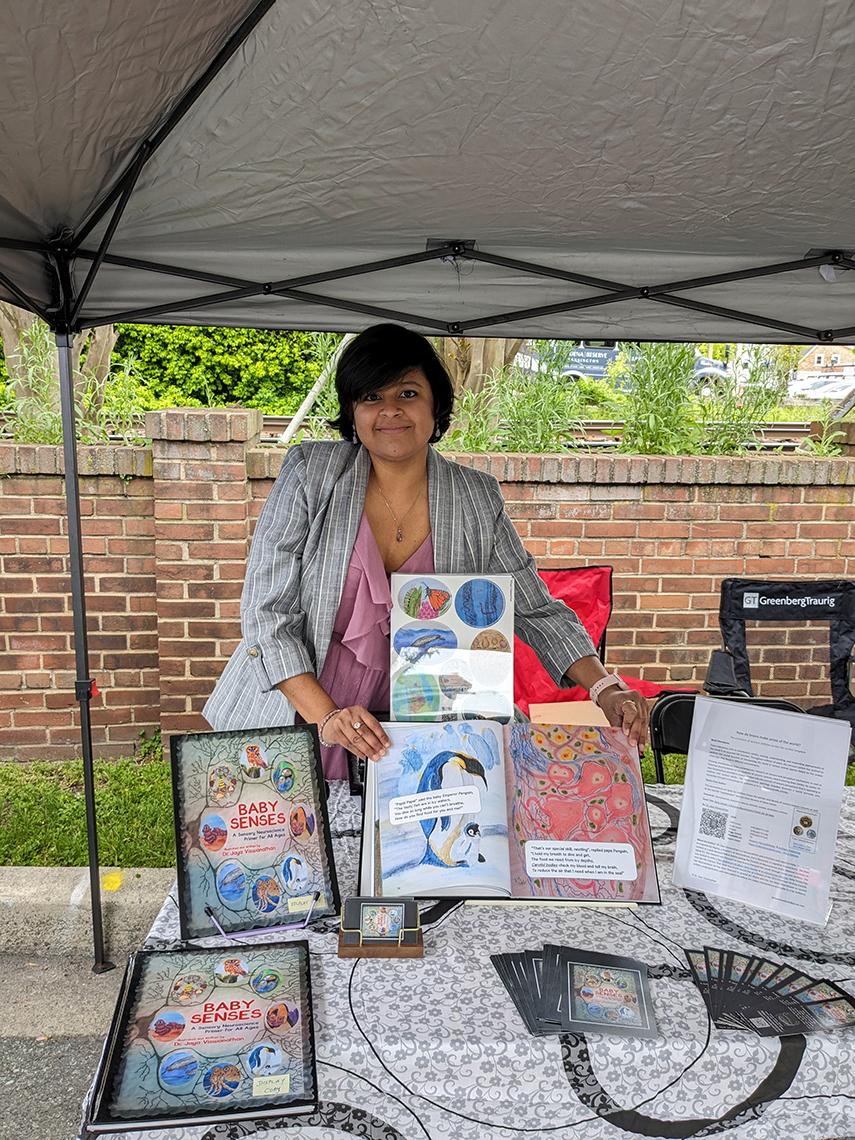
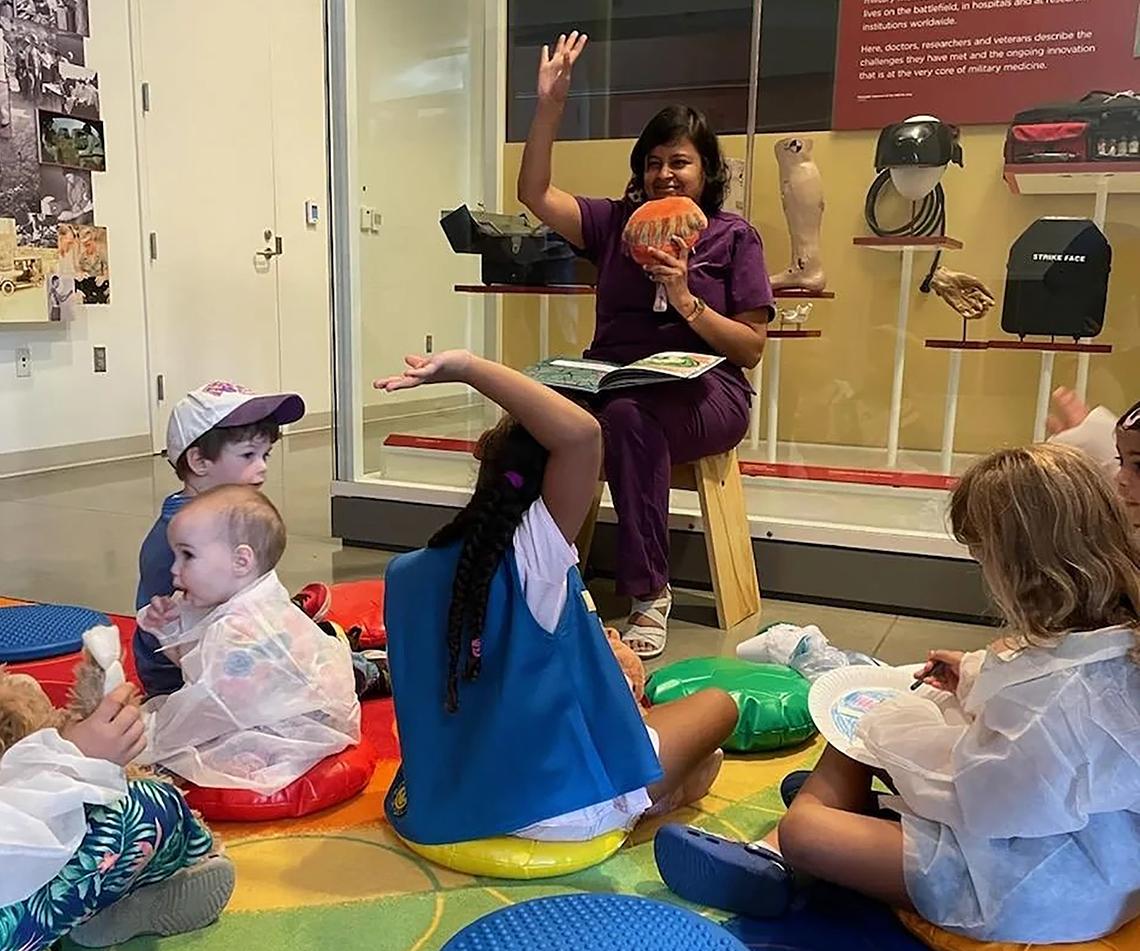
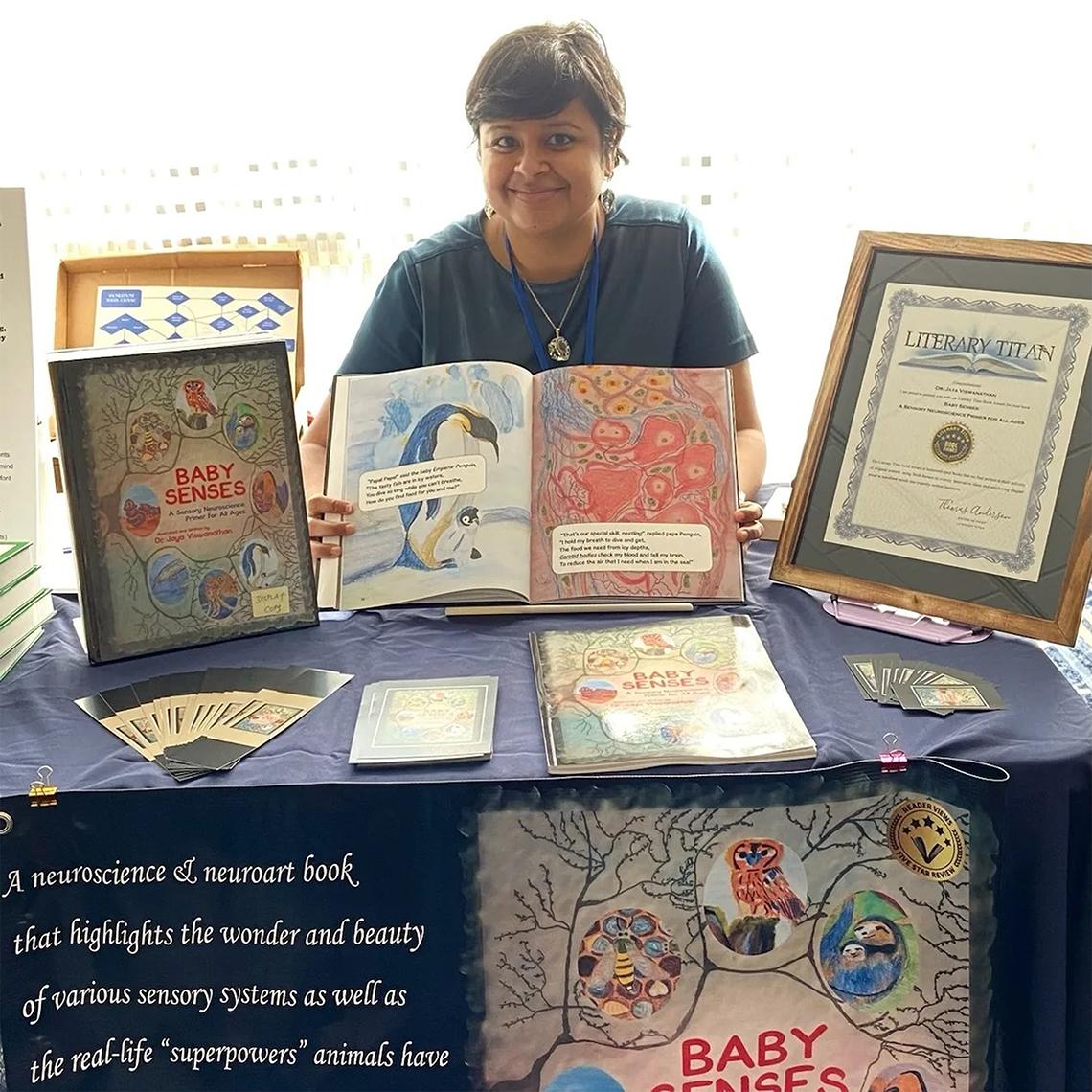
If your child asks this question, you might find yourself turning to Baby Senses: A Sensory Neuroscience Primer for All Ages, a children’s neuroscience book written and illustrated by Dr. Jayalakshmi Viswanathan.
As it turns out, lemurs use their well-developed sense of smell to map their environment to help them get around in the dark. Viswanathan, a scientific research program specialist in NIH’s National Institute on Aging, featured the iconic primates as well as several other animals and insects in her book.
She was inspired to write Baby Senses while volunteering with a DC-based youth literacy organization. A child she was tutoring was interested in neuroscience, but Viswanathan couldn’t find any books suitable for young readers. Baby Senses was her solution.
Viswanathan’s interest in science communication was rooted in her childhood. Growing up in India, she found it challenging at times to learn about science. She often couldn’t find resources appropriate for her level of understanding. When it came time to write Baby Senses, she knew she wanted the book to be educational for both children and adults, so she included a helpful glossary of scientific terms for parents and teachers.
Viswanathan also created all of the art for Baby Senses. “I considered hiring an illustrator, but I wanted to make sure the visuals were scientifically accurate,” she said. She calls her art form “neuro-art,” utilizing techniques ranging from watercolor painting to dance, to portray the intricacies of neuroscience.
She started another artistic venture in 2024: a neuroscience podcast titled “Know Brainer.”
“It was inspired by a lot of philosophical conversations I had during graduate school,” she explained. The feedback following the release of Baby Senses in 2023 then spurred her to take the leap. She wrapped up season one in 2025 and is planning for a second season, with the potential for more beyond that.
“I thought I would only do it for a year or two, but I’ve had so much fun talking to people,” said Viswanathan. “I can’t think of a single episode where I didn’t have fun or learn something new.”
Viswanathan feels like she’s just getting started in the realm of children’s books, too. She is in the planning stages for another picture book.
“I just want to get kids excited about science,” she said. Through each of her art forms, she seeks to make her research relatable to the public and build trust in the scientific method.