NINDS Mourns the Passing of Neurobiology Expert
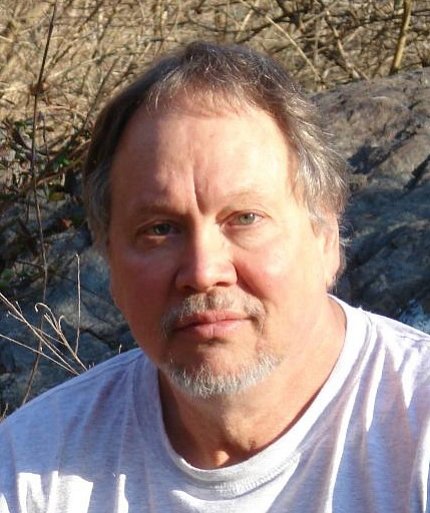
Dr. (Stephen) Brian Andrews, a senior investigator and chief of the section on analytical cell biology of the Intramural Program in NIH’s National Institute of Neurological Disorders and Stroke (NINDS) until his retirement in 2014, and subsequently a special volunteer, died earlier this year at the age of 80. His scientific work at NIH spanned more than 30 years.
Andrews earned his undergraduate degree from Providence College, Rhode Island, in 1966, and his Ph.D. in chemistry from the Massachusetts Institute of Technology in 1971. After completing a postdoctoral fellowship at Yale University School of Medicine, he served as assistant professor and senior research associate at Yale for a decade.
In 1983, he joined NIH’s Laboratory of Neurobiology, headed by Dr. Thomas S. Reese, where Andrews set up his own group to become a world leader in the field of biological x-ray microanalysis, pioneering methods to detect trace amounts of diffusible chemical elements, in nanoscale neuronal structures in rapidly frozen brain. For example, he was able to detect minute changes in Ca concentrations in endoplasmic reticulum and mitochondria accompanying neuronal activation.
To accomplish this, the Andrews lab became one of a small number of labs around the world that could cut thin 100-nm cryosections of tissue, required to preserve fine-scale ultrastructure without loss of diffusible ions. In this way, Andrews helped elucidate how neurons regulate cytosolic Ca ion concentrations, and how de-regulation of Ca results in neuronal injury and disease.
Due to NINDS’s strong ties with the Marine Biology Laboratory at Woods Hole, MA, Andrews and his family had the opportunity to return to the region of his alma mater in New England during many summers, where Andrews worked intensively on experiments to test novel scientific ideas and to interact with other world experts in the field of structural neuroscience.
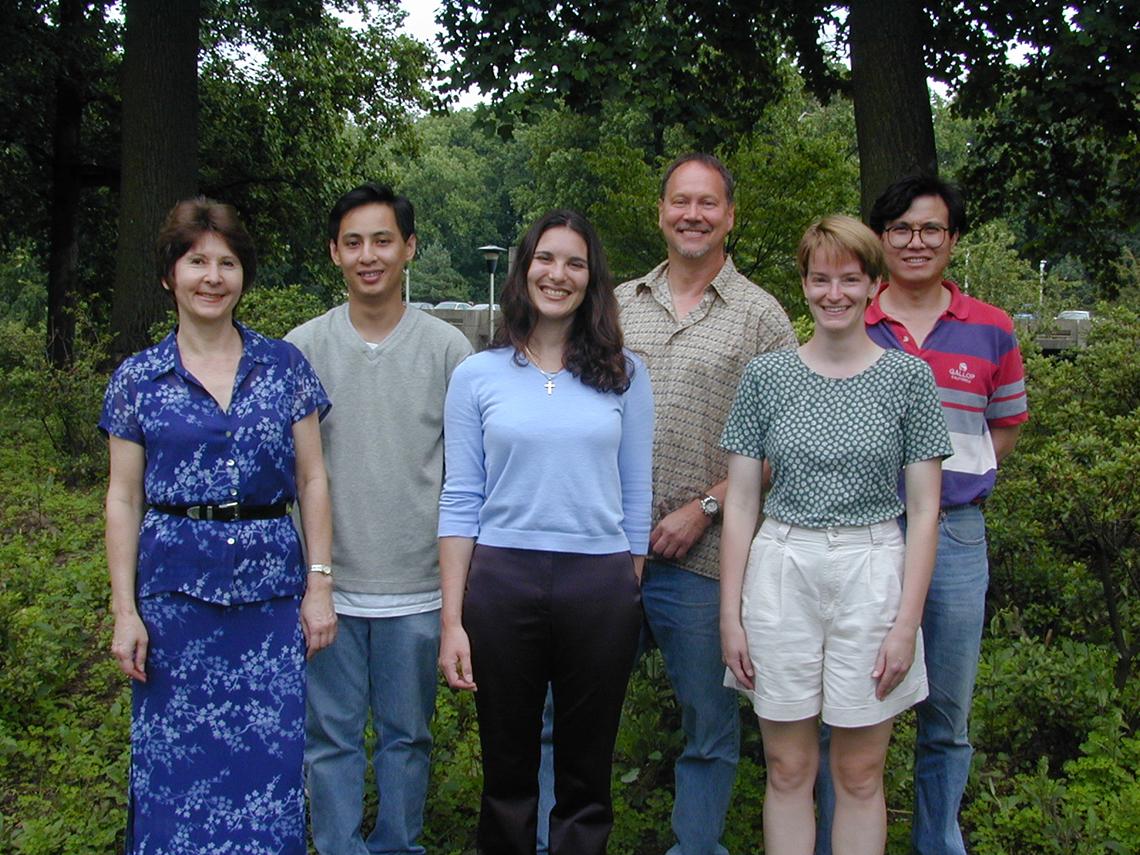
Andrews also developed a close long-term collaboration with Dr. Richard Leapman’s lab in the National Institute of Biomedical Imaging and Bioengineering (NIBIB) to push the detection limits for measuring smaller elemental concentrations using electron energy loss spectroscopy. More recently, Andrews collaborated with Dr. Alan Koretsky’s lab in NINDS, employing synchrotron radiation to measure minute concentrations of manganese ions in presynaptic neuronal terminals by x-ray fluorescence detection.
“Brian will be missed dearly by his colleagues, collaborators and friends across NIH,” said Leapman.
“It was always so much fun to talk science with Brian,” said Koretsky. “He was so generous with his technology and his broad knowledge led to many insightful suggestions.”
Andrews is survived by his wife Sheryl, sons Ethan and Mark, and four grandsons.