Chan Investigates Role of Diet, Microbiome on Colorectal Cancer Risk
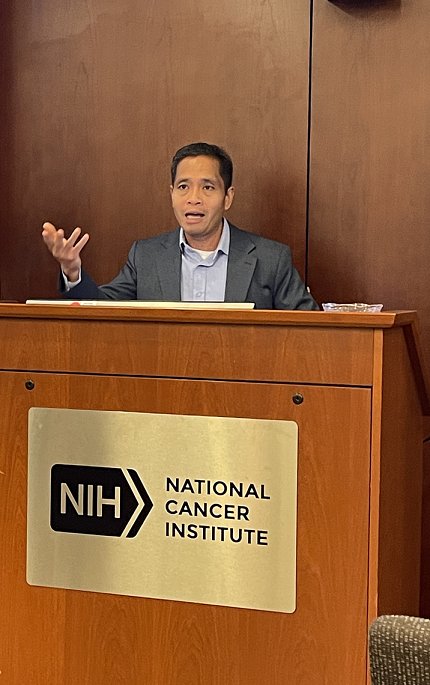
Dr. Andrew T. Chan, professor of immunology and infectious diseases at Harvard T.H. Chan School of Public Health, delivered the 2025 Arthur Schatzkin Memorial Lecture at NIH’s National Cancer Institute (NCI) in September.
Through research spanning population epidemiology to clinical trials, Chan focuses on prevention and treatment of gastrointestinal cancers. His talk touched on key observations and discoveries that can inform our understanding of dietary factors and gut microbial characteristics that influence colorectal cancer risk.
Chan described a large, collaborative effort to combine gut metagenomic data from 18 studies that found strain-level associations with colorectal cancer. Some of the colorectal cancer-associated species overlap with cardiovascular and immune-mediated diseases, which suggests these species may represent pro-inflammatory risk factors for colorectal cancer. Chan also described the development of dietary scores related to the gut microbiome and colorectal cancer risk.
In addition to the lecture, Chan participated in two roundtable discussions focused on early-onset colorectal cancer (EOCRC)and the microbiome. He discussed the PROSPECT Study for the Cancer Grand Challenge, which he co-leads with Dr. Yin Cao of Washington University in St. Louis.
Chan said his team will utilize an innovative and interdisciplinary approach—encompassing epidemiology, laboratory research and clinical intervention studies—to uncover the underlying causes and mechanisms behind the development of EOCRC. With these new insights, they aim to create and test groundbreaking strategies to prevent disease in future generations.
The team convenes multidisciplinary researchers from five countries, including experts in population sciences, clinical trials, behavioral science, genomics, cancer biology, immunology, computational biology, biochemistry and nutrition. They also include clinicians who care for patients with, or at-risk of, cancer and patient advocates, who will ensure that studies address the needs of diverse communities.
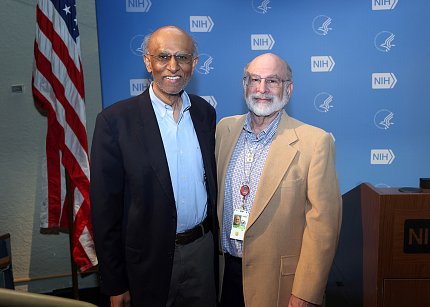
Photo: Chia-Chi Charlie Chang
His team has three overarching objectives: identify risk factors associated with EOCRC; characterize the underlying mechanisms of causal risk factors; and develop precision prevention strategies.
“It was a great discussion,” said Dr. Giovanny Herrera Ossa of NCI’s Metabolic Epidemiology Branch (MEB). “He emphasized the importance of being adaptable and building a strong team, and the fellows seemed to really connect with that. The Q&A was also engaging, with questions about career turning points, handling uncertainty and making collaborations work.”
Chan is also professor of medicine at Harvard Medical School; chief, Clinical and Translational Epidemiology Unit at Massachusetts General Hospital (MGH) and director, epidemiology at MGH Cancer Center.
In introducing the lecture, host Dr. Rashmi Sinha, a MEB senior investigator, reflected on the career of her colleague and lecture namesake, the late Dr. Arthur Schatzkin, who greatly contributed to the field of nutritional epidemiology, including establishing the landmark NCI Polyp Prevention Trial and the NIH-AARP Diet and Health Study. As an example of his innovative thinking, Sinha recounted Schatzkin’s idea to collect stool from trial participants, which sadly was rejected at the time. “Think of what we could have learned from such samples!”