
Beta-HPV Can Cause Skin Cancer
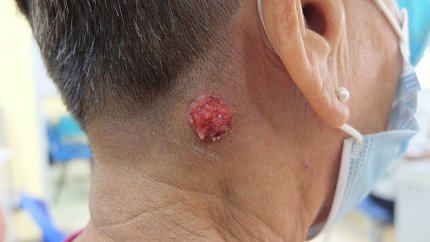
Photo: Casa Nayafana/Shutterstock
NIH researchers have shown for the first time that a type of human papillomavirus (HPV) called beta-HPV commonly found on the skin can cause a form of skin cancer called cutaneous squamous cell carcinoma (cSCC) when certain immune cells malfunction.
cSCC is one of the most common cancers in the U.S. and worldwide. Previously, scientists believed HPV facilitated the accumulation of DNA mutations caused by ultraviolet (UV) radiation, the primary driver of cSCC. The findings were published in The New England Journal of Medicine.
NIH researchers made their discovery in a 34-year-old woman who came to the NIH Clinical Center for evaluation and treatment of recurrent cSCC on her forehead. She had undergone multiple surgeries and a round of immunotherapy to try to kill the tumor, but it repeatedly grew back. The tumor was one of many progressively worsening HPV-related diseases the woman was experiencing.
The researchers analyzed her genome and discovered a beta-HPV had integrated into the tumor DNA and was producing viral proteins. This contradicted the prevailing theory that beta-HPV facilitates the establishment of cSCC without integrating into cellular DNA and plays no role in maintaining the cancer. Further genetic analysis of the woman’s cells showed they were capable of repairing DNA damage from UV radiation, suggesting the virus alone had caused cSCC.
The investigators found her genetic mutations hampered T cells from activating in response to skin-cell infection by beta-HPV, suggesting the immune disorder itself was responsible for the woman’s worsening HPV-related diseases, and that treating this disorder might cure all of them.
NIH investigators gave the woman a stem cell transplant to replace her defective T cells with healthy ones. After, all her HPV-related diseases including the recurrent, aggressive cSCC resolved and have not recurred since the transplant. This confirms the woman’s inherited disorder had prevented her T cells from keeping beta-HPV in check, allowing the virus to directly cause and sustain cSCC.
The study finding suggests other people with defective T-cell responses may also be susceptible to cancer caused directly by beta-HPV.