NIH DDIR Schor Retires
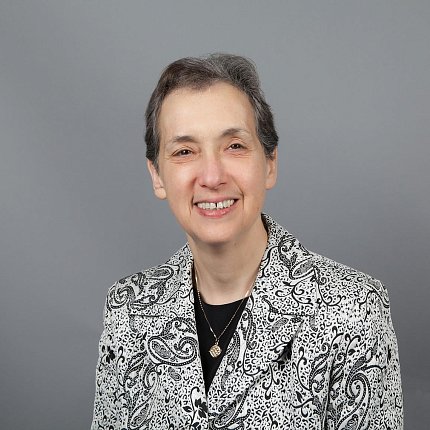
Dr. Nina Schor stepped down from her role as NIH deputy director for intramural research (DDIR) on Sept. 30. She has served in the role since August 2022.
Schor plans to return to the University of Rochester, where she was a professor and chair of the Department of Pediatrics for 12 years before joining NIH’s National Institute of Neurological Disorders and Stroke (NINDS) as deputy director in 2018.
“NIH is great because of the amazing people who work here. It’s been a privilege to work among this incredible cohort of interesting and interested people,” she said.
As DDIR, Schor led the NIH Office of Intramural Research (OIR) overseeing faculty recruitment and development, research regulatory affairs, technology transfer, training and education, and research integrity for the NIH Intramural Research Program (IRP), as well as the NIH Stetten Museum.
Schor worked to break down silos in the IRP. Before she left NIH, she was involved in drafting a strategic plan “that will move the IRP forward as one IRP, as opposed to 24 IRPs in each institute.”
When she arrived at NIH in January 2018, she worked with NINDS Director Dr. Walter Koroshetz to plan, budget and guide the institute’s scientific and administrative functions.
Born in Bayside, N.Y., Schor earned her undergraduate degree from Yale University, her Ph.D. in medical biochemistry from Rockefeller University and her medical degree from Weill Cornell Medicine.
Schor completed residency programs in neurology and pediatrics at Children’s Hospital and Harvard Medical School in Boston. Following her residencies, she was a professor, chief of child neurology and associate dean for medical student research at the University of Pittsburgh.
She also served as the William H. Eilinger Chair of the Department of Pediatrics and Pediatrician-in-Chief of the University of Rochester’s Golisano Children’s Hospital. A pediatric neurologist by training, Schor conducted research on neuroblastoma, one of the most common childhood cancers.
“I received continuous NIH funding for 27 years,” Schor said. “I came to NIH to pay back the system that supported me. I want to do the same for the next generation of scientists.”
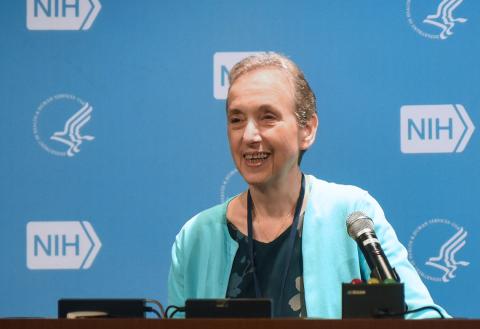
Photo: MALIK LONON
Schor has worked in many roles throughout her career. Wherever she was or whatever she was doing, she always made time to nurture the next generation of scientists. She has mentored more than 85 postdoctoral fellows and graduate, medical and undergraduate students. She’s grateful for the opportunity to shape scientists of the future, she said. “It’s the most wonderful part of my job.”
When she was at NINDS, she wrote a handbook for trainees about how to transition into a career at an extramural institution. The guide featured information about the promotions, tenure process and grant writing.
During her time at NIH, Schor learned the importance of delegating important tasks to employees who could do the best possible job. “There just aren’t enough hours in the day to do everything for which the Office of Intramural Research is responsible,” she remarked.
At the University of Rochester, she’ll serve as the director of faculty and program development for the Intellectual and Developmental Disabilities Research Center. She’ll be involved in workforce development and mentoring.
“I’ve spent most of my career on a college campus,” she said. “While I’ve enjoyed my time in government, I’ve missed having English majors ask me questions about biochemistry during office hours, conversations with colleagues in the School of Music about the neural processing of auditory information, grant writing and serving on faculty committees.”