
Diagnostic Aid Can Assess Risk of Diabetic Foot Ulcer Recurrence
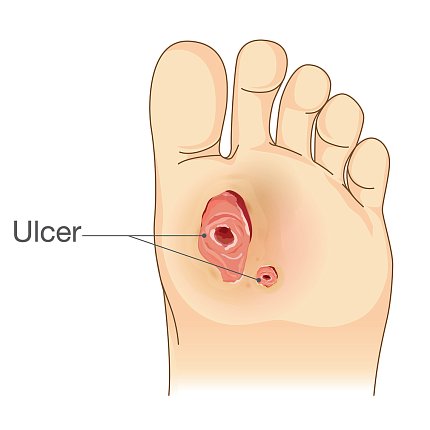
Photo: LOGO3IN1/ADOBE STOCK
An NIH-funded research team has identified a diagnostic aid with the potential to accurately predict the recurrence of diabetic foot ulcers that visually appeared to be fully healed. By measuring the skin’s barrier function through a process known as trans-epidermal water loss, or TEWL, scientists were able to determine which wounds were more likely to reopen.
TEWL measurements are a major factor in burn care, where deep layers of the skin are often damaged. The findings suggest that full restoration of skin barrier function should be incorporated into existing wound treatment standards to ensure complete wound closure and to better identify patients at risk of wound recurrence.
Scientists, collaborating through the NIDDK Diabetic Foot Consortium, evaluated more than 400 study participants who had a diabetic foot ulcer that appeared to be closed. They measured TEWL at the site of the foot ulcer and found 35% of participants with high TEWL (more water loss) reported a wound recurrence by 16 weeks, compared to just 17% for those with low TEWL (less water loss). Participants with higher TEWL were 2.7 times more likely to experience a wound recurrence than participants with low TEWL.
Diabetic foot ulcers are a major complication of diabetes where a break in the skin of the foot is often unnoticed by a patient due to nerve damage, known as neuropathy. They are the leading cause of non-traumatic lower-limb amputations, and untreated or unhealed ulcers significantly increase the risk of death. Wounds that appear to be healed on the surface may not be fully closed below the superficial surface of the skin, hampering the effectiveness of the skin’s barrier function to keep in water and keep out pathogens, such as bacteria.