
NIH Researchers Identify Brain Circuits Responsible for Visual Acuity
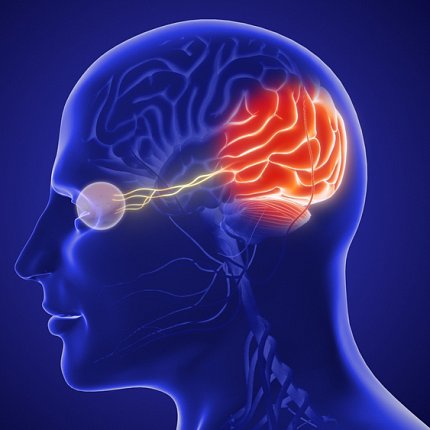
Photo: JITENDRAJADHAV/SHUTTERSTOCK
NIH researchers have identified which brain circuits are vital for visual acuity and how they are affected by damaged retinal cells.
While vision restoration therapies aim to replace or repair damaged cells in the eye, it is critical to understand how brain circuits involved in vision are affected by retinal cell loss. Study results suggest that targeting these circuits may be necessary for optimal vision recovery. The study was published in The Journal of Neuroscience.
Visual processing involves interactions between neurons in the eye and brain and is vital for sight. These pathways originate in photoreceptor cells in the retina that convert light energy into electrical signals, which are then transmitted to the brain’s visual processing centers. Damage to retinal cells often affects sight. In a process known as neuroplasticity, the brain undergoes functional changes to adapt to a retinal injury or disease. A person who experiences vision loss, for example, may have a resulting “blind spot” in a portion of their field of view.
Current therapies target retinal cells; however, retinal cells are just the first step in the visual pathway.
Scientists aimed to understand how neurons downstream of the retina are affected by damage to retinal ganglion cells (RGCs), which receive signals from other retinal cells and transfer to the brain. RGCs connect to neurons in a relay center in the brain, known as the lateral geniculate nucleus (LGN), that transmits signals to the visual cortex, where those signals are processed into images. The study examined two types of LGN cells that respond to different types of visual information and form parallel processing pathways: X-LGN neurons, which contribute to visual acuity, and Y-LGN neurons, which contribute to motion perception.
Researchers demonstrated the effects of retinal cell loss on the X and Y visual processing pathways using an animal model. Following injury to the RGCs in the retina, they found that X-LGN neurons didn’t respond properly to visual stimuli, whereas Y-LGN neuron responses remained intact. These findings show retinal cell loss affects downstream visual pathways differently, suggesting higher sensitivity of visual acuity pathways to retinal degeneration.