NIH Mourns Passing of Hallett
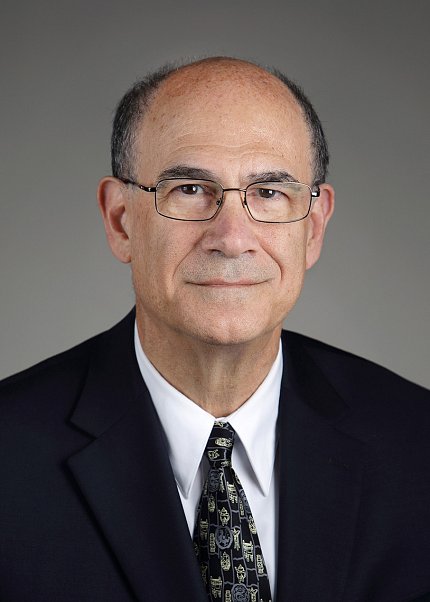
NIH scientist emeritus Dr. Mark Hallett passed away on November 2 from a glioblastoma. He was surrounded at home by family and friends.
Hallett, an internationally renowned expert in movement disorders, had retired from federal service three years ago. He became a scientist emeritus after a stellar 38-year career at NIH. At NIH’s National Institute of Neurological Disorders and Stroke (NINDS), Hallett directed the Medical Neurology Branch and was chief of the Human Motor Control Section, which he founded in 1984.
A native of Philadelphia, Hallett developed an early interest in science. He earned his undergraduate degree in biology in 1965 and his medical degree in 1969, both from Harvard University. He interned at Peter Bent Brigham Hospital in Boston, received neurology training at Massachusetts General Hospital and, in 1970, had a fellowship in neurophysiology and biophysics in the Laboratory of Neurobiology at NIH’s National Institute of Mental Health.
Before coming to NINDS, Hallett served as a Harvard University William C. Moseley Jr. traveling fellow at the Institute of Psychiatry in London. In 1976, he was chief of the Clinical Neurophysiology Laboratory at Brigham and Women’s Hospital in Boston and rose to associate professor of neurology at Harvard Medical School. In 1984, he joined NINCDS (now NINDS) as clinical director and chief of MNB’s human motor control section.
He played a major role in establishing movement disorders as a subspecialty of neurology. He was one of the first to use transcranial magnetic stimulation, a technique that he employed, along with an array of brain imaging methods, to treat patients and develop a deep understanding of human functional movement and the pathophysiology of neurological disorders such as dystonia, Parkinson’s disease, cerebellar ataxia, myoclonus, essential tremor, tic and others. He was among the first to use botulinum toxin therapy for motor disorders, notably to treat hand dystonia.
During his time at NINDS, Hallett contributed tremendously to its intramural program—through both the groundbreaking research within his lab and his leadership. He chaired or served on numerous committees, including the Tenure Review Committee and the Scientific Review Committee. He was deeply respected by the institute’s leaders, faculty and staff, all of whom looked up to him and consulted him regularly for advice and wisdom. He mentored more than 150 fellows, many of whom have become international leaders in neurology, and he received numerous mentoring and clinical teaching awards.
The scope and impact of Hallett’s work transcend traditional productivity metrics but those numbers are astounding: He published more than 1,000 manuscripts and reviews, edited nearly 30 books, and served on the editorial board of more than 40 journals.
Hallett held leadership positions in many professional societies, including the American Academy of Neurology and the International Federation of Clinical Neurophysiology. His clinical and scientific accomplishments were recognized by dozens of distinguished service and lifetime achievement awards, as well as honorary degrees, professorships and society memberships around the world.
He is survived by his wife Judy, children Nick and Vicky and granddaughters Flora and Celeste.