NIH Mourns the Passing of Kohn
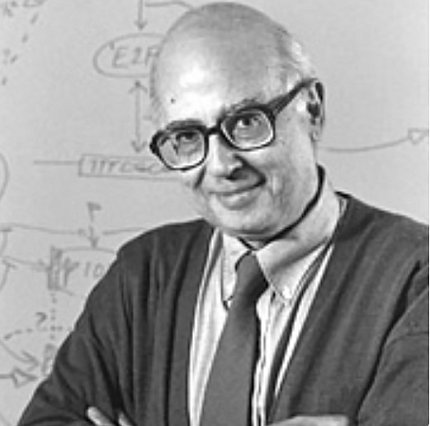
NIH scientist emeritus Dr. Kurt W. Kohn recently passed away at age 95. He had devoted nearly 60 years of his life to anti-cancer drug research at NIH’s National Cancer Institute (NCI).
Kohn earned an A.B. from Harvard in 1952 in chemistry and physics, an M.D. from Columbia University College of Physicians and Surgeons in 1956 and a Ph.D. in biochemistry and molecular biology from Harvard in 1965.
After an internship at Mount Sinai Hospital in New York, he joined NCI as a clinical associate in the Clinical Pharmacology Service (1957–1960). He then spent two years in the laboratory of Dr. Paul Doty at Harvard before returning to NCI in 1962 to the Laboratory of Chemical Pharmacology led by Dr. David P. Rall.
In 1968, Kohn founded the Laboratory of Molecular Pharmacology, which he led until 1997. He advanced understanding of DNA-targeted anti-cancer drugs, demonstrating the cytotoxicity of bifunctional alkylating agents is due to DNA interstrand crosslinks, elucidating a novel mechanism of action of the anthramycin family of antibiotics, and identifying DNA topoisomerases as targets of several clinically important anti-cancer drugs. These discoveries sparked a worldwide interest in topoisomerase inhibitors that continues to this day.
Under his direction, the lab grew into a hub of innovation, advancing mechanistic pharmacology and training a generation of scientists who went on to lead their own pioneering research programs.
After stepping down as chief, Kohn continued as a senior investigator in the Developmental Therapeutics Branch. In later years, he broke new ground in computational biology by creating molecular interaction maps, graphical depictions of the complex networks that govern cell cycle regulation, DNA repair and apoptosis.
Kohn retired in 2015 and is remembered as a brilliant scientist and a remarkable mentor whose impact extended across generations of researchers.