NIH Remembers Brown
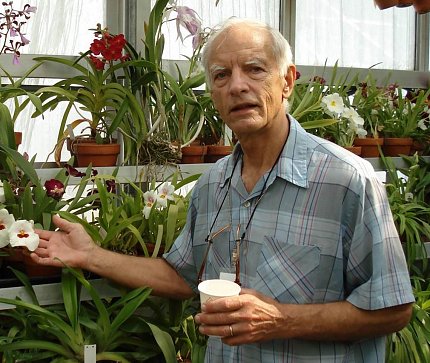
Dr. Paul W. Brown, a physician-scientist who spent 40 years working for NIH’s National Institute of Neurological Disorders and Stroke (NINDS), recently died peacefully at his home. He was 89.
Brown dedicated his professional life to public health at NIH. He worked in the NINDS Laboratory of Central Nervous System Studies, making major contributions to our understanding of transmissible spongiform encephalopathies, also known as prion diseases.
Brown’s work was instrumental in advancing research on kuru, Creutzfeldt-Jakob Disease (CJD), and variant CJD, a human disease acquired from bovine spongiform encephalopathy popularly called mad cow disease.
He will be remembered not only for his impressive scientific contributions, but also for his compassionate nature. Brown placed great emphasis on discussing diagnoses and prognoses with patients and their families, explaining complex concepts in accessible terms. He also was a leader in assisting industries with developing methods for prion detection and removal, focusing on the safety of blood and plasma-derived therapies.
His colleagues remember him riding to work on his scooter, wearing a robin’s-egg blue safety helmet. He was a man of few words but articulate nonetheless—brilliant, kind and forever passionate about his work. He was also an avid gardener, a competitive tennis player and a polymath who loved art. Brown’s legacy of scientific excellence and personal kindness will continue to inspire us all.
“I cherish my memory of Paul, this man in the blue helmet and all he meant to me and his other co-workers,” recounted his colleague Dr. Larisa Cervenakova. “He was a brilliant and compassionate physician and scientist, articulate speaker and teacher, exceptionally lucid writer, late-in-life published meteorologist, passionate master gardener, polymath and art lover, aggressive competitive tennis player (no pickleball for Paul), loving husband and father.”