NCI’s Zhuang Retires
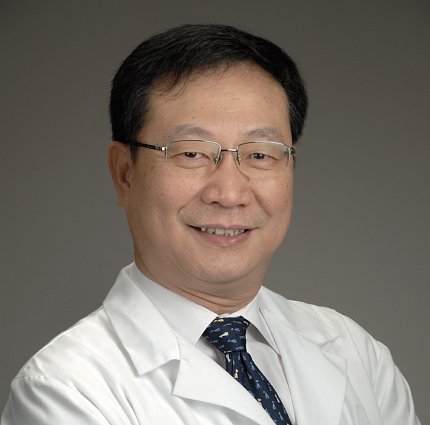
Dr. Zhengping Zhuang, a world-renowned expert in experimental pathology, cancer genetics and cancer therapeutics, retired in June after working at NCI for 32 years.
Throughout his career, Zhuang focused on investigating the role of inherited and somatic mutations in tumor pathophysiology, particularly in tumors of the central nervous system. This work led to the characterization of four genes linked to cancer causation, one of which is associated with a disease now named after him and his colleague. Zhuang has also contributed to biotechnological advancements, drug development and clinical translation of his work in tumor biology.
Zhuang received his M.D. at the Shanghai Jiao Tong University School of Medicine in Shanghai, China. He completed his Ph.D. in pharmacology at Wayne State University in Detroit, Mich., followed by a fellowship at Massachusetts General Hospital. Zhuang then moved back to Michigan, where he completed his residency in transitional medicine at the Henry Ford Hospital, a training program associated with the University of Michigan.
Zhuang served as a research associate at the University of Michigan before coming to NCI in 1993, where he started as a resident in anatomic pathology in the Department of Pathology. He served as a staff pathologist and special expert for the Surgical Neurology Branch for 17 years. In 2017, Zhuang joined the Neuro-Oncology Branch as a senior investigator and head of the Cancer Stem Cell Biology Research Program.
Throughout his career, Zhuang has published more than 400 articles. He co-discovered the role of the menin gene in multiple endocrine neoplasia type 1; the role of the c-MET gene and trisomy in papillary renal cell carcinoma; and the role of the HIF2A gene in a novel tumor-associated syndrome of multiple paraganglioma, somatostatinoma, and polycythemia, a disease now referred to as Pacak-Zhuang syndrome. Recently, he also co-discovered a role for the gene SF3B1 for pituitary prolactinoma. He holds eight patents and has 17 more pending.
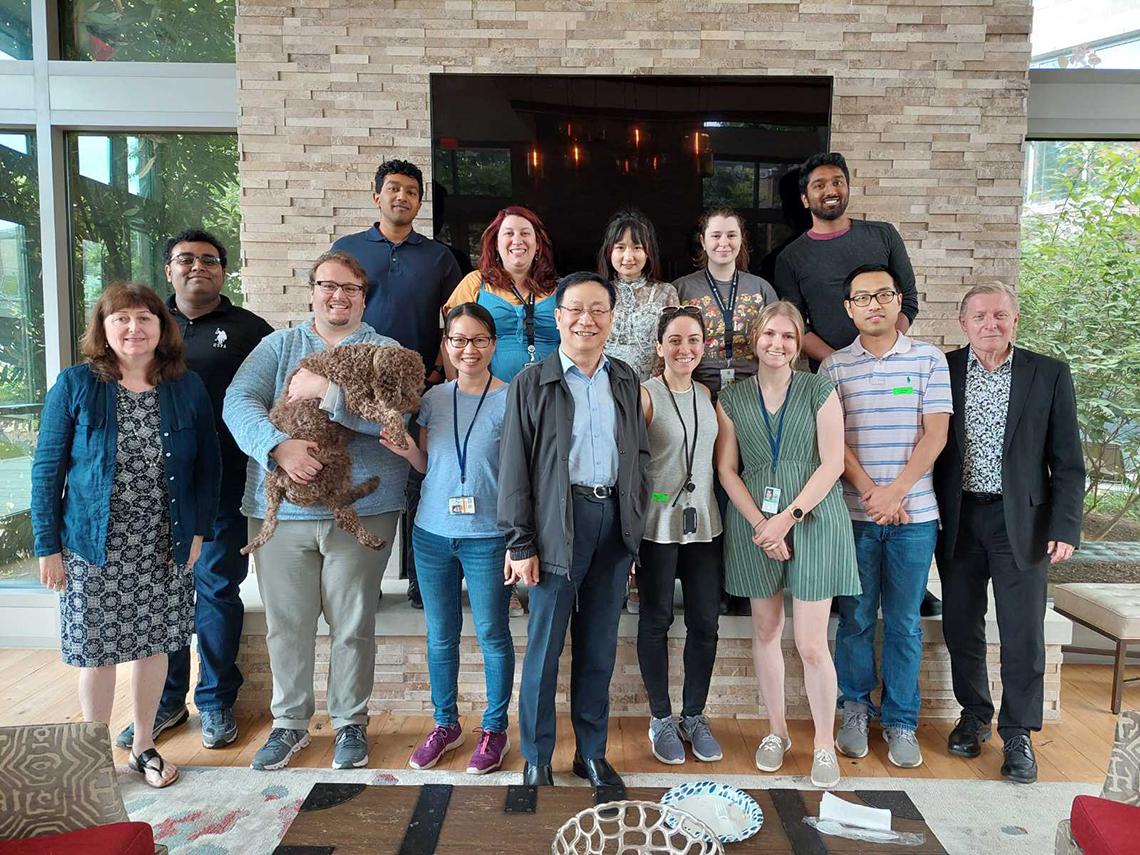
In a Q&A with NCI colleagues, Zhuang reflected on his proudest scientist achievement.
“One early invention I’m pretty proud of is a technology called laser capture microscopy (LCM). When we talk about cancer tissue, it’s not just cancer cells; you also see all different varieties of vascular cells and immunoreactive cells,” he explained. “At the time of my residency training, people just took the whole piece of tissue to do the genetic analysis or protein study. I thought that was inaccurate, so I started thinking about how to develop a technology to separate individual cells in the tissue.
“I developed a tool from a pipette that could be used to isolate tumor cells under a microscope. And then, with Dr. Lance A. Liotta and fellow pathology resident Dr. Michael Emmert-Buck, we developed an automated machine that could isolate cells without having to do everything manually. We started around 1995, and almost 30 years later, it’s still very popular.”
Zhuang and his colleagues used this tissue microdissection technology to identify several important cancer genes. The research eventually led to having a syndrome named after him and his colleague, Dr. Karel Pacak.That condition, Pacak-Zhuang syndrome, is now taught in medical school. “How often in a lifetime do you get to find a completely new disease and have it named after you?”
In his retirement, Zhuang plans to still work with some labs to continue some research and help train young scientists. He is also working with a Japanese company to develop a high-throughput device that can image-capture a tumor tissue on a film or tape, allow AI to reconstruct the images and create a 3D model.
“I want this machine to go to every hospital, so that pathologists will not have to look at the microscope anymore; they will see 3D images on their computer like CT scans for a radiologist. I’m very excited about this.”
To read the full Q&A with Zhuang, see: https://go.nih.gov/VjlO2n0.